
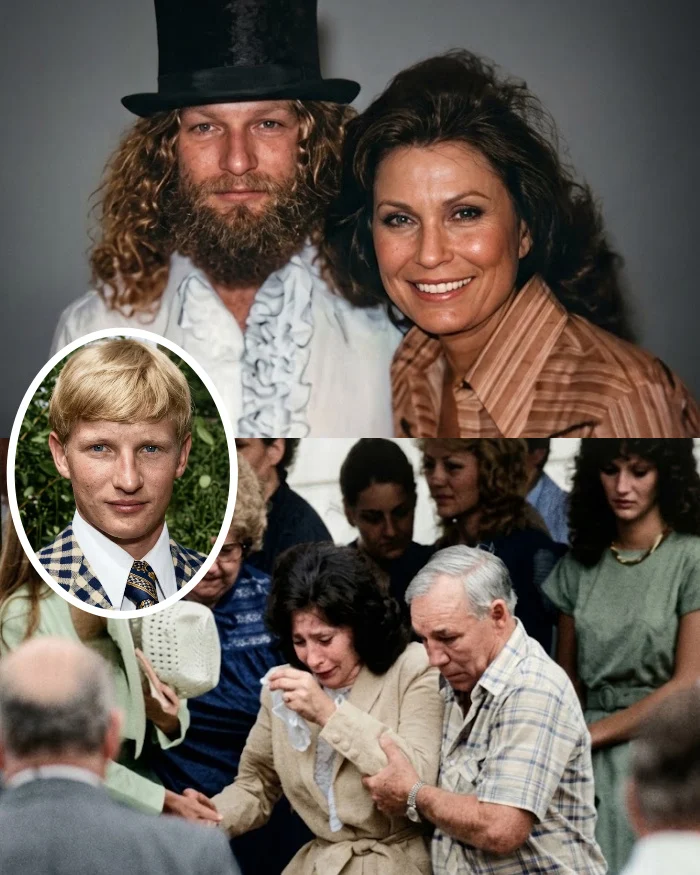
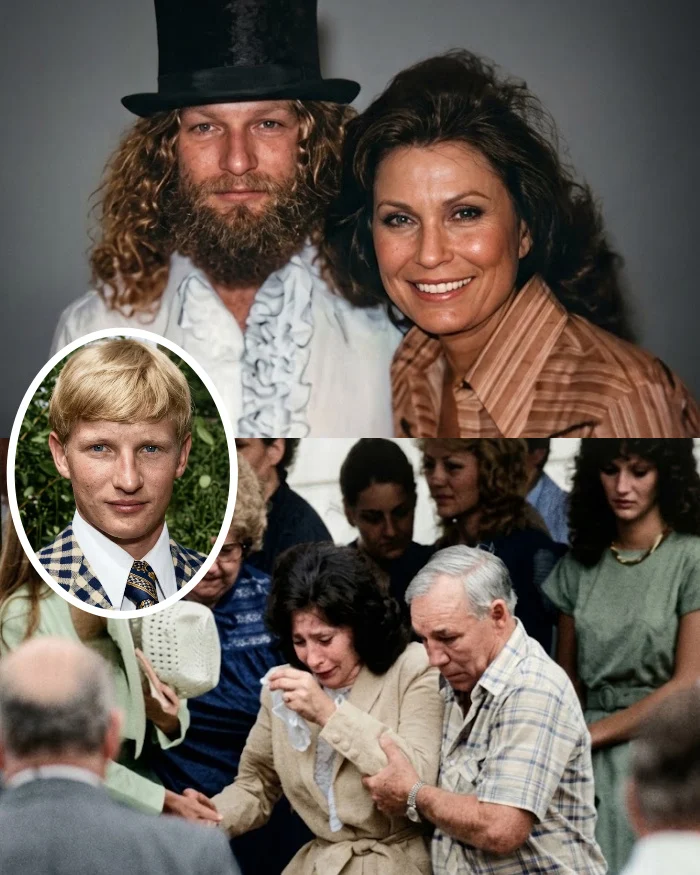
The most painful news of Loretta Lynn’s life waited until she could breathe on her own.
On July 24, 1984, Loretta Lynn collapsed from severe exhaustion just before a scheduled performance at the Williamson County Fair in Marion, Illinois. Paramedics rushed the fifty-two-year-old singer to Marion Memorial Hospital, where she arrived unresponsive with no detectable pulse. The emergency team worked over her on the gurney with continuous chest compressions, electric defibrillation and intubation until a faint heartbeat returned. Once stabilized, she was transferred directly to intensive care in a deep coma.
At the exact same time Loretta lay unconscious in Illinois, tragedy struck at the family farm in Hurricane Mills, Tennessee. Her oldest son, thirty-four-year-old Jack Benny Lynn, drowned after being swept away by swollen waters while trying to cross the Duck River on horseback. Deputies from the Humphreys County Sheriff’s Department found his body downstream the following day and confirmed the accidental drowning.
Fearing that catastrophic news would overwhelm her fragile heart, doctors and family members turned off the television, removed the radio and strictly barred any mention of home from the hospital room. Her husband Doolittle and close relatives stood outside the ICU curtain and kept their grief silent so her monitor readings would stay steady.
Loretta slowly began to regain consciousness over the following days. By late July she was tolerating basic bedside care and her vital signs stabilized. Her medical team cleared her for discharge on July 27 and allowed an air transfer back to Tennessee for extended bed rest under a domestic physician’s oversight.
The truth waited at Hurricane Mills. Once she was settled securely in the family home, Doolittle and close relatives gathered in the living quarters to tell her Jack was gone. The shock caused an immediate setback to her fragile recovery, and home-care nurses gave sedatives while watching her blood pressure through the night.
She had fought her way back from the edge of death only to learn that her firstborn son was gone.
Jack had been laid to rest days earlier at the family cemetery on the Hurricane Mills property. Denied the chance to attend the funeral or stand beside his grave during the initial burial, Loretta spent her first days home confined to bed and listened to relatives describe the memorial while she fought physical weakness and grief.
As August progressed, Loretta took her first cautious steps around the house with support from her daughters and nursing staff. Her first private excursion outside was a slow walk up the rise toward the family burial ground, where she spent quiet hours beside the newly turned earth and tried to reconcile the days she had lost while unconscious in Illinois.
The dual physical and emotional trauma halted her touring operations entirely. Booking agents placed her entire late-summer concert schedule on indefinite hold and canceled dozens of state fair appearances and showroom bookings throughout the Midwest and South. The Coal Miners band stood down as the industry wondered whether she would ever return to the stage.
Loretta spent the rest of that autumn in seclusion behind the gates of Hurricane Mills. She took meals quietly with her grandchildren, avoided business calls and focused on basic physical therapy to rebuild her stamina. Long walks along the property line and the company of her surviving children gradually restored a measure of strength to a woman whose voice had carried generations of listeners through their own hard miles.
When she eventually resumed public appearances months later, the stage retained the warmth of a survivor who understood the steep cost of survival. Loretta Lynn had walked away from the edge of cardiac arrest in Illinois only to return to a Tennessee riverbank where the memory of her firstborn remained carved into the quiet hills of home.