
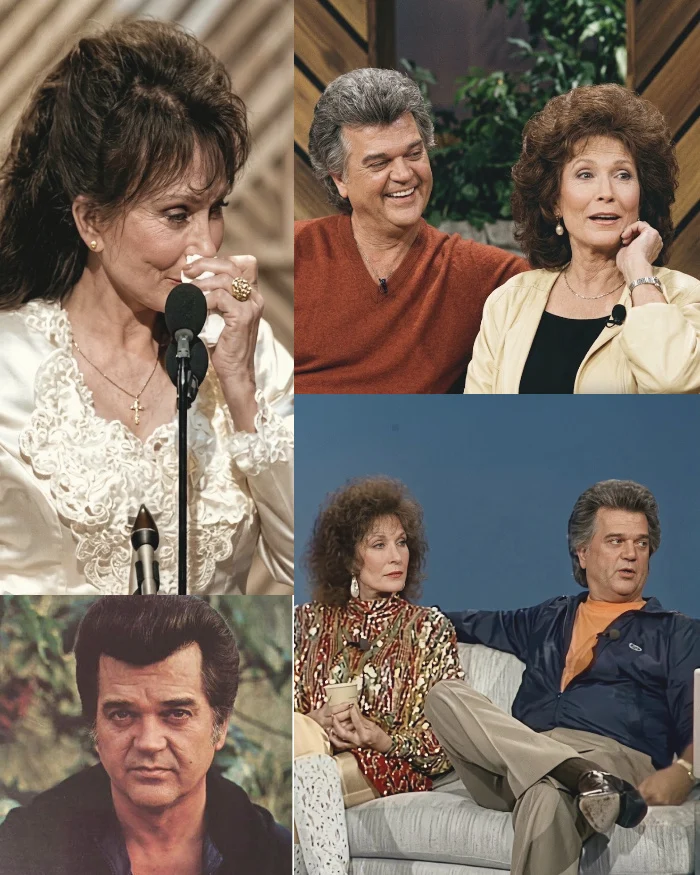
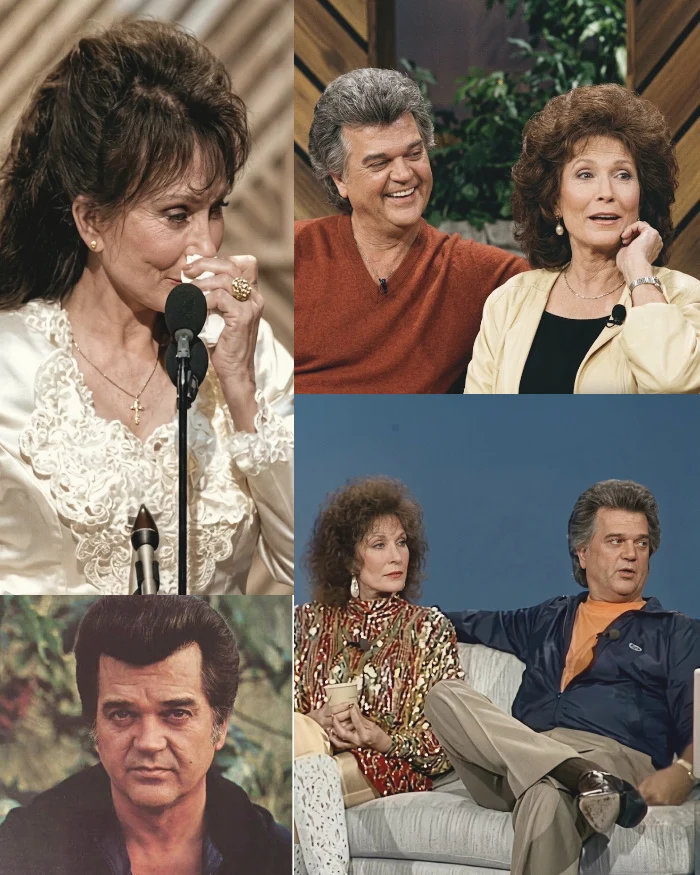
At dawn outside Cox South Hospital in Springfield, Missouri, Loretta Lynn lifted her face to the sky and screamed Conway Twitty’s name into the silence. The heavy glass doors had shut behind her. The humid night air offered no answer. It was June 5, 1993, and her longtime duet partner was gone.
Doctors had just told Lynn that Twitty had died after a ruptured abdominal aortic aneurysm. He had collapsed on his tour bus following a concert in Branson, and emergency surgery could not save him. He was 59. Lynn was already inside the same hospital, exhausted from days beside her husband, Oliver Doolittle Lynn, who was recovering from open heart surgery on another floor.
For years the loss stayed mostly private. Then Lynn sat down with television host Ralph Emery and described the moment she learned her singing partner was dead. She ran out of the hospital and into the dark parking lot. Standing alone, she looked upward and called his name, begging him not to leave.
She looked up and screamed his name into the silence, begging him not to leave
There was no answer from the dark, only the quiet Missouri morning. Lynn eventually turned and walked back through the heavy glass doors to rejoin Conway’s wife, Dee Henry, and sit beside her husband. She carried with her the abrupt end of a musical partnership that had shaped country music for more than two decades. They had shared microphones, studio sessions, and the top of the country charts.
That partnership had begun against warnings. In 1970, when Lynn and Twitty first raised the idea of recording together, record executives and booking agents told them no. Both were solo powerhouses on Decca Records under producer Owen Bradley. Managers feared a joint project would dilute their individual market power. Doolittle Lynn supported the pairing, and Conway refused to yield. Lynn told the executives they were making the record regardless.
Their instinct was proved right. At Bradley’s Barn in Mount Juliet, Tennessee, they recorded After the Fire Is Gone, a stark look at infidelity delivered with conviction. The single reached number one on the Billboard country chart in early 1971 and won them a Grammy Award.
Between 1971 and 1981, Lynn and Twitty released a collaborative studio album every year. Their voices offered a study in contrast. Lynn’s piercing Kentucky mountain edge met Twitty’s smooth Mississippi Delta warmth. Across thirteen joint singles, twelve reached the Top 10, including Lead Me On, Louisiana Woman Mississippi Man, and Feelins.
The Country Music Association voted them Vocal Duo of the Year for four consecutive years, from 1972 through 1975. On the road, their package shows packed arenas and state fairs from coast to coast. They offered two full individual sets before bringing both headliners together for an intimate final act.
Because their chemistry on stage felt so natural, rumors of an offstage romance followed them for decades. Yet their bond was defined by disciplined boundaries and mutual protection. Twitty was a methodical businessman who helped navigate the crushing pressures of touring. Lynn remained a loyal confidante through personal and professional trials. They were colleagues who shared the rare burden of massive commercial expectations while remaining tethered to working class Southern roots.
That trust brought Lynn to Conway’s bedside moments before the end. When a hospital chaplain warned that Twitty was slipping away, Lynn gripped Dee Henry’s hand and stepped into the room. She leaned close to tell him that he loved to sing too much to leave.
Doolittle Lynn survived his surgical recovery and lived another three years before his passing in 1996. Conway Twitty died at 59, leaving behind one of the most prolific catalogs in modern American music.
When Loretta Lynn walked out of the Springfield hospital days later, she re entered a music industry where her voice stood alone once more. She carried the memory of that empty parking lot for the rest of her life, where years of shared harmony had vanished into the quiet. Decades of harmony had begun with two stubborn artists defying Nashville executives. It ended outside emergency room doors, where a grief stricken partner looked upward and shouted into the dawn.