
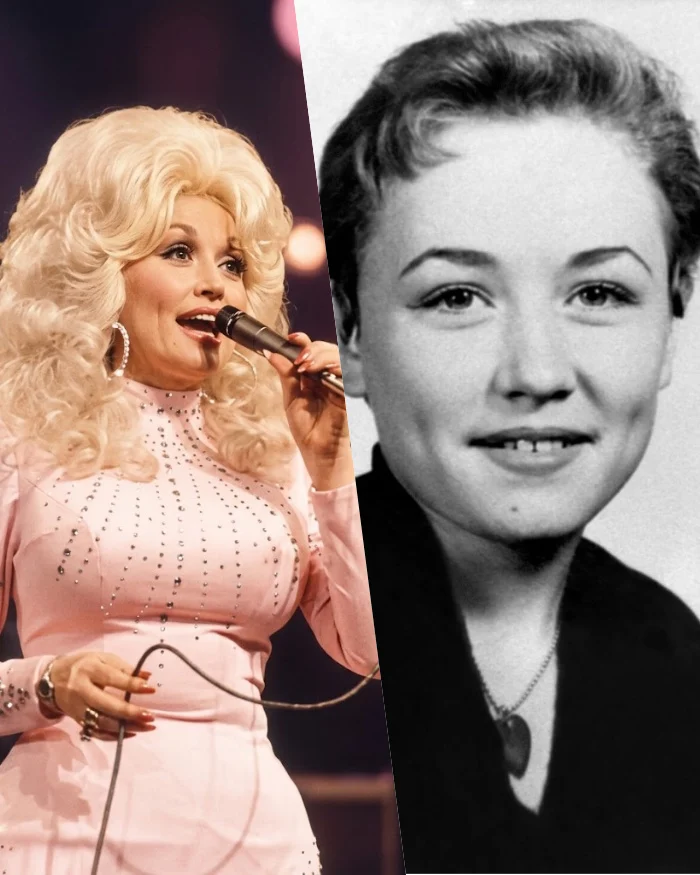
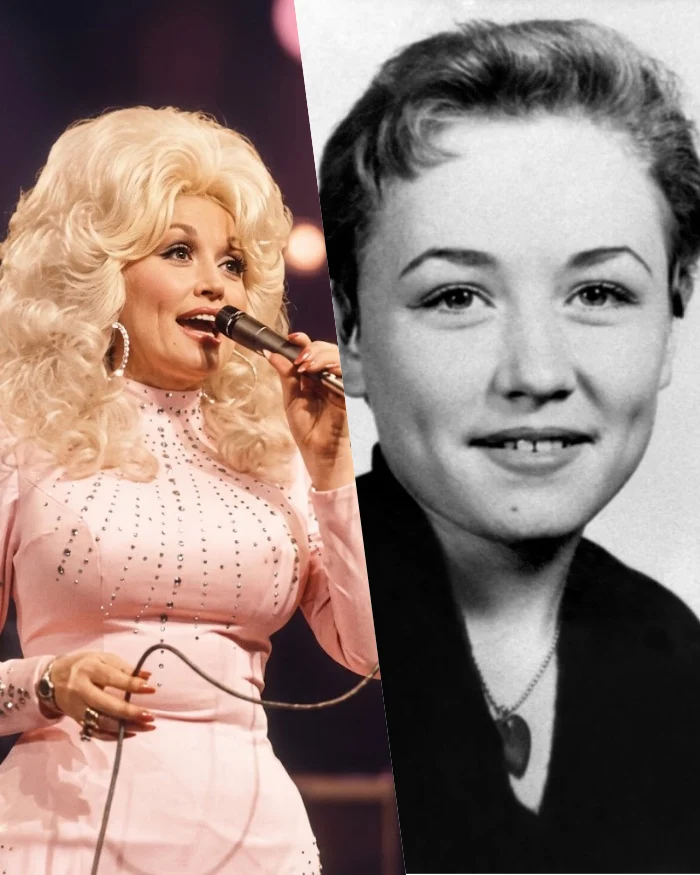
The hardest promise Dolly Parton ever made was not to a producer or a crowd. It was to a dirt road in Locust Ridge Tennessee.
Before she became a global icon, Parton was an eighteen-year-old girl leaving a one-room cabin she shared with eleven siblings. On the morning after her high school graduation in the spring of 1964, she boarded a Greyhound bus with her belongings packed inside brown paper grocery bags. She was the fourth of twelve children in a family shaped by sharecropping and relentless physical labor. Leaving the Great Smoky Mountains was not a casual adventure. It was a permanent relocation.
She promised herself she would not walk back up that path until she had found success.
Neighbors in Sevier County whispered doubts. They pictured a naive country girl with cardboard boxes for luggage getting swallowed by the music industry and returning defeated. Parton looked back at the familiar dirt road and made a quiet vow. The generational poverty that had defined her parents’ lives would not define her future.
Nashville tested that vow almost at once. When the bus pulled into the city, Parton had practically no money and no clear blueprint for a career. The crowded noisy cabin was replaced by the heavy silence of cheap motels and rented rooms. She moved in with her uncle Bill Owens, who had also traveled to Nashville to help pitch their songs. To survive, they scrounged for leftover food.
During the leanest weeks, Parton gathered condiment packets from local diners. She asked for cups of hot water, tore open free packets of ketchup and mustard, and stirred them together into a makeshift tomato soup. It was severe poverty, but it was a struggle she had actively chosen. She refused to buy a ticket back to Sevier County. For Parton, the hunger she experienced in a strange city felt different from the generational poverty she had left behind. In Nashville, being broke was simply the temporary cost of chasing a publishing contract.
On her very first afternoon in town, while she washed clothes at the Wishy Washy Laundromat, a young man named Carl Thomas Dean drove by in a white Chevrolet and stopped to talk. He warned her about staying out in the sun and struck up a conversation. That chance meeting would lead to a private marriage lasting more than half a century, yet Dean could not instantly shield her from the grueling financial realities of an aspiring songwriter trying to break into Music Row.
Every day, she and her uncle walked up and down the streets of the music district, knocking on the doors of publishing houses. She sang demos, pitched her lyrics to anyone who would listen, and endured the constant rejection that defined the town. She leaned heavily on the work ethic she had watched her father apply to the Tennessee soil.
The relentless pavement pounding eventually yielded results. Fred Foster, the head of Combine Music and Monument Records, recognized the distinct piercing quality of her voice and her sharp instincts for storytelling. He signed her as a writer and eventually as a recording artist, providing the initial income that allowed her to stop relying on diner condiments. That publishing deal was the first real crack in the wall.
Within a few years, her songwriting caught the attention of country television star Porter Wagoner, who hired her for his weekly syndicated show. From that point forward, the trajectory of her life permanently shifted.
Today, the cardboard boxes and paper grocery bags are long gone. They have been replaced by a global entertainment empire, a literacy foundation that ships millions of books across the world, and a theme park bearing her name. She is recognized as one of the most successful and shrewd executives in the history of American music.
Yet the foundation of that entire institution was poured during those quiet desperate months in 1964. The resilience that built a billionaire philanthropist started entirely with a teenager who stared down an empty bank account and simply refused to turn around.