
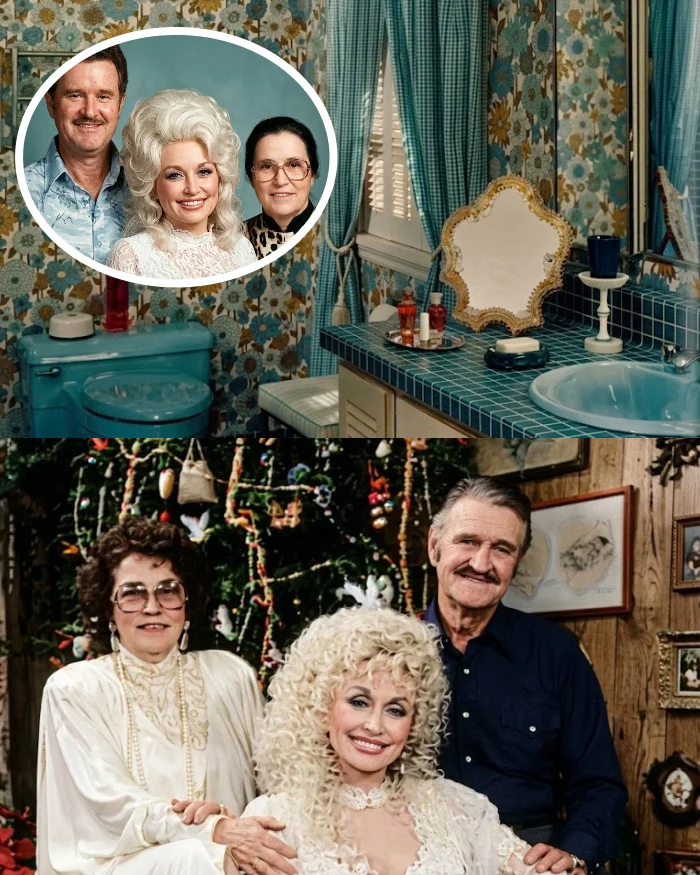
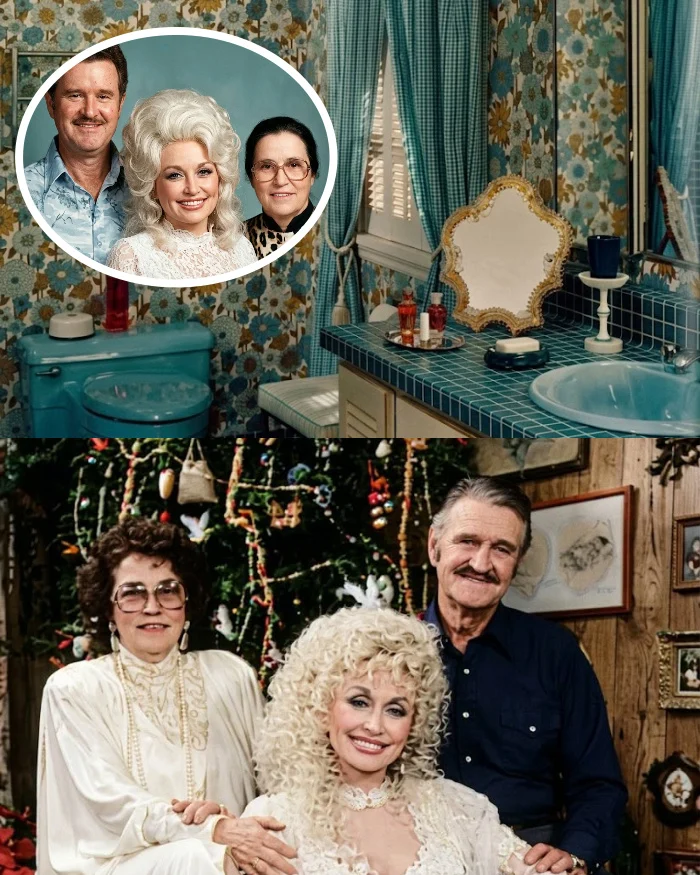
Robert Lee Parton stood in a new bathroom in Sevierville, Tennessee, turned the shower handle, and felt hot water rush over his weathered hands. For a man whose palms had been hardened by sharecropping, construction work, chopping wood, and breaking winter ice, the moment was too much. The stoic father who had never complained about rural poverty broke down and wept.
That shower was not a random luxury. It was the first major purchase Dolly Parton made after her early Nashville royalty checks began arriving in the late 1960s. Instead of chasing flashy symbols of country music stardom, she bought a modern home for her parents, Robert Lee and Avie Lee Parton.
The contrast with their old life was stark. Robert Lee had worked endlessly as a sharecropper and taken grueling construction jobs to keep his family afloat. He and Avie Lee raised twelve children in a drafty one-room log cabin on Locust Ridge in the foothills of the Great Smoky Mountains. The walls were lined with old newspapers to block freezing wind. The family had no electricity and no indoor plumbing. Bathing the children or washing clothes meant carrying heavy buckets of icy creek water back to the cabin and boiling them over a wood stove.
Robert Lee endured that hardship without complaint. His focus was survival, insulation, food, and keeping his family alive through bitter mountain winters. So when he stepped into the new Sevierville house and hot water poured instantly from the shower, the sudden relief overwhelmed him.
For Dolly Parton, that moment clarified success. It was never just fame or applause. It was the chance to physically lift exhaustion from the people who raised her.
Her relentless work in Nashville, writing thousands of songs and navigating a difficult industry, had a practical purpose. Money became a tool for relief. That stream of running water washed away a lifetime of survival mode and helped shape a fierce protective instinct that guided her fortune for decades.
Parton did not hoard her wealth. She quietly bought properties and built local businesses meant to secure her siblings’ futures. Years later, when she created the Dollywood theme park empire in Sevier County, she kept family at the center. She brought Robert Lee in to help manage and oversee parts of the operation, leaning on his practical wisdom and deep knowledge of the region.
The man who had once farmed dirt and carried creek water was suddenly helping guide a multi-million-dollar economic engine for his home region. Though he could not read or write, his daughter credited his brilliant natural business mind for much of her own corporate success. Dollywood was more than entertainment. It was deliberate infrastructure designed to provide jobs and healthcare for the community that had shared her family’s struggles.
For decades the public has been captivated by the sparkling wardrobe, the massive wigs, and the undeniable flash of country music royalty. Dolly Parton built a larger-than-life persona that conquered the entertainment world.
The true foundation of her legacy was not record sales or theme park tickets. It was a stoic father finally able to rest his hands in warm water.