
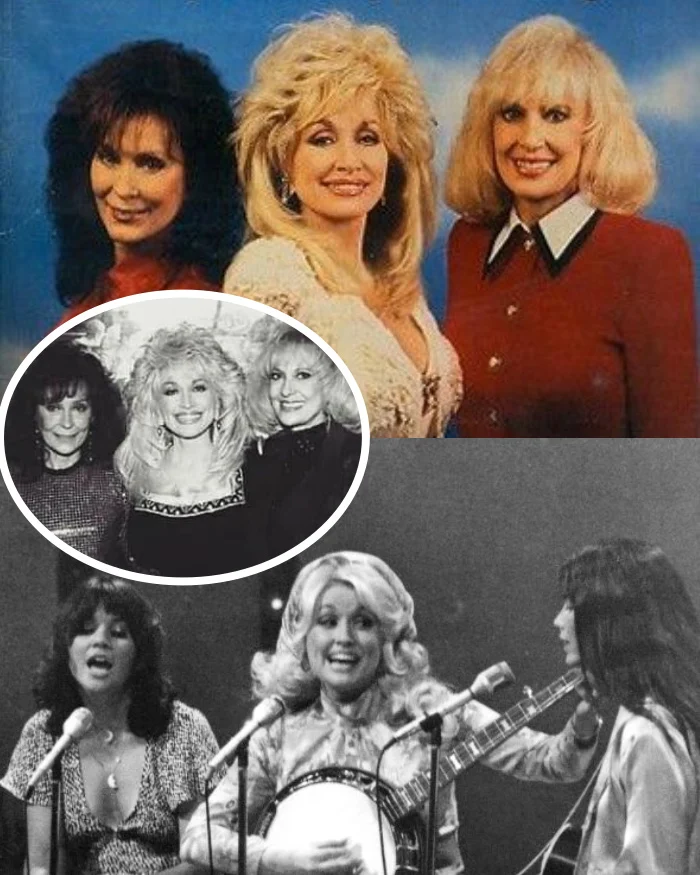
Tammy Wynette arrived at the studio in severe physical decline, her body worn by chronic pain and multiple surgeries. Yet she took her place beside Dolly Parton and Loretta Lynn, and the room fell into a rare, respectful quiet.
In 1993, Parton, Lynn, and Wynette finally gathered around the microphones to record Honky Tonk Angels. For fans of traditional country music it was a monumental summit of the genre’s foundational architects. Lynn had carried the unfiltered truths of rural working-class women to the radio. Wynette had given heartbreak and endurance their definitive voice. Parton had built a global storytelling empire. These were the women who turned the marginalized role of the 1960s television girl singer into absolute industry dominance.
Parton had spent more than a decade pushing for the collaboration and repeatedly hit the invisible walls of the music business. The hurdle was never the women’s willingness to sing together. It was the corporate machinery that controlled their catalogs. Lynn was historically tied to MCA Records while Wynette and Parton worked under the Sony umbrella. In an industry fiercely protective of exclusive artist contracts, executives balked at sharing royalties, clearing publishing rights, and financing a joint master tape.
Parton refused to let the project die in a boardroom. She used her massive industry leverage as a co-producer and international superstar to force the competing labels to cooperate. She personally navigated corporate red tape, guaranteed equal billing for all three artists, and ordered executives to step aside so the women could work without interference. Her business acumen secured the legal path. The profound respect between the three women set the tone once the studio doors closed.
By the time they stood together in the vocal booth they had survived the harshest realities of their profession. They shared decades of highly publicized divorces, intense media scrutiny, and the crushing demands of a business that constantly searched for younger faces.
They no longer had anything left to prove to Nashville
The sessions carried a heavy unspoken physical reality. Wynette arrived while battling severe physical decline. She endured chronic pain and multiple surgeries and pushed her body just to participate in the historic gathering. Because of her condition the studio offered a rare quiet sanctuary. There was no competition for the lead vocal, no clashing egos, and no pressure to maintain heavily guarded public personas.
They did not try to recreate the bright polished sound of the young girls who first arrived on Music Row with guitars and desperation. They leaned into the natural grain of their mature voices and recorded with the undeniable weight of the lives they had actually lived. They sang with the comfort of women who alone understood the isolating toll of carrying a country music legacy.
The room offered a rare quiet sanctuary where ego had no place
When Honky Tonk Angels was released, country radio was aggressively shifting toward a younger pop-oriented generation. The era of traditional honky-tonk queens was being quietly pushed off the dial. Despite changing trends and resistance from modern programmers, the record struck a deep nerve with the public and earned Gold certification. It proved the enduring commercial power of authentic storytelling.
The timeline soon took on a much heavier historical significance. Wynette died five years later in 1998 at the age of fifty-five. Her sudden loss turned the 1993 master tapes into something far more profound than a successful crossover project. The album became a permanent and irreplaceable historical document, the only time the three matriarchs of country music were captured together on a single studio release.
Parton’s quiet determination to cut through label restrictions gave the genre a priceless piece of its own history. The record was not just a collection of classic songs. It was a final documented celebration of their shared survival. How she navigated the boardroom politics to get all three voices onto a single master tape remains one of the most difficult behind-the-scenes chapters of her career.