
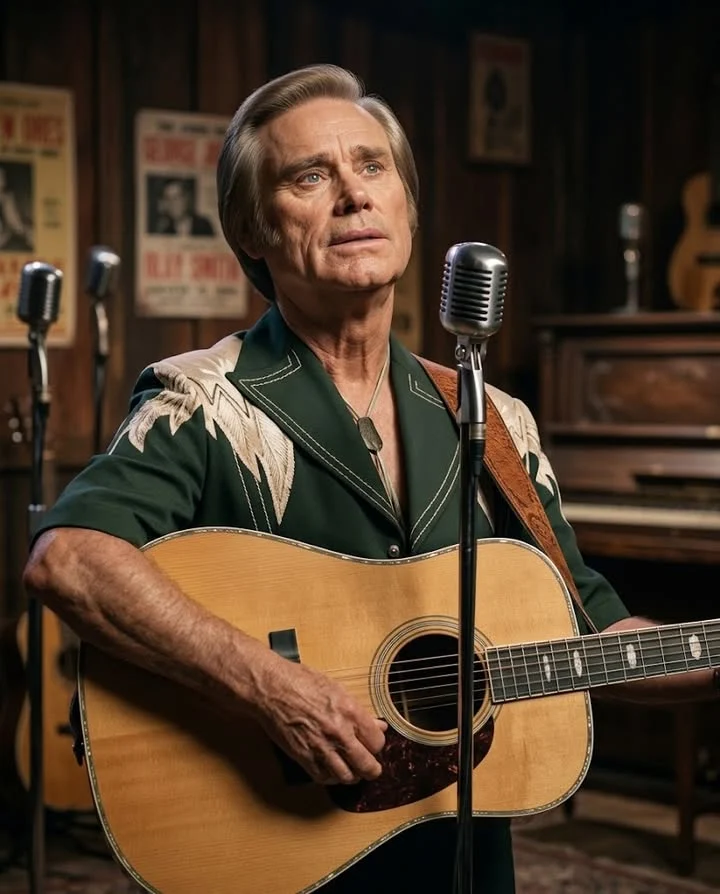
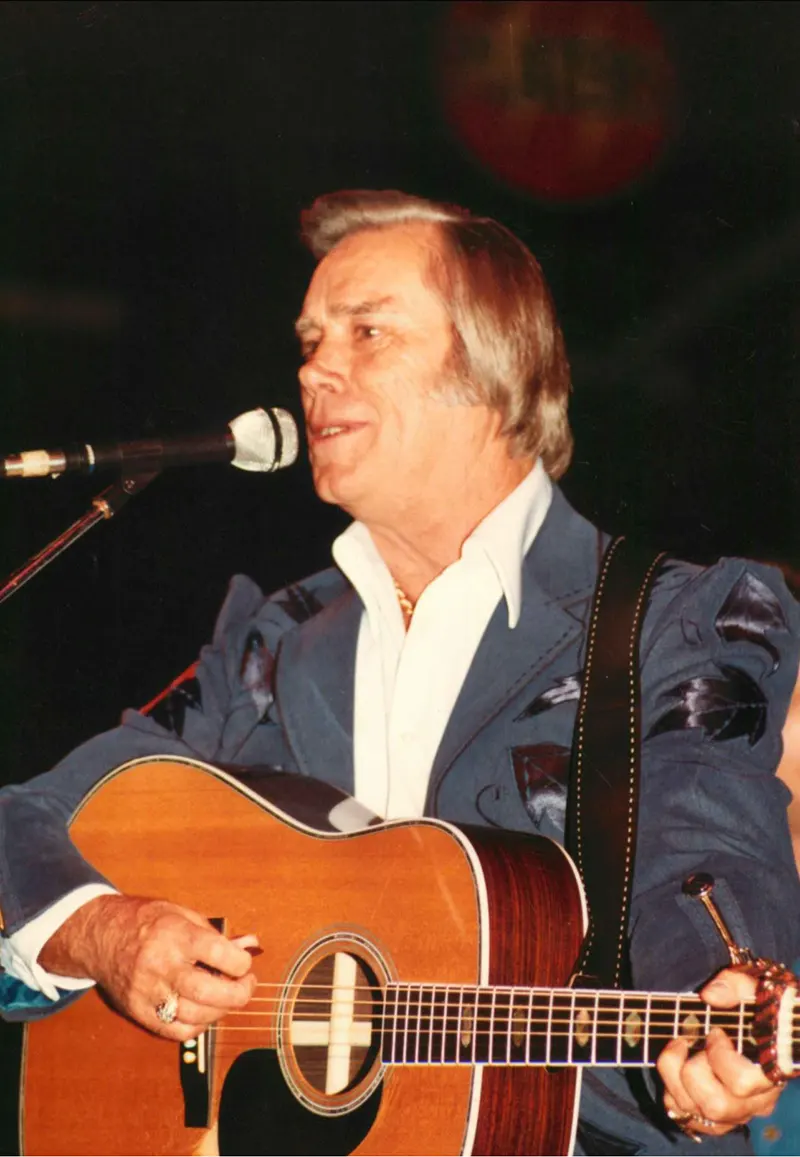
Love does not have to sound fancy to be deep. Sometimes it sounds like a joke in a kitchen, ordinary as breakfast and stubborn as truth and warm enough to last long after the song ends.
If I don’t love you, grits ain’t groceries and that’s on every poor man’s plate.
If I Don’t Love You, Grits Ain’t Groceries walks in with a smile on its face. Before a note settles, the title already has the flavor of old Southern speech, playful and colorful and a little outrageous, the kind of phrase somebody might toss across a kitchen table just to prove they mean every word. It does not sound like a grand confession.
But with George Jones, even a wink could carry a wound. That was part of his genius. He understood that country people did not always say I love you in polished and perfect sentences. Sometimes they said it sideways. Sometimes they hid it inside a joke. Sometimes they wrapped devotion in humor because plain emotion felt too exposed. And George could sing that better than almost anyone.
In a song like this, love does not arrive dressed in roses and moonlight. It smells like breakfast on the stove. It sounds like screen doors and porch talk and laughter in a small house and somebody trying to make a point with the kind of saying that could only come from real life. If I don’t love you then grits ain’t groceries. That is the beauty of it. The phrase is funny because it is impossible. Of course grits are groceries. Of course the feeling is real. The humor does not weaken the love, it proves it. It is a country way of saying you can doubt a lot of things but not this.
The lyric keeps that plea grounded in everyday hurt. His heart is feeling used and junky and the road of love is getting mighty bumpy. He asks his pretty mama whether he has filled her heart with hate and he feels outdated because she is affiliated with someone new. He begs her to let him know what is the matter and what is on her mind. He insists that if he does not love her then there is not a cow in Texas, even though they raise them there all the time. He does not want to sound demanding, he just wants a little understanding.
George Jones had a voice built for that kind of truth. He could make sorrow feel devastating, but he could also make affection feel lived in. Not fancy. Not fragile. Real. The kind of love that has sat through hard mornings and bills on the table and tired hands and the stubborn pride of ordinary people who do not always know how to say the soft thing first.
That is where the song becomes more than a novelty. Beneath the clever title is a man trying to be believed. He is not making a speech. He is not begging on his knees. He is reaching for the language he knows, food and humor and exaggeration and home, and using it to tell someone his love is as certain as the things they grew up knowing.
You can almost see the room. A small kitchen. A skillet cooling on the stove. A woman pretending not to smile. A man leaning in the doorway, acting like he is joking, when every joke is carrying something serious underneath. That was the old country miracle George Jones could reveal. He knew that love was not always elegant. Sometimes it was awkward. Sometimes it was stubborn. Sometimes it came with a laugh because the heart needed a little cover before telling the truth.
And when George sang it, the listener could hear both things at once, the playfulness of the line and the ache of needing someone to understand it. That is the choke in a song like this, not because it is tragic but because it is human. It reminds us of the people who loved in sayings and teasing and nicknames and biscuits and coffee and quiet routines. The fathers who did not say much but fixed the car. The mothers who showed love by filling plates. The couples who argued and laughed and stayed. The homes where devotion did not sound like poetry, but you knew it was there because somebody kept showing up.
George Jones sang so many songs about losing love that it can be easy to forget how beautifully he could sing about claiming it. If I Don’t Love You, Grits Ain’t Groceries gives us that side of him, the side with a grin, the side that understood everyday language could hold sacred feeling, the side that could take a line almost too funny to take seriously and reveal the heart beating inside it. Because country music has always known something city lights sometimes forget. Sometimes it sounds like a Southern saying passed down through generations.