
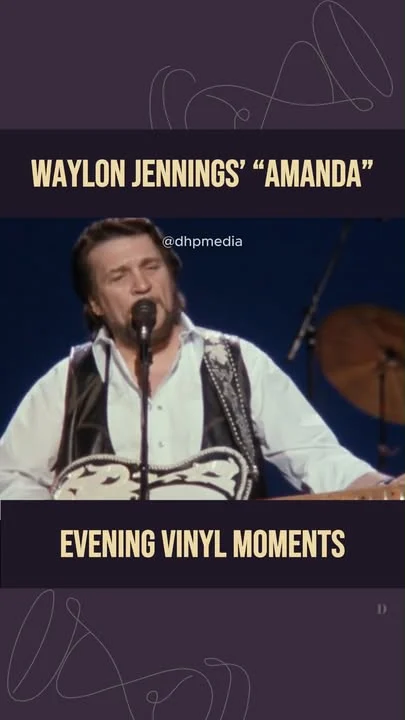
Waylon Jennings built a career on defiance. With Amanda, he built a monument to surrender. It is a song that does not ask for a fight. It asks for forgiveness. And it remains one of the most tender moments in all of country music.
This tender masterpiece was born from the pen of Bob McDill, a songwriter who knew how to capture a man’s soul on paper. Jennings first brought the song to life in 1974 for his The Ramblin Man album. But it found its true home in 1979 on the platinum selling Greatest Hits collection. Alongside the rowdy anthems Luckenbach Texas and Good Hearted Woman, Amanda stood apart as the album quiet beating heart.
The musical arrangement wraps the listener in a warm reflective space. An acoustic guitar provides the gentle foundation. A pedal steel weeps with quiet dignity. The piano enters not to dominate but to softly underline the emotion. Jennings unmistakable baritone does not just sing the words. It lives them. The lyrics capture a man looking back at the wreckage of his choices. The central plea is heartbreakingly simple.
Amanda, light of my life / Fate should have made you a gentleman’s wife
This is not the rage of a rebel. It is the sorrow of a man who knows he fell short.
The song power lies in this raw honesty. It strips away the bravado of the outlaw persona. It connects with anyone who has felt unworthy of the love they received. This vulnerability is what makes Amanda timeless. It proves that the strongest men are the ones who can admit their weaknesses.
For those drawn to this deep vein of emotion, the genre offers kindred spirits. Willie Nelson Angel Flying Too Close to the Ground carries a similar aching tenderness. George Jones He Stopped Loving Her Today remains the gold standard for heartbreaking narrative. Gordon Lightfoot If You Could Read My Mind shares the acoustic intimacy. Conway Twitty Hello Darlin is a sincere reflection on love and loss. And Jennings own Luckenbach Texas provides the rugged backdrop that makes the regret in Amanda so poignant.
In a world of overproduced music, Amanda stands as a powerful testament to the power of simplicity. It needs no flashy tricks. It relies on a perfect melody, a poetic truth, and a voice that carries the weight of a lifetime. Whether this is your first listen or your hundredth, the song invites you to sit still and feel something deeply real. It is not just a highlight in Waylon Jennings catalog. It is a gift to anyone who has ever dared to love and feared they were not enough.