
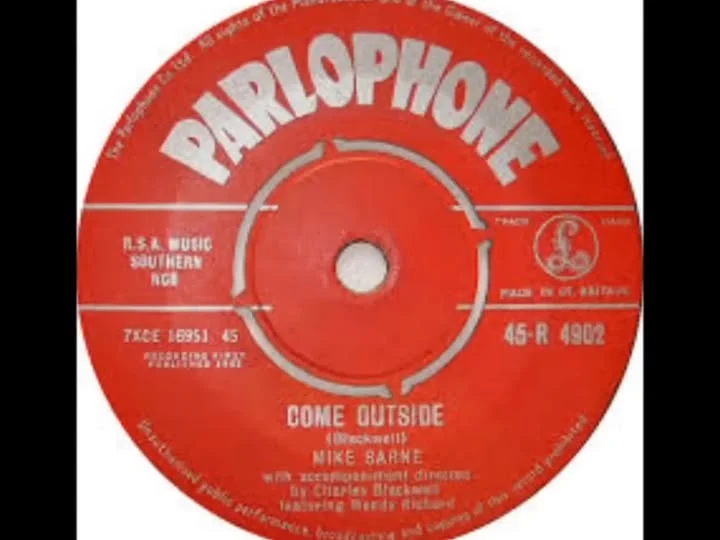
“Oh aright then, but only for a little while!” With those words, spoken in a pure, unvarnished Cockney accent, a 19‑year‑old Wendy Richard sealed the fate of a pop classic. The year was 1962, and the song was Mike Sarne’s “Come Outside,” a frantic, cinematic piece of rock‑and‑roll that topped the UK charts for a fortnight. The moment she relented, after a barrage of brilliant put‑downs, the tension broke and a generation found its soundtrack. It is a miniature play, a negotiation of curfews and romance, set to a tight guitar riff and a driving piano line.
I first encountered this track not on a crackling radio but through a dusty cassette compilation labelled “UK No. 1s: Pre‑Beatlemania.” After a string of earnest ballads, the bustling, panicked energy of “Come Outside” was jarring and immediate. It dropped the listener onto a sweat‑drenched dance floor, where the battle of wills between a desperate suitor and a thoroughly unimpressed girl unfolded in real time. Sarne, smooth and slightly strained, sings of a promise to her father to have her home by half past ten. Richard, with delightful defiance, shoots back: “What for?” “What’s the rush?” “Get lost!” And the killer line, “Shove it!”
The record was a strategic one‑off for Parlophone, not attached to any album. It dethroned Elvis in the UK and made Sarne a household name, at least for a brief moment. His pop career was sharp and fleeting, yielding a follow‑up “Will I What?” with Billie Davis, before he transitioned into a distinguished cinema career as a director and actor. Wendy Richard, of course, would later become a beloved figure in British television, but here she is raw, unpolished, and utterly captivating.
The genius of the arrangement belongs to producer and arranger Charles Blackwell, a pivotal figure in early 60s British pop. He built a taut, driving sound that is classic rock and roll distilled to its essence. A bright, compressed drum pushes the rhythm forward. A sharp, clean guitar riff locks into the tempo, echoing American rockabilly but with a distinctly British restraint. Beneath the melody, a piano plays a fast, octave‑skipping line that heightens the urgency. Listening with good headphones reveals Blackwell’s excellent engineering—dry, tight, professional. It captures a transitional moment before psychedelic experimentation took over.
The greatest achievement of “Come Outside” is its successful fusion of American‑imported rock‑and‑roll glamour with the gritty, domestic comedy of the London working‑class street.
The song’s ending is a narrative triumph. After Sarne mentions the “lovely moon out there,” Richard finally relents with that resigned, almost sweet agreement. The frantic music fades, and the two slip out the door. This small victory, set against a beat that demands jiving, is pure early 60s youth culture. It is a slice of life that feels foreign to the counter‑culture brewing across the Atlantic. There is no world peace or cosmic introspection here. Instead, there is only the delicate negotiation of curfews and public appearances, what British slang called “slap and tickle,” all before mum and dad got worried.
We remember the 1960s starting with Love Me Do, but for a fleeting moment, the UK charts celebrated this local, novelty charm. “Come Outside” is a remarkable cultural document, a mirror held up to the innocence of suburban dance halls. Pop music does not need to be profound to be valuable. Sometimes it just needs to be a perfect, funny, and utterly honest reflection of a moment in time. For those who enjoy this style, seek out Sarne’s follow‑up “Will I What?” with Billie Davis, or the earlier novelty hits of Lonnie Donegan, or the conversational British pop of The Scaffold. They all share that same irreverent, regional spirit that made “Come Outside” a lasting treasure.