
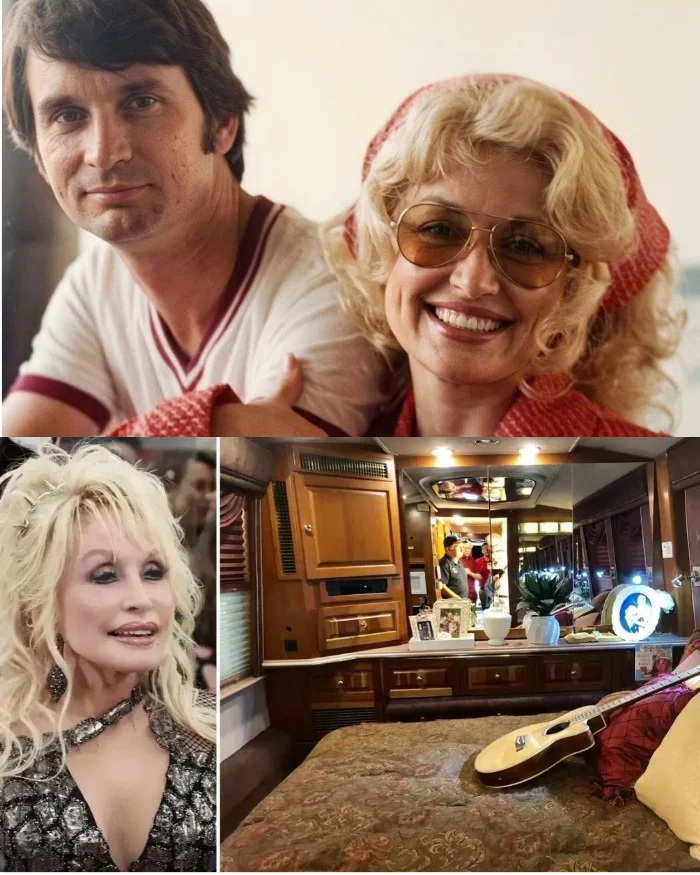
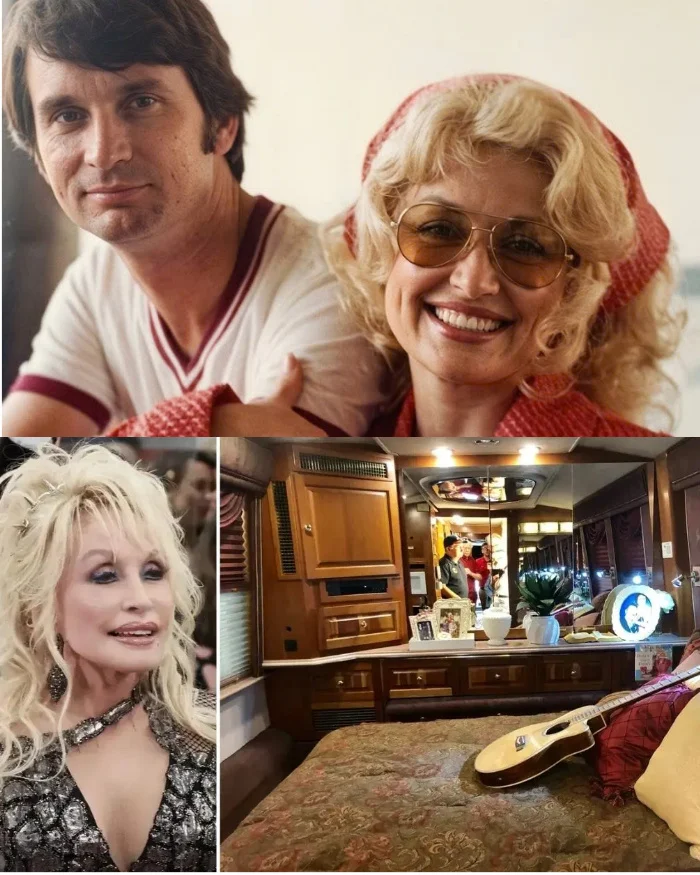
For a woman whose voice crossed every continent, the most precious view was never a stadium crowd. It was an ordinary road seen through a camper window, with Carl Dean beside her and no one asking Dolly Parton to be anything more than herself. Long after stadium tours and private jets defined her public life, she still found her deepest peace riding shotgun in a modest recreational vehicle.
Outside the gates of their Brentwood estate just south of Nashville, Carl kept an unassuming camper serviced and ready to go. Whenever recording sessions, Dollywood business meetings, and cross country tours became overwhelming, the couple slipped away without an entourage, security personnel, or personal assistants.
Those escapes began decades earlier, shortly after their quiet 1966 marriage in Ringgold, Georgia. The music business demanded constant travel during the early years of Dolly’s career, but Carl had no interest in following his wife into crowded industry banquet halls. The camper became their compromise, a self contained world where they could move at their own pace along rural back roads.
An ordinary window looking out on an ordinary road, with the only man who never asked her to be anything more than herself.
Carl always took the driver’s seat and steered through the scenic bypasses of Middle and East Tennessee, eastern Kentucky, and western North Carolina. Beside him, Dolly traded elaborate wigs and rhinestone costumes for a casual outfit, pulling her hair back beneath a simple scarf and sliding behind oversized sunglasses. To clerks and fellow drivers at highway intersections, she blended seamlessly into the scenery.
Their routines on the road were intentionally plain. Instead of reserving tables at white tablecloth restaurants, they pulled into fast food drive thrus and ordered tacos, burgers, or french fries through the window before parking under the trees at roadside rest stops. Carl handled the driving and maintenance, while Dolly often prepared simple Southern skillet meals on the small two burner stove when they set up camp for the evening.
State park campgrounds and rural recreation areas were their main destinations. Carl favored wooded campgrounds tucked near the foothills of the Great Smoky Mountains, places with basic public utility hookups where neighbors kept to themselves. At night they sat on folding lawn chairs outside the camper door or read by small overhead lamps inside, listening to crickets rather than backstage commotion.
Whenever her schedule allowed a longer break, they traveled deeper into the mountain gaps where Dolly had grown up. Returning to Sevier County by back roads let her visit family landmarks and mountain streams without drawing crowds or creating local spectacles. Carl knew every winding turn through the hollows and deliberately chose gravel routes and scenic state routes that avoided interstate traffic.
Age and health eventually slowed their longer journeys in recent years, but the camper remained a permanent fixture in their lives. After renewing their marriage vows on their Nashville property for their 50th wedding anniversary in May 2016, they celebrated not with a world cruise or an overseas resort, but by stocking the camper once again.
They drove through the rolling hills toward northwest Georgia, retracing the exact highway route they had taken as young lovers fifty years before. They stopped at the same quiet roadside spots, ate simple meals off paper plates, and took in the countryside side by side.