
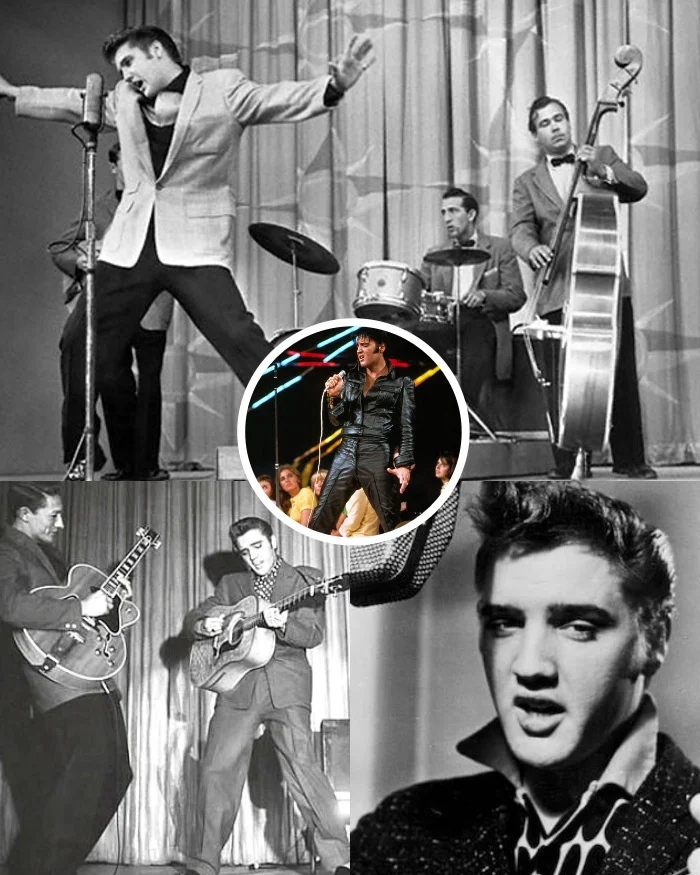
He attacked the microphone with frantic and unpolished energy and turned a Little Richard hit into a blueprint for rock and roll rebellion. On September 3 1956 inside Radio Recorders in Hollywood Elvis Presley was no longer just a rising star because he was a national shockwave completely focused on the groove.
Introduction And Short Summary Of The Song
Released in late 1956 on the second RCA album of Presley titled Elvis and also as a single in the United Kingdom Rip It Up is one of his most energetic rock and roll covers. Originally written by Robert Bumps Blackwell and John Marascalco the song was first recorded by Little Richard whose wild and unrestrained version had set a new standard for the genre. The take by Presley retained the frantic energy of the original while adding his own swagger and was backed by the sharp guitar of Scotty Moore and the slapping bass of Bill Black and the pounding drums of D.J. Fontana. His performance captured the essence of early rock and roll with reckless fun and youth rebellion and unstoppable momentum.
Origins Of The Song
Rip It Up was penned in 1956 by Blackwell and Marascalco who were a songwriting team that gave Little Richard many of his biggest hits including Good Golly Miss Molly and Ready Teddy. Little Richard recorded the original version of Rip It Up in May 1956 and it quickly became a hit and reached number 17 on the Billboard pop chart and number one on the rhythm and blues chart.
Presley recorded his version just months later on September 3 1956 at Radio Recorders studio in Hollywood. At that point Presley was already a national phenomenon and had broken into the mainstream with Heartbreak Hotel and Blue Suede Shoes and Hound Dog. Including Rip It Up on his second RCA album was both a tribute to one of his biggest rivals and a declaration that he could match the energy and fire of Little Richard himself.
Why Elvis Released Rip It Up
By 1956 Presley was firmly established as the face of rock and roll but RCA and Colonel Tom Parker wanted to maintain his momentum. Covering Rip It Up gave him a way to tap into the rising popularity of Little Richard while reinforcing his own reputation as a high octane rocker. Unlike his ballads which showcased tenderness and vulnerability Rip It Up emphasized his raw and playful energy. The lyrics about partying on Saturday night and dancing all week long spoke directly to teenagers who were the very audience driving his meteoric rise.
The song was not released as a single in the United States but appeared on the album Elvis in 1956 which topped the Billboard album chart. In the United Kingdom it was issued as a single in early 1957 and became a hit and reached number one on the singles chart. This success further cemented his global appeal and showed that his brand of rock and roll resonated just as strongly overseas.
The Message Conveyed In Rip It Up
The lyrics are simple but perfectly suited to the spirit of rock and roll. They celebrate youthful abandon and late night parties and carefree dancing.
Well, it’s Saturday night and I just got paid, A fool about my money, don’t try to save.
The message is about living in the moment and spending money and having fun and throwing caution to the wind. It reflected the rebellious attitude of 1950s teenagers who were rejecting the conservative values of the generation of their parents. The vocal performance of Presley enhances this sense of reckless joy. He sings with grit and humor and abandon and leans into the syncopated rhythms with a playful swagger. His interpretation made the song feel like a spontaneous outburst rather than a carefully crafted recording.
The Recording And Musical Characteristics
Musically his version of Rip It Up is a driving rock and roll number with strong rhythm and blues roots. The upright bass of Bill Black provides the foundation and slaps out a relentless rhythm while the drumming of D.J. Fontana propels the track with explosive backbeats. The guitar playing of Scotty Moore is central and delivers sharp riffs and quick solos that amplify the excitement. The piano played by Shorty Long adds bright boogie woogie flourishes that fill out the arrangement.
His vocals are raw and dynamic. He bends notes and growls and shouts in a way that mirrors the intensity of Little Richard but with his own distinct phrasing. Unlike the smoother delivery of his ballads this performance emphasized his ability to let loose and embody the wild spirit of rock and roll. The recording captures the feel of a live performance with the musicians feeding off the energy of each other. It feels less polished and more spontaneous and that was key to its impact.
He pushed the tempo and let his voice break and slide over the beat and proved he was not a manufactured pop idol but a genuine force of nature.
Cultural And Commercial Impact
Although it was not released as a single in the United States Rip It Up became a fan favorite and a highlight of the second RCA album of Presley. In the United Kingdom its release as a single in early 1957 propelled it to number one on the charts and proved his dominance outside the United States. Culturally the song reinforced his image as the embodiment of teenage rebellion and excitement. Songs like Rip It Up demonstrated why adults often viewed him as dangerous while teenagers adored him. The lyrics about spending money recklessly and partying until dawn perfectly captured the generational divide of the 1950s.
The track also illustrated his relationship with his contemporaries. Covering the song of Little Richard showed both respect and rivalry as Presley sought to prove that he could bring just as much fire to the material. Fans and critics often debated whose version was superior but his interpretation ensured that the song reached broader audiences.
Legacy Of Rip It Up
Today Rip It Up is remembered as one of the essential early rock and roll recordings of Elvis Presley. While not as famous as Hound Dog or Jailhouse Rock it remains a fan favorite for its unrestrained energy and its role in showcasing his ability to match the intensity of his peers. The song is often included in collections of his early work and continues to be celebrated for its raw energy. Live performances of Rip It Up further demonstrated his charisma as he often used the song to show off his stage moves and playful interaction with audiences.
More broadly the track highlights the cross pollination of early rock and roll. Presley drew from African American rhythm and blues artists like Little Richard and Chuck Berry and Arthur Crudup and transformed their songs into mainstream hits. His version of Rip It Up ensured the song would reach millions of new listeners and contributed to the rapid growth of the genre. Nearly seventy years later Rip It Up still sounds fresh and exhilarating. It captures Elvis Presley at the height of his early powers as reckless and joyful and unstoppable and offers a timeless reminder of why he became the King of Rock and Roll.