
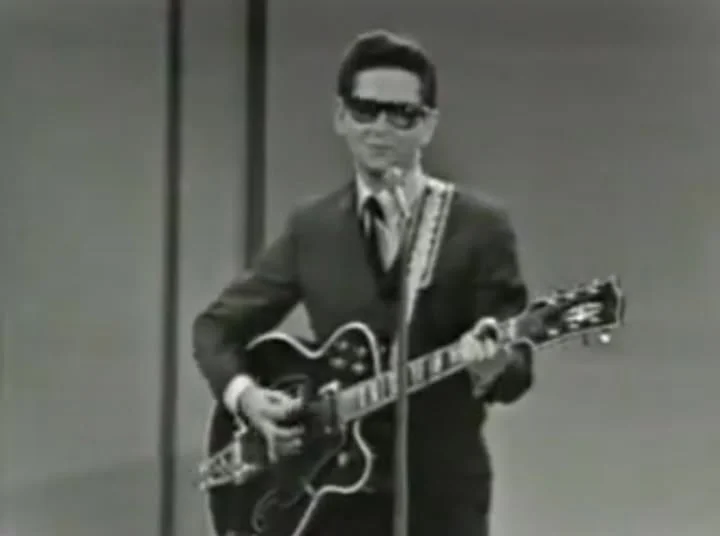
“A pretty woman!”
That spontaneous exclamation, born from a simple moment of adoration, sparked a song that would define an era and outlive its creator. Few tracks in the history of popular music have achieved the near-mythic status of Roy Orbison’s “Oh, Pretty Woman.” Released in 1964, the track burst onto the scene with a guitar riff so distinctive it has become a cultural shorthand for joy, romance, and the electric thrill of a chance encounter. The song didn’t just capture the spirit of the 1960s; it transcended it, weaving itself into the very fabric of pop culture.
What began as a quiet comment between Orbison and his co-writer Bill Dees about the artist’s wife, Claudette, became a masterclass in songwriting. The duo finished the song in a remarkably short time, channeling that fleeting moment of awe into a global phenomenon. It’s a story of how raw, human emotion can be translated into three minutes of perfect, timeless art.
The Unforgettable Riff That Started It All
The sonic signature of “Oh, Pretty Woman” is its opening guitar riff—a simple, driving sequence of notes that immediately commands attention. This wasn’t just a hook; it was a declaration. Guitarists from every generation have studied its power and simplicity, and it remains one of the most recognizable instrumental moments in rock history. This riff was the key that unlocked the charts, propelling the single to the number one spot on the Billboard Hot 100 for three weeks. It sold millions of copies, turning Orbison from a respected balladeer into a rock and roll icon.
The riff is nearly impossible to forget. It grabs you by the ears and refuses to let go, a perfect marriage of melody and momentum.
Around this unforgettable sound, Orbison and Dees crafted lyrics that spoke to a universal human longing. The song’s narrative of a man captivated by a stranger on the street is simple, direct, and deeply relatable. It explores themes of attraction, the hopefulness of a fleeting moment, and the vulnerable plea that follows. This raw, emotional honesty ensures the song feels as fresh and relevant today as it did decades ago, surviving shifts in musical taste and cultural trends.
A Voice Made for the Ages
What truly lifted “Oh, Pretty Woman” from a catchy pop tune to a work of art was Orbison’s unmistakable voice. Unlike the frantic energy of much of the rock music of its time, Orbison’s vocal was a dramatic, operatic force. He could soar from a whisper to a powerful cry, imbuing the song with a strange, beautiful urgency. His wide vocal range and emotional control gave the track a depth and intensity that was rare for the era. It’s this voice that makes the song’s simple plea feel like a life-or-death drama.
The film Pretty Woman, starring Julia Roberts and Richard Gere, introduced a new generation to the song in 1990. This second life cemented its status as a cultural artifact, leading to a surge in radio play, countless covers, and a new wave of appreciation for Orbison’s genius. Since then, the song has appeared in everything from Hollywood blockbusters to commercials, a testament to its versatility and enduring appeal.
A Legacy That Keeps Paying Dividends
Even today, the royalties from “Oh, Pretty Woman” are a significant source of income, a stark indicator of its sustained relevance in the music industry. As streaming platforms grew, so did its plays, creating a new revenue stream. The song has been reimagined by artists as diverse as Van Halen and Al Green, each cover proving the strength of its core composition. These modern interpretations, and its use in media, ensure that new audiences discover the song every year.
Whether it’s on a classic rock playlist, in a movie soundtrack, or covered by a modern artist, “Oh, Pretty Woman” remains as relevant and loved today as it was upon its release.
Ultimately, “Oh, Pretty Woman” is the cornerstone of Roy Orbison’s legacy. It captures the very essence of his artistry—the perfect blend of rock and romance, of power and vulnerability. It is a song that not only defined a moment but continues to define an artist. As Orbison himself believed, music is meant to connect, to reach people on a deep emotional level. With this single, he achieved that goal with unforgettable grace. It is a track that will likely continue to inspire, entertain, and resonate for generations yet to come.
Watch the video and let the iconic riff transport you back to a moment of pure, joyful possibility.
Video
Lyrics
“Oh, Pretty Woman”
🎵 Let’s sing along with the lyrics! 🎤
Pretty woman, walking down the street
Pretty woman, the kind I like to meet
Pretty woman
I don’t believe you, you’re not the truth
No one could look as good as you
Mercy
Pretty woman, won’t you pardon me?
Pretty woman, I couldn’t help but see
Pretty woman
That you look lovely as can be
Are you lonely just like me?
Wow
Pretty woman, stop a while
Pretty woman, talk a while
Pretty woman, give your smile to me
Pretty woman, yeah, yeah, yeah
Pretty woman, look my way
Pretty woman, say you’ll stay with me
‘Cause I need you, I’ll treat you right
Come with me baby, be mine tonight
Pretty woman, don’t walk on by
Pretty woman, don’t make me cry
Pretty woman, don’t walk away, hey…
OK
If that’s the way it must be, OK
I guess I’ll go on home, it’s late
There’ll be tomorrow night, but wait
What do I see?
Is she walking back to me?
Yeah, she’s walking back to me
Oh, oh, pretty woman