
Beside a quiet stone in Nashville two names rest together at last and the silence between them tells a love story that outlived fame, fortune and even death itself.
When Marizona Baldwin Robbins died on July 10, 2001 at the age of seventy, her children laid her directly beside her husband Marty Robbins at Woodlawn Memorial Park. It was the final chapter of a promise made by two young people in the Arizona desert more than half a century earlier, a promise that had survived truck routes, tour buses, race tracks and three battles for his heart.
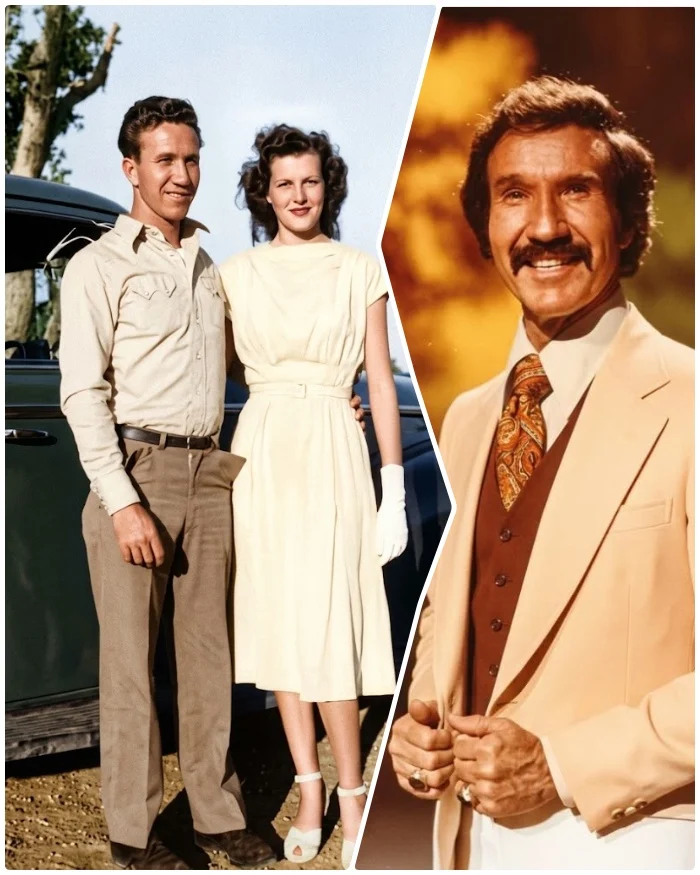
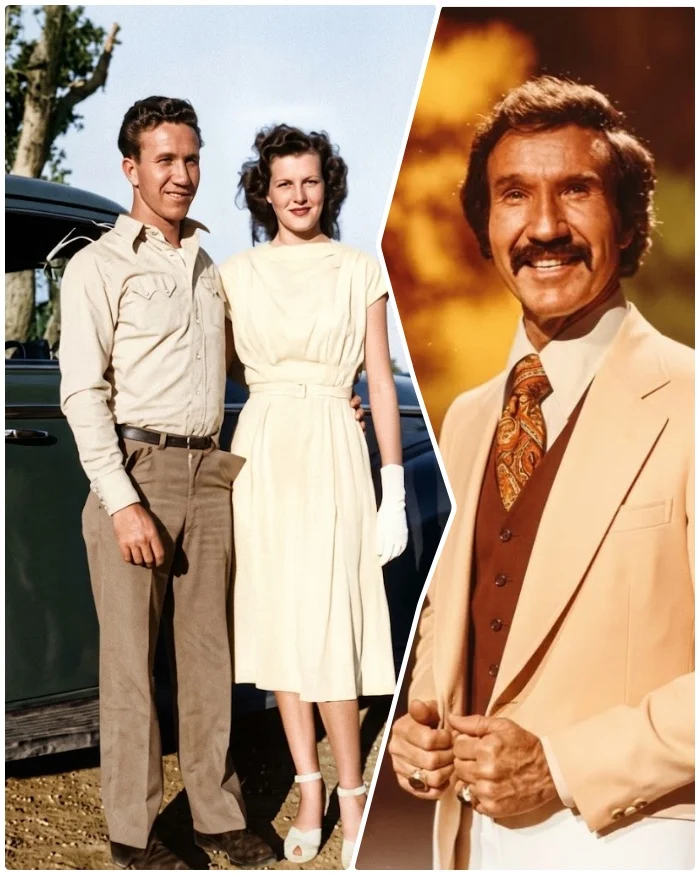
Long before Nashville knew his name, Martin David Robinson was an ex-Navy frogman hauling gravel and delivering blocks of ice around Phoenix, Arizona while playing local clubs after dark. He met fifteen-year-old Marizona Baldwin at a soda fountain and on September 27, 1948 they married in Arizona, long before the spotlight found him.
Their son Ronald Carson, known to everyone as Ronny, arrived in July 1949. Ten years later their daughter Janet was born after the family moved to Tennessee following Robbins’s induction into the Grand Ole Opry in 1953.
Even as Robbins soared with A White Sport Coat in 1957 and El Paso in 1959, he placed his wife at the very center of his work by founding Marizona Music to publish his songs. While he spent up to two hundred days a year on the road and raced in thirty-five NASCAR Grand National events at Daytona and Talladega, Marizona stayed away from the tour bus and kept their Brentwood, Tennessee home steady and whole.
In August 1969, when Robbins was forty-three, a first major heart attack changed everything. As he recovered, he poured twenty-one years of gratitude into a song written only for her. He thought about the household expenses she managed, the long absences she endured and the home she held together while he chased the next town and the next race.
At first Robbins thought of giving the ballad to pop singer Frankie Laine, who had already turned another Robbins song, You Gave Me a Mountain, into a major crossover hit earlier in 1969. But when Marizona heard My Woman, My Woman, My Wife, she asked him to keep it and sing it himself.
Released in January 1970, just days before Robbins entered St. Thomas Hospital in Nashville as one of the earliest patients in the United States to receive triple-bypass heart surgery, the single rose to number one on the Billboard country chart and reached the pop Top 50. In a 1978 interview Robbins said the words were simply what he wanted to say to his wife.
And my wife is everything I said in that song. It’s a true song
The tribute earned Robbins the 1971 Grammy Award for Best Country Song, a public honor for a private devotion that had never sought applause.
On December 8, 1982, just seven weeks after his induction into the Country Music Hall of Fame, Robbins died at fifty-seven, six days after quadruple coronary bypass surgery in Nashville following a third heart attack. Marizona never remarried. Instead she stepped away from public life and, together with Ronny and Janet, took charge of Marty Robbins Enterprises and his publishing catalogs, including Marizona Music and Mariposa Music.
For several years the family ran the Marty Robbins Museum in Nashville and Hendersonville, sharing his gold and platinum records, his custom stage suits, his instruments and his stock cars with fans who traveled to Tennessee. Later, family artifacts and memorabilia helped anchor exhibits in his hometown of Glendale, Arizona and in the Country Music Hall of Fame.
Ronny kept his father’s music alive on stage while helping oversee the estate in Tennessee. He had debuted beside his father on the Grand Ole Opry at nineteen and recorded as Ronny Robbins in the 1970s, and for years he performed his father’s catalog at tribute concerts and festival dates alongside surviving members of his father’s band.
Janet chose a different creative road while still helping preserve her father’s story. After moving to New York and later California, she became an independent recording artist, composer and educator, releasing world-music and avant-garde albums in the late 1990s and 2000s and sharing family memories with biographical archives.
For nearly two decades after her husband’s death, Marizona stayed in Nashville close to her children and grandchildren, guarding the privacy of the home she had kept since the 1950s. When she was laid beside him beneath a shared monument, it bore the name of the eighteen-year-old bride from Phoenix who had once met a young truck driver at a soda fountain and never let go.