
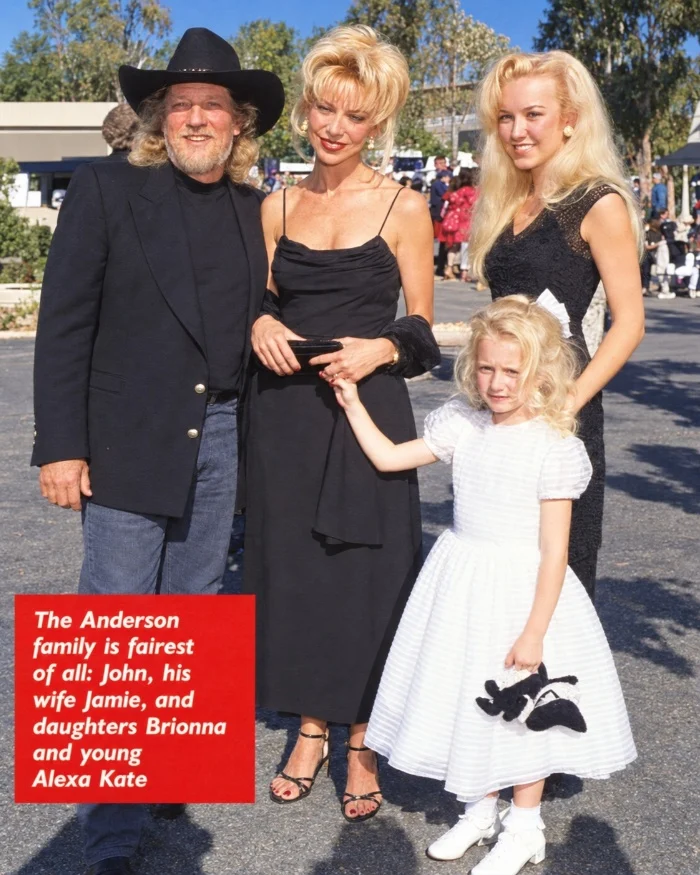
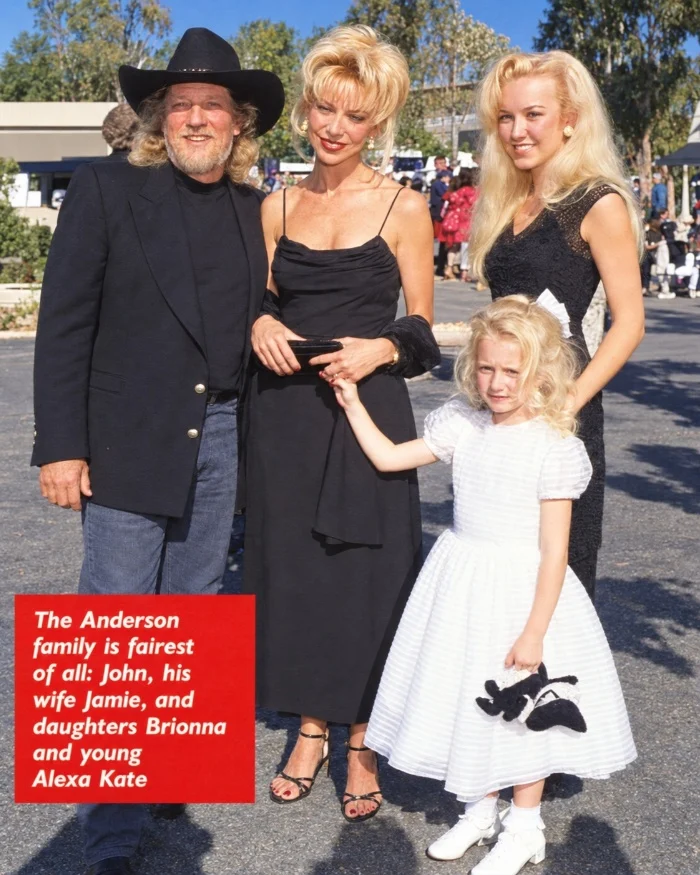
The bus doors sighed open in the Tennessee night and the roar of another crowd was suddenly far behind him. John Anderson stepped down onto the quiet ground of DeKalb County, traded the glare of stage lights for the soft dark of his own farm, and walked toward a house where he was not a star at all. He was simply a husband coming home and a father coming back to the small moments he had missed.
That homecoming had become the heart of his life by late 1983. Just as country radio was turning the Apopka, Florida native into a household name, he married Jamie Atkinson. The timing mattered because fame was arriving fast and it could easily have pulled him away from everything steady. Instead, the marriage gave him an anchor that would hold through every change in sound, label, and chart fortune that followed.
The rise itself had been dazzling. His breakthrough hit “Swingin’” moved more than a million copies, earned Gold certification, and helped carry him to the Country Music Association’s Horizon Award. It followed earlier chart-toppers such as “Wild and Blue” and confirmed that a singer once known only in small clubs had found a national audience.
Anderson had not arrived overnight. In his early Nashville years he worked construction jobs, including work helping to put the roof on the New Capitol Building, while singing at night for modest crowds. That hard beginning taught him to tell the difference between what lasts and what fades, a lesson that stayed with him when the tour buses began rolling from state fairs to crowded honky-tonks and municipal auditoriums for months at a time.
When he and Jamie welcomed their daughters, Brionna-Cheri and later Alexa Kate, known in the family as Lexi, the miles between the stage and the front door felt heavier. Rather than moving into the middle of Nashville’s social whirl, the couple chose a farm in Smithville, Tennessee, about an hour east of Nashville and near Center Hill Lake. There the rhythm came from the land, not from the recording business.
While Anderson endured grueling cross-country routes, Jamie kept the Smithville household steady and gave the girls a normal small-town childhood away from industry noise. Together the couple guarded a clear line between his public career and their private life. He carved out blocks of time between tour runs to fish on nearby waters, care for the Tennessee acreage, and sometimes take Jamie and the girls along on the bus during summer breaks.
Inside that Smithville house, the stage persona fell away. He caught up on school days, shared family dinners, walked the property, and settled into the quiet routines that highway motels and bright lights could never replace. Those returns were not pauses from his real life. They were his real life.
Home was never just the place he returned to between tours. Home was the reason the journey had meaning at all.
That foundation proved vital when his commercial momentum cooled in the late 1980s. Instead of losing himself in the downturn, Anderson stayed rooted in family and rural Tennessee. The steadiness carried him into a powerful early 1990s resurgence powered by songs like “Straight Tequila Night,” “Seminole Wind,” and “Money in the Bank.” Whether a record topped the charts or struggled for airplay, the life waiting in Smithville did not change.
Decades later the same sanctuary held him again. After serious health challenges in the late 2010s forced him to step back from heavy touring, Jamie and his daughters remained at his side, just as they had through every earlier chapter. That support carried through to his 2024 induction into the Country Music Hall of Fame, an honor that crowned a career without ever replacing the family at its center.
For all the awards and platinum plaques that followed 1983, Anderson never mistook applause for purpose. His true measure was not found under stage lights but in the quiet home he and Jamie built together in Smithville, in a marriage that began as his star was rising and endured long after the crowds had gone home.