
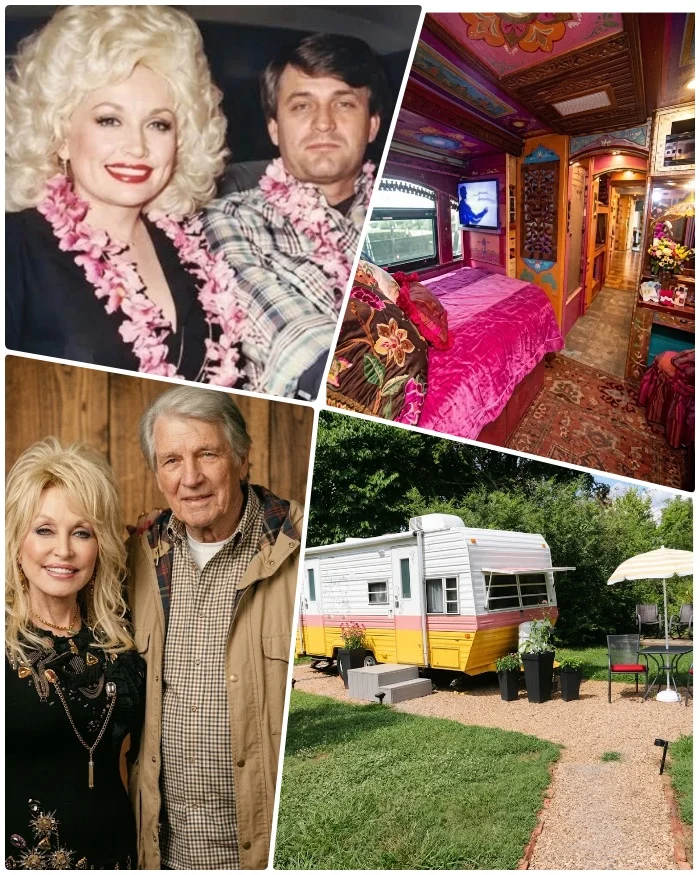
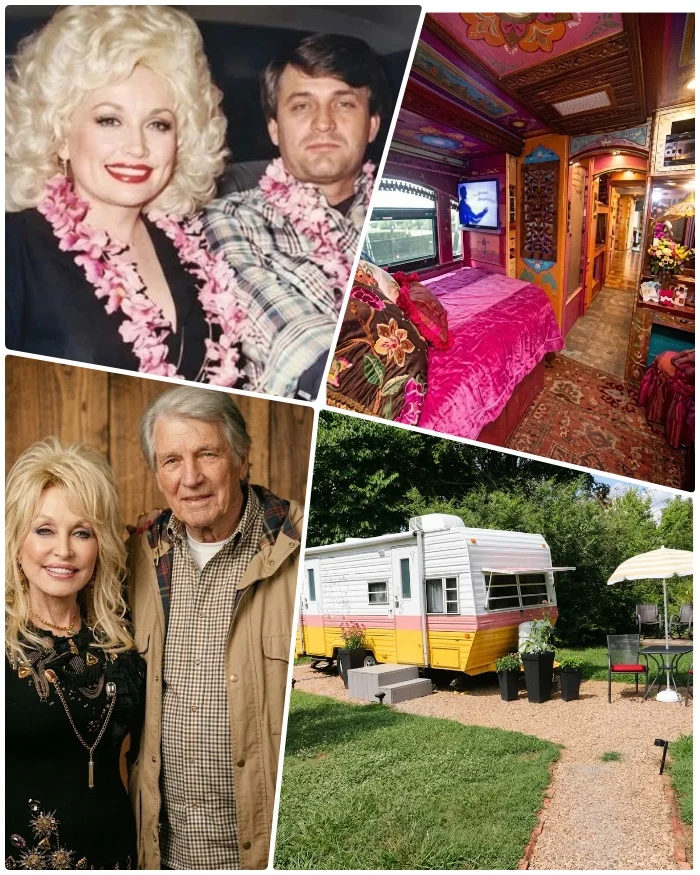
Long after the arena lights dimmed and the tour buses rolled away, the happiest version of Dolly Parton was not the glittering star on a stage. She was a woman in sneakers, with no wig and no makeup, sitting in the passenger seat of a small camper while her husband Carl Dean drove her down a quiet Tennessee backroad.
She could command crowds across the globe, yet the safest place she ever found was right beside the man she loved, inside a modest cabin on wheels that never needed to leave home behind. That tiny vehicle became their moving shelter, a private world where fame could not dismantle an ordinary life.
The story began far from any spotlight. When eighteen-year-old Dolly arrived in Nashville in 1964, she met Carl on the sidewalk outside the Wishy Washy Laundromat on her very first day in town. He was twenty-one and running an asphalt paving business, a man entirely detached from the machinery of the country music business.
Two years later, record executives urged Dolly to stay single because marriage might hinder her career. She and Carl quietly chose a different path. On Memorial Day in 1966, they drove across the state line to Ringgold, Georgia, a small town chosen because Georgia had no waiting period for marriage licenses and Tennessee newspapers were less likely to track them down.
Dolly insisted on a church ceremony rather than a courthouse clerk. At the First Baptist Church in Ringgold, with only her mother, the pastor, and the pastor’s wife as witnesses, they exchanged their vows and set the tone for the next six decades.
Carl attended one early music industry banquet with Dolly, watched the spectacle unfold, and decided on the car ride home that he would never attend another. Dolly never asked him to step into her spotlight or forced public attention upon him. Instead, she built her routine around stepping into his world.
He supported her relentless ambition while keeping his own life rooted on their twenty-three-acre farm in Brentwood, Tennessee. She respected his distance from public attention and protected it fiercely, even as Hollywood galas and industry banquets demanded her presence.
Whenever touring schedules cleared, their retreat took physical form in that modest camper van. Dolly swapped her custom stage wardrobe, her rhinestones, and her high wigs for simple clothes and sneakers. Carl took the steering wheel, Dolly rode beside him, and together they avoided interstate highways in favor of winding backroads across Middle Tennessee and rural Kentucky.
Meals were never reservations at luxury restaurants. They pulled through roadside fast-food drive-thrus for tacos or burgers, or they unpacked homemade biscuits and fried chicken Dolly had fried in their own kitchen. Far from luxury buses and personal assistants, they packed simple Southern lunches and grabbed food from roadside windows, with nobody waiting with a camera around the next empty country turn.
Because Dolly wore no stage makeup or wigs in the camper, tourists and locals never looked twice. Cashiers at drive-thru windows handed bags through the glass without recognizing one of the most famous women in American music history.
The vehicle served as their sanctuary. On pull-offs near quiet creek beds and state parks, they spent hours talking, reading, or watching the countryside change with the seasons. Inside that compact cabin, the global country music icon set aside the rhinestones and wigs to simply be Carl’s wife.
Her greatest comfort was knowing Carl had loved her long before the world ever learned her name.
In a world that constantly commodified her identity, that small cabin was the one place where Dolly was simply Carl’s wife. Carl never cared about album sales, television ratings, or stadium attendance. He valued the companion who sat next to him on long dirt roads.
As age and health challenges eventually made travel harder for Carl and slowed their rural trips, those decades of daytime escapes became the foundation of their nearly sixty-year marriage. The memories forged across those years remained intact, carried in quiet conversations and shared meals on pull-offs surrounded by Tennessee woods.
He gave her the freedom to conquer the world, and she made sure he always had a quiet home to steer toward.