
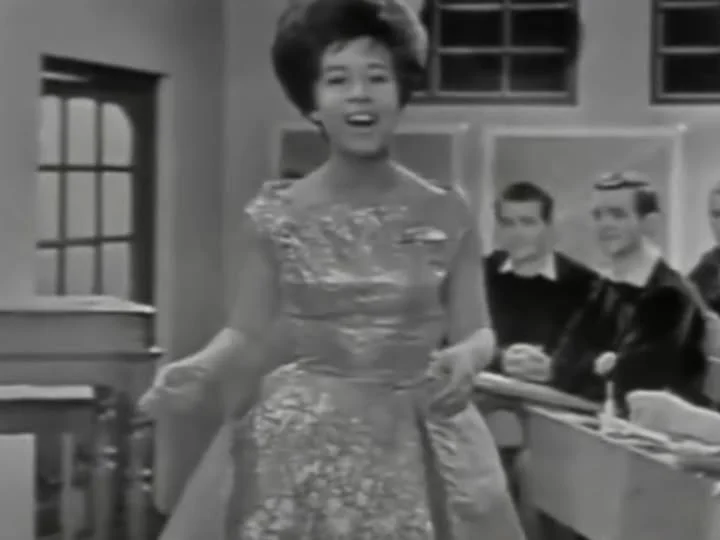
There is a glorious recklessness to Helen Shapiro’s 1961 single Walking Back To Happiness. It arrives at the very end of an era. The amplified future of the beat groups was stirring in the basement clubs of England. Yet here was a single that operated on an entirely different plane. It was a defiant stand for orchestral grandeur. And it was a massive hit.
Recorded at the legendary Abbey Road studios and produced by the prolific Norrie Paramor, the track sounds like a victory lap for a style of British pop that was already living on borrowed time. Helen Shapiro was barely fourteen years old. Her voice on this track is a deep resonant instrument, earning her the childhood nickname Foghorn. It is almost startlingly mature. This contrast sits at the heart of the song’s power. She sings the opening line with breathless conviction. She isn’t pleading. She is announcing a triumph.
Walking Back To Happiness was written by John Schroeder and Mike Hawker. It tells a direct story of leaving a bad relationship.
Well, here I am, and I’m walking back to happiness.
It is not a story of revenge. It is a story of relief. The act of walking back to happiness implies agency. It is a physical journey away from pain. This theme of self respecting departure was subtly powerful for a 1961 pop single.
Producer Norrie Paramor built a cathedral of sound around his young star. The brass section does not accompany Shapiro. It announces her with bright fanfares. The piano provides quick rhythmic punches. The drums keep a buoyant shuffle. The backing vocals are a highly debated element. A cooing high pitched chorus sings the rhythm of the title. Some call it a concession to a teen sound. Others see it as the perfect foil for Shapiro’s grounded power. The friction creates a unique sonic signature. It is a sound defined by its own glorious friction.
This single became Shapiro’s second consecutive UK Number 1. It shifted over a million copies. It sealed her status as Britain’s biggest female star. Yet the clock was ticking on this specific sound. The orchestral pop of the Norrie Paramor stable was about to be radically challenged. Just two years later, the band that opened for her on tour would redefine pop music entirely. The Beatles were the future. This track stands as a magnificent full stop at the end of a paragraph of British music history.
Listening to the track today, the production’s dynamic range is striking. The punch of the drums has room to breathe. The sweeping strings add a moment of heightened drama. It rewards a close listen. The song has outlived its era because it taps into a universal feeling. It captures the pure joy of feeling better after a storm. It is a sonic reset button. For anyone needing a blast of triumphant defiance, this is the perfect tonic. It is an essential chapter in the story of British pop.
For those who share this taste, the path through early 60s orchestral and girl group pop is rich. Dusty Springfield shared the dramatic sweep. Brenda Lee offered a similar powerhouse teen vocal. The Shirelles used a gentle orchestral backing to enhance a mature theme. Cliff Richard’s early Norrie Paramor productions provide further context. Little Eva captures the same dancefloor joy.