
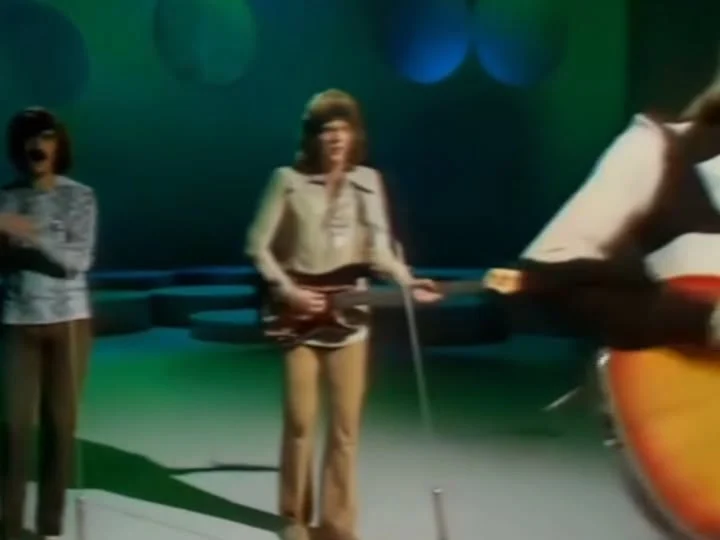
The first strum of an acoustic guitar The Moody Blues unleashed in 1970 still resonates like a question mark hanging in the air. It is urgent, almost frantic. Then it softens into a sigh. That is the genius of “Question”—a song that refuses to sit still, much like the restless era that birthed it. Over fifty years later, this track from the album A Question of Balance remains a masterclass in emotional architecture, a piece that manages to be both a thunderclap and a whispered prayer.
The late 1960s and early 1970s were a time of profound societal tremors—the Vietnam War, civil unrest, a collective search for truth. “Question” became an anthem for that uncertainty. Lines like
Why do we never get an answer when we’re knocking at the door?
captured a generation’s frustration. But the song does not dwell in despair. It moves, constantly shifting between intensity and introspection, mirroring the very human cycle of doubt and hope.
The Moody Blues had already shattered expectations with albums like Days of Future Passed and On the Threshold of a Dream. Those records were lush, orchestral, almost cinematic in their production. But for A Question of Balance, the band pivoted. They wanted something they could replicate on stage. So they stripped back the studio wizardry and focused on a more organic, immediate sound. “Question” became the perfect opening statement—raw, dynamic, and deeply human.
The song’s sonic journey is as layered as its lyrics. It begins with a burst of acoustic guitar, a bright percussive rhythm that grabs you by the collar. Justin Hayward’s commanding strumming drives the pace, while drums and sweeping strings add a sense of urgency. Then, without warning, the tempo drops. A mellotron emerges, casting a dreamlike glow. Gentle piano chords and subdued percussion invite the listener into a quieter space. It feels almost like two songs in one, yet the transition is seamless. The electric guitar makes subtle appearances, never overpowering the acoustic core. Each instrument serves the narrative, building a soundscape that is both grounded and ethereal.
Lyrically, “Question” explores existential themes of love, meaning, and the chaos of the world. The fast-paced verses reflect external turmoil, while the slower chorus offers a breath—a moment of introspection. Justin Hayward’s vocal delivery is earnest and impassioned, lending authenticity to the philosophical musings. The duality of the song structure mirrors the tension between outer noise and inner peace. It is not just a song; it is a journey through the questions that define our lives.
The legacy of “Question” endures because it transcends its era. Its unique structure—two distinct sections fused into a cohesive whole—continues to inspire musicians and captivate new listeners. As the opening track of A Question of Balance, it sets the tone for the entire album, inviting reflection while enveloping the audience in a soundscape that feels both intimate and vast. The careful balance of guitar, piano, and mellotron exemplifies the band’s ability to create music that is complex yet accessible.
For those drawn to the blend of acoustic and orchestral elements, “Question” opens a door to a rich world of music. Similar tracks from The Moody Blues like “Nights in White Satin” and “Tuesday Afternoon” offer deeper exploration of the same emotional territory. Fans of folk-rock will find kinship with Crosby, Stills & Nash’s “Suite: Judy Blue Eyes”, while the progressive ambition of Jethro Tull’s “Thick as a Brick” echoes the same spirit of artistic risk.
More than half a century after its release, “Question” remains a cornerstone of the band’s discography. It is a testament to the power of music to ask the questions that words alone cannot answer. Whether you hear it for the first time or the hundredth, the song invites you to pause, reflect, and keep searching.