
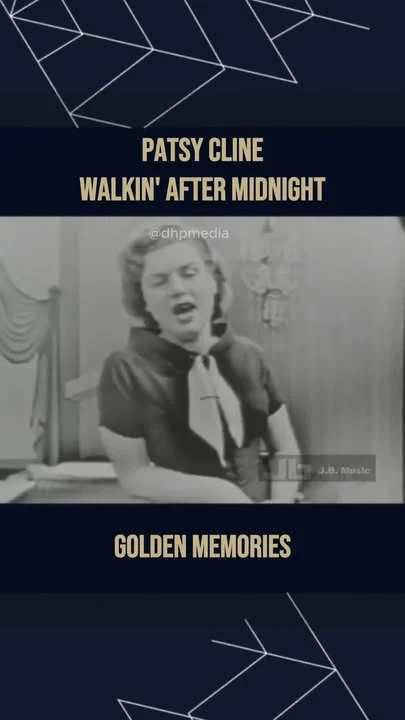
There is a moment in every love story where longing turns into action. For Patsy Cline, that moment arrived in the form of a song that would forever define her legacy. Walkin’ After Midnight isn’t just a tune about heartbreak; it’s a testament to the quiet, defiant strength of a woman who refuses to surrender to despair. The image is unmistakable: a lone figure drifting under a moonlit sky, not merely waiting for love but actively searching for it. This combination of vulnerability and resolve has made the song an eternal companion for anyone who has ever felt the sting of loneliness in the stillness of the night.
The Unlikely Birth of a Classic
The story behind Walkin’ After Midnight is as surprising as its impact. When songwriters Alan Block and Donn Hecht first brought the song to Patsy Cline’s label, 4 Star Records, the singer herself was reluctant. At the time, she was known for honky-tonk tunes, and this new offering was a blend of country, pop, blues, and even jazz—a fusion that felt risky for the late 1950s. Yet, Cline’s hesitation masked her gift. She took the unconventional melody and infused it with a smoky, soulful depth that only she could deliver. Her voice, rich and warm, transformed a modest composition into something deeply personal, bridging genres and setting the stage for a career that would shatter expectations.
“The song captures the delicate tension between hopelessness and resilience.”
Patsy’s ability to make any song her own was already present in that 1956 recording. She didn’t just sing the lyrics; she lived them. The result was a unique sound that hinted at her potential to cross over from country into pop, reaching audiences far beyond the traditional fanbase.
The Poetry of Loneliness
At its heart, Walkin’ After Midnight explores the journey of a woman wandering through empty streets, consumed by thoughts of a love she cannot have. The lyrics are poetic yet plain: “I go out walkin’ after midnight, out in the moonlight, just like we used to do.” It’s a visual that feels both sad and liberating. The narrator is not passive. She is taking control of her pain, facing it head-on as she roams beneath the stars. This narrative of action over waiting was empowering for its time, offering a fresh perspective on female heartbreak in country music.
For listeners, the song evokes a universal ache. It conjures memories of late-night reflections, the bittersweet hope that someone else is out there, somewhere, searching too. Cline’s delivery turns this longing into a kind of anthem—a reminder that even in our loneliest hours, we carry a spark of resilience.
A Voice That Changed Everything
What made Walkin’ After Midnight iconic was not just its story but the instrument through which it was told. Patsy Cline’s voice was a revelation. Described as full of emotional depth, it conveyed pain without bitterness and love without sentimentality. Her vocal control allowed her to navigate the song’s subtleties, capturing attention with each perfectly placed note. She drew from jazz, blues, and pop, creating a sound that was distinct and unforgettable.
Her performance on the Arthur Godfrey’s Talent Scouts television show in 1957 was a turning point. The audience was captivated, and demand for the song exploded. It climbed to No. 12 on the Billboard Hot 100 and No. 2 on the country charts—a rare crossover success for a female country artist at the time. This moment not only launched Cline but also paved the way for future hits like Crazy and I Fall to Pieces, cementing her role as a pioneer.
An Enduring Legacy
Today, Walkin’ After Midnight remains a beloved classic, covered by artists from Reba McEntire to Kelly Clarkson. Yet, Cline’s original version holds a unique power. It stands as a testament to her timeless artistry and her influence on generations of female musicians. She proved that a woman could succeed on her own terms, crossing musical boundaries and gaining widespread acclaim. Her success shattered the notion that country music was confined to rural audiences, showing that it could speak to everyone.
In a broader sense, this song represents more than lost love. It embodies the resilience and quiet strength that define Patsy Cline’s legacy. It is a story of a woman refusing to give up, wandering through the night with purpose and hope. Even now, listening to her voice, we feel that determination—a reminder that, despite life’s hardships, we can find beauty and strength in the journey.
Why We Keep Coming Back
Walkin’ After Midnight endures because it resonates on a deeply human level. Patsy Cline captured a feeling familiar to us all: that late-night restlessness, the ache of longing, the quiet hope of connection. Through her powerful voice, she transformed a simple tale of love and loss into an unforgettable anthem. In a world of fleeting trends, this song remains timeless. It speaks to universal themes of love, resilience, and hope, reminding us that even in our loneliest moments, we are not truly alone. Patsy Cline’s legacy lives on, both in this song and in the countless artists she inspired, proving that sometimes, the quiet beauty of walking after midnight is all we need to feel understood.
I go out walkin’ after midnight
Out in the moonlight, just like we used to do
I’m always walkin’ after midnight
Searchin’ for you