
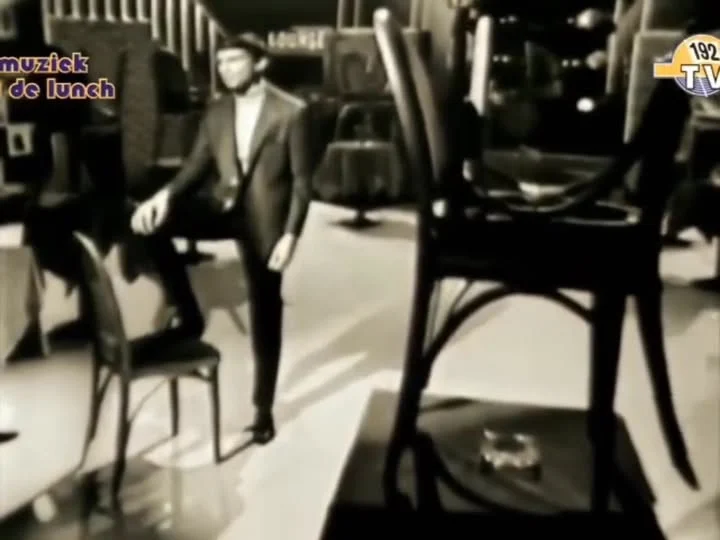
The moment arrived on a late night drive, years after the needle had first dropped on this strange and beautiful panic attack of a song. The freeway stretched ahead in anonymous gray ribbons, but through the car speakers the world transformed into a black and white melodrama, every headlight a spotlight and every exit ramp a looming fate. That is the power embedded deep inside Gene Pitney’s extraordinary single, a record that turns ordinary surroundings into a scene of breathtaking emotional collapse.
The story begins in early 1965, when Pitney released this gem on the Musicor label. American fans found it on an album with the same title, while across the Atlantic the LP was known as Looking Thru the Eyes of Love. At the time Pitney stood at a fascinating crossroads. The British Invasion had crashed over the charts with guitars and youthful swagger, but this singer still occupied a world of orchestral grandeur and trembling vulnerability. That distinctive voice had already delivered landmarks like Town Without Pity and Twenty-Four Hours From Tulsa, songs that made him the most emotionally exposed narrator in pop music. Yet this particular single deserves recognition as the pivot point, the moment where one era of elegant heartbreak quietly absorbed the restless energy of the next.
The people behind the record were just as remarkable as the voice in front of them. Aaron Schroeder and Wally Gold produced the session, both deeply rooted in the New York pop establishment, and they brought a team that knew how to dress teenage angst in tuxedoed arrangements. The songwriting credits belong to Bob Brass, Irwin Levine, and a young, not yet famous Al Kooper. That name should stop every record collector in their tracks. The same Al Kooper who would later play organ for Bob Dylan and help form Blood, Sweat and Tears helped write this archly traditional pop single. It makes for a thrilling collision of worlds, a polished Brill Building story from a man who would soon embody the wilder spirit of American rock experimentation.
The Sound of Paranoia
From the first moment the track begins, there is no gentle introduction, no polite build, just a nervous swell of sound that feels almost unsettling. Siege of strings pulse beneath a rhythm section that moves with urgent precision. The bass line behaves less like a foundation and more like a racing heartbeat, while the cymbals create a constant, restless shimmer above the kick drum. A listener cannot sit still through this because the music itself refuses to stand still.
The arrangement deserves close attention, especially the way the strings refuse to stay in the background. They function as a Greek chorus, swirling around Pitney with manic intensity and forecasting disaster in every downbeat. Here the guitar steps forward with brittle, percussive stabs that snap the focus back to the singer, while the piano holds the entire structure together with a stately, almost defiant sense of order. It is the last thread of sanity in a portrait that is steadily unraveling.
Then comes the voice. Pitney possessed a vibrato that could divide critics, but here it becomes the perfect instrument for a lyric drenched in dizzying doubt. He sings from somewhere deep inside a paranoid mind, watching the person he loves lean toward another man. There is a physical struggle in his delivery, as though he cannot catch his breath.
He’s standing close to you, darling, he’s lookin’ in your eyes
He climbs toward that line with his throat straining against the limits of the microphone, and the effect is utterly theatrical. The singer sounds like he is running out of air, running out of hope, running out of everything. It is precisely this breathless fusion of high production gloss and exposed human nerve that defines the Pitney genius.
The Contrast and the Crisis
In the wider music landscape of 1965, the song became a major success overseas, climbing to an impressive height on the UK Singles Chart, while its American performance landed more modestly. The geography of that response says something essential about Pitney’s career. European audiences still craved this lush, dramatic pop that placed overwhelming emotion at the very center of every arrangement, even as American radio began leaning harder toward gritty soul, folk rock, and garage guitar bands.
The lyric works like a short sharp shock. The entire narrative depends on an unreliable narrator, a man who may be seeing what is really there or may simply be manufacturing his own nightmare. Is she actually betraying him, or is his desperate imagination creating the tragedy? The music leans hard toward the latter. The faster the pulse becomes and the higher his voice rises, the more obvious it becomes that this moment is a delusion unfolding in real time, a mind spiraling out of control while dressed in beautiful orchestral clothes.
Listening on good equipment reveals how carefully every element was placed in the mix. Pitney’s voice remains dry and intimate against a deep orchestral wash, and that separation creates a strange intimacy, as though the singer stands alone at the center of a cyclone. The production is meticulous, but the feeling is anything but controlled. This is not merely a catchy pop tune, it is a small sonic world built for maximum emotional impact.
A modern audience might be startled by the sheer volume of feeling that Pitney unleashes here. Later generations learned to prefer restraint and cool distance, but this kind of dramatic pop asks only for complete surrender. The listener is invited to set aside cynicism and fall into the grand devastation. There is a reason this song has lingered in the memory of everyone who has ever heard it late at night. It transforms the ordinary into the monumental and delivers a short, thrilling catharsis that still feels absolutely necessary.
For anyone searching for the summit of pre-psychedelic American pop melodrama, this is the essential bookmark. It stands as living proof that emotional spectacle could still rule the charts even while the first chords of the counterculture were beginning to ring. It remains a high-wire act, a glorious and beautiful panic that lasts exactly two and a half minutes and never loses its power to stop time.
Listening Recommendations
Just One Smile by Gene Pitney from 1967 offers a similar blend of soaring orchestral arrangement and deep romantic yearning, another Randy Newman composition made unforgettable by that trembling voice.
Make It Easy on Yourself by Jerry Butler from 1962 shares the same spirit of noble and spectacular heartbreak, carried by a lush Burt Bacharach and Hal David arrangement that wraps sorrow in silk.
I’m Gonna Be Strong by Gene Pitney from 1964 is a direct spiritual sibling to this record, a Barry Mann and Cynthia Weil masterpiece that showcases the same intense, strained vocal power and cinematic intensity.
Runaway by Del Shannon from 1961 matches this song’s operatic high tenor and accelerating romantic desperation, and the famous keyboard solo remains an iconic moment in the history of pop drama.
Only Love Can Break a Heart by Gene Pitney from 1962 captures the magic of the Bacharach and David collaboration with Pitney, building tension through a pristine arrangement and a vocal ascent that feels both controlled and completely unhinged.
You’ve Lost That Lovin’ Feelin’ by The Righteous Brothers from 1964 may feature a duo rather than a solo voice, but the scale of Phil Spector’s wall of sound and the sheer intensity of the vocal performance resonate perfectly with the Pitney school of glorious despair.