
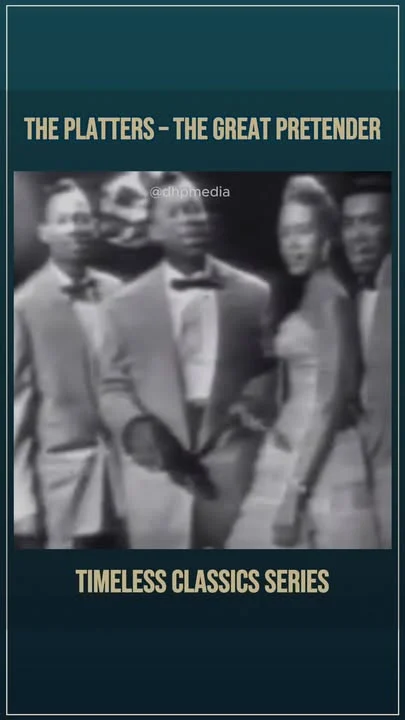
Everyone wears a mask. It is the armor we put on when our world feels fragile. We smile when we are breaking. We laugh when we are lost. This is the quiet performance of survival. In 1955 a song appeared that understood this secret performance perfectly. It did not arrive with a roar. It arrived with three simple piano notes. It was a whisper of undeniable truth. It was The Great Pretender by The Platters.
The architect of this timeless sound was Buck Ram. He managed the group, composed the music, and crafted the arrangements. He understood the power of rhythm and blues. He also understood the elegance of a pop ballad. He married them together. The result was a sound that shattered barriers. It conquered the pop charts. It proved that vulnerability delivered with polish could speak to everyone.
The song is a beautiful paradox. The narrator admits to a profound loneliness. The sound around him is one of utter control. Tony Williams delivers the lead vocal with pristine beauty. Then comes the masterstroke. On the line Adrift in a world of my own, his voice cracks. This is the hiccup. It is a tiny fracture in the facade. It reveals a universe of pain beneath the shimmering surface.
It is the sonic equivalent of a single perfect tear rolling down the cheek of a stoic movie star.
The arrangement is a study in elegance. The other members of The Platters include David Lynch, Paul Robi, Herb Reed, and Zola Taylor. They provide harmonies that act like a velvet curtain. Zola Taylor adds an ethereal shimmer. The drums are played with brushes. The piano is deliberate and melancholic. The production is bathed in a warm reverb that feels like a ballroom at midnight.
This sound connected with millions. A teenager in 1956 could hear it on a crackling transistor radio and feel understood. A professional today can hear it on studio headphones after a long day and feel the same comfort. The technology changes. The human condition does not. The song gives us permission to acknowledge our private masquerade. It does not offer a solution. It offers a profound form of solace. It tells us that we are not alone in our pretending.
To hear The Great Pretender is to hear a heart breaking in the most elegant way possible. Listen to the spaces between the notes. Feel the restraint. Recognize the truth in the lie. It is a masterpiece of empathy wrapped in a perfect pop song.
For further listening explore the Ink Spots and If I Didnt Care for its pioneering influence on vocal group harmony. Roy Orbison with Crying offers a dramatic operatic approach to public sorrow. Smokey Robinson and the Miracles with The Tracks of My Tears is a direct thematic relative. Sam Cooke with A Change Is Gonna Come shows the power of orchestral arrangements. Patsy Cline with Crazy conveys immense heartbreak with flawless control. The Righteous Brothers with You Have Lost That Lovin Feelin takes the pop grandeur to an epic scale.