
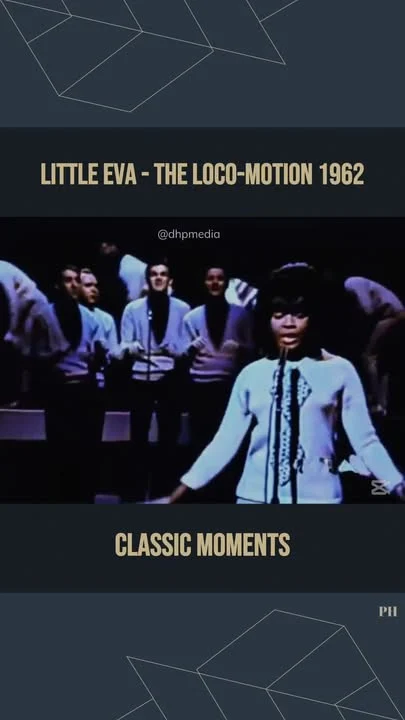
It starts with a handclap. Not a thunderous one but a sharp bright snap that cuts through the chatter of a crowded living room. The Bluetooth speaker on the kitchen counter crackles to life and suddenly a grandmother sways without lifting her feet while a teenager rolls her eyes then pulls her cousin into the chorus. Somewhere between the opening bars and the first saxophone lean the room dissolves into a single moving body. This is the quiet alchemy of The Loco Motion a record that has turned strangers into dancers for over sixty years.
The song was born in a small studio thick with summer air. A stand microphone sat at an angle and a young voice smiled between syllables. In the control booth Gerry Goffin and Carole King the Brill Building songwriting couple kept time with a pencil on the desk. On paper the track seemed light verse chorus a couple of dance instructions but inside those spare lines hummed an engine built for hips. Released as a single in June 1962 on the newly minted Dimension Records it was never intended for an album. It became the opening signature of Little Eva debut LP Llllloco Motion only later. The teenager born Eva Boyd had been babysitting for Goffin and King before her voice vaulted her into pop frontline. Goffin produced the session while King arranged the instruments and sang backup. Many sources confirm she also sat at the piano a small detail that fits the track tactile pocket.
Pop thrives when the smallest gesture one clap one hop unlocks the feeling that you belong to the same beat as everyone else.
The song origin story reads like Brill Building folklore. Dee Dee Sharp who had just scored with Mashed Potato Time reportedly passed on the demo. The demo vocalist Little Eva kept the song and turned it into a juggernaut. That reversal of fortune a background singer stepping forward because the melody fit her like a tailored dress is part of the record charm. It also crystallizes the legend of the right voice in the right hallway at the right hour.
Listen to those first seconds again. There are two circulating versions one with handclaps and one without. The claps function like flicked sparks in a dark room. The rhythm section moves with natural spring the snare dry and close the bass round as if nudged by felt. When the saxophone enters it does not grandstand it leans. Carole King arrangement fits like a glove every layer serving propulsion over ornament. The Cookies provide buoyant harmonies that never steal the spotlight they push it forward like friends cheering you into the circle at a party.
Harmonically the record keeps to bright primary colors almost nursery blocks of pop but the performance finesses those blocks into a rolling groove. Little Eva phrasing is precise without feeling cautious. She softens the ends of lines letting a fraction of air trail like confetti. Her vibrato is barely there she sings with a clear beam that allows consonants to bite and the dance instructions to feel like they happen in real time. The physical grammar embedded in the mix drum fills that mimic a hop bass runs that suggest a slide handclaps that outline a crowd response. The saxophone midrange rasp lends grit to the glitter the piano marks the changes like a bright chalk line on a dance floor.
The single became a number one on the U.S. charts and later reappeared as a top tier hit in two other decades via Grand Funk Railroad and Kylie Minogue. We often talk about The Loco Motion as a phenomenon rather than a recording. But return to the original and you hear craft decisions with the elegance of carpentry. Pull the fader on the lead vocal in your imagination focus on the bed a pocket so supportive it feels elastic as if the studio floor were set on springs. The Cookies harmonies are set dry and close like companions at your shoulder. The room is not cavernous yet there is enough air for reverb tails to bloom briefly before the next drum hit snaps them shut. That balance dry rhythm bones modest ambience on the top end gives the track its crisp smile.
Consider the record cultural position. It appeared at a hinge moment before the British Invasion reconfigured pop electric palette after doo wop twilight alongside a wave of dance songs that turned instructions into identity. Where The Twist thrives on a single mirrored action The Loco Motion acts like a cheerful emcee building a group from strangers with each imperative. The singalong effect is immediate the call and response feel of the backing vocals moves the listener from spectator to participant even in a solitary car at a red light.
The authorship also tells a story about the Brill Building gendered division of labor. Carole King hands are all over the record from the writing room to the arrangement stand to the microphone. Her professional partnership with Gerry Goffin is written into the credits but her particular sense of melodic lift the way choruses break like daylight animates the performance. Produced by Goffin released as Dimension 1000 and backed with He Is the Boy the single served as Dimension Records declaration youth rhythm and a suggestion of a new step to try tonight.
Dance songs can be a pejorative when critics wield it a way of suggesting disposability. But The Loco Motion proves how instruction can be revelation. Its directions are not mere novelty they are a delivery mechanism for confidence. Little Eva is not a drill sergeant she is that friend who loosens the room with a grin and a shrug convincing even the shy one near the punch bowl to take a step forward. The groove has give the chorus rises like a group picture faces turning toward the lens all at once.
Technically the recording dynamics are more refined than memory suggests. The rhythm track holds steady but the arrangement adds and subtracts elements to simulate a crowd growing the entrance of sax the thickening of harmonies a brief drop that makes the return of the chorus feel inevitable. You can practically sketch the microphone placement from auditory clues lead vocal close and present background vocals just behind and spread drums tight bass controlled piano central enough to tick through the changes reeds at a polite middle distance. It is not high drama it is calibrated buoyancy.
I have often thought of The Loco Motion as public transportation disguised as pop. It takes individual bodies and organizes them into a collective line without uniforms or choreography degrees. Decades later those instructions still work at weddings family reunions and tiny kitchens where someone has just turned a speaker toward the stove. One vignette a living room in late December the tree still up a child in sock feet trying to mimic a grandparent hip swing. Another a college bar where the song arrives as if by accident between newer hits and the room half ironically half sincerely screams the chorus. A third a solitary run at dusk when the track impeccable two and a half minute length slots perfectly between streetlights as you pick up your pace.
The record endurance owes something to its adaptability. Grand Funk translated it into arena heft Kylie Minogue reframed it in neon. Those versions prove the song skeletal strength but they also sharpen what is special about Little Eva original the blend of neighborhood scale and broadcast ambition. The timbre is friendly not corporate the swing feels organic not metronomic. There is a dash of R&B grit in the sax and a wink of girl group sparkle in the harmonies. The balance produces a sensation that pop rarely achieves without overthinking effortlessness.
For listeners encountering it today through a remaster or retrospective playlist there is a temptation to chase the cleanest transfer the definitive take. But some mild surface hiss a touch of tape saturation even the tiny asymmetries between handclap and snare hit are part of the record living grain. If you audition it on studio headphones you might notice how the backing vocals feather into the lead on the last syllables how the sax breath noise sits just under the note. These details do not contradict the song broad accessibility they deepen it proof that the communal is built from the particular.
A word on historical placement. Little Eva version reportedly features King on piano and The Cookies on backing vocals. The single release as Dimension 1000 makes it a kind of thesis statement for the Goffin King axis. The record went to number one in the U.S. and performed strongly in the UK where British acts immediately issued competing covers. Years later the recording would be honored by institutions and list makers but its truest validation remains how instinctively people move when it comes on.
If you come to the track as a musician there are other pleasures. The count in feel of the groove offers lessons about momentum how to get a dance floor moving without crowding the frequency spectrum. The drum pattern uses space as an instrument the bass plays melody as much as underpinning. Guitar players sometimes try to add more chug than the original needs the record works so well because the arrangement leaves enough air between strokes. Those little breaths are where the dancers step. The takeaway is almost compositional you do not have to shout to be heard and you do not have to stack six hooks when one will do. For those learning arrangement basics the record is a two minute masterclass in additive structure.
Because we live now amid infinite playback it is also worth noting how The Loco Motion survives digital contexts. It does not rely on sub frequencies that vanish on phone speakers nor on studio tricks that date instantly. It is scaled to the human voice and the human room. Place it on a modern playlist beside soul ballads or glossy synthpop and it still snaps the air with a grin. It is almost funny to think the song competed once for jukebox coin in an era of endless choice it earns its spot again and again.
The last time I played it for a room of mixed ages I watched a small miracle. A tween rolled her eyes at the opening bars then pulled her cousin into the chorus an uncle who never dances clapped on two and four a grandmother swayed without moving her feet. The song did not impose a choreography it offered an option and everyone found their version of it. That is the secret agency disguised as novelty. The single invites you to do what you already know how to do move.
Two closing notes on context. First the single belongs to a continuum of dance instruction records but it surpasses novelty through sheer melodic inevitability and a vocal performance that treats the listener as an equal not a pupil. Second its industry mechanics new label producer writer team in house singers embody the Brill Building factory metaphor while proving that factories can produce art when they leave space for personality. Produced by Gerry Goffin arranged by Carole King released on Dimension sung by a teenager who believed in the song enough to make it her calling card that is a chain of custody that would be marketing copy if it did not feel so human in the grooves.
If you have not heard it in a while give the original single your next three minutes. Do not analyze first. Let the claps call you in listen for the sax rasp notice how the chorus arrives with the ease of a friend walking through an open door. This is pop as invitation not instruction a locomotive that rolls because the track is well laid the engine tuned the passengers willing. Keep your ears open for that crisp piano and the discreet vocal blend tiny craft choices that make the song feel both intimate and public like dancing in a kitchen while knowing the whole block might join you.
And if you end up craving a little more immersion cue it up back to back with the later remakes. You will hear how much muscle you can bolt onto a chassis and how the original still outruns them by smiling while it moves.
Listening with modern gear or via a playlist inevitably raises practical questions. First if you want to hear the click of handclaps and the roundness of the bass without cranking volume audition a lossless master on a decent pair of studio headphones the soundstage deserves the attention. Second if you are discovering the track through a music streaming subscription let it be the anchor for a small 1962 to 1964 dance song queue the stylistic contrasts will teach your ear why The Loco Motion still feels like a social event rather than a museum piece.
In the end what Little Eva and the Goffin King partnership captured is the most democratic idea pop ever produced movement as belonging. The record still opens that door as lightly and decisively as a handclap on the two.