
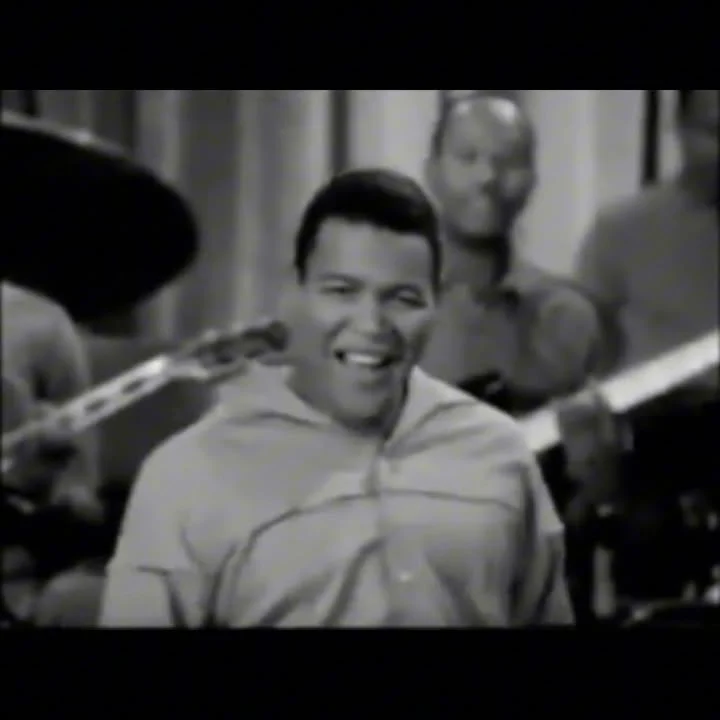
Imagine the crackle of a transistor radio in 1961. A teenage girl in a Midwestern kitchen, her hand frozen above the dial as a blast of horns and a cracking snare erupt from the speaker. Within seconds, she is twisting, her hips swiveling to a beat that demands participation. That is the power of Chubby Checker’s Twistin’ U.S.A.—a song that did more than continue a dance craze. It turned a national pastime into a shared declaration of joy, a sonic passport to a coast-to-coast party.
By the time this track dropped on the Cameo-Parkway label, the Twist had already shattered conventions. The earlier single, “The Twist,” had topped the charts twice, an unprecedented feat. But Twistin’ U.S.A. was no mere sequel. It was a manifesto. With its breathless roll call of cities—from California to New Orleans, up to New York—it announced that the dance was no longer a fad. It was a way of life. Checker, the young man from South Philadelphia whose real name was Ernest Evans, became the unlikely ambassador of a movement that rewrote social etiquette for an entire generation.
The recording itself is a marvel of controlled chaos. Forget the reverb-drenched sounds of West Coast rock. This was the early Philly Sound, captured close and dry, crackling with nervous energy. The studio band—uncredited but essential—played with a precision that felt spontaneous. Producer Kal Mann may have overseen the sessions, but the real architects were the tight, no-nonsense musicians who gave Checker the propulsion he needed. Every element was streamlined for one purpose: to make you move.
The best rock and roll songs don’t just ask you to dance. They tell you exactly where the party is, and ‘Twistin’ U.S.A.’ maps out the whole country.
Listen to the arrangement. It opens with a two-bar horn figure that sounds less like a melody and more like a starter pistol. The rhythm section is instantly kinetic. The snare drum cracks on the two and four, the backbone of a backbeat that feels faster than its predecessor. The tempo is relentless, demanding frantic movement from the first second. The guitar plays a purely supportive role, locked with the bass in a steady eighth-note strum that never wavers. No solos, no flash—just a chugging engine that prioritizes danceability above all else.
The bassline is simple and repetitive, a walking pattern that acts as a gravity well, pulling every other instrument into its orbit. And then there is the piano, easily overlooked but vital. It drops bright, percussive stabs into the gaps left by the rhythm guitar, adding a ragtime-infused bounce that counters the metallic grind. This careful interplay is why the song sounds equally thrilling on a cheap transistor radio or a high-fidelity home system.
Checker’s voice is the anchor. He does not sing so much as command, his vocal track pushed right up against the microphone, giving his declarations an almost breathless immediacy. The backing vocals—reportedly by The Dreamlovers—echo his geographical roll call, turning the song into a call-and-response anthem. It is pure rhythm given form, a track that makes every listener feel included in a grand, sweeping narrative.
This song arrived at a pivotal moment in pop music, sitting on the cusp between the raw energy of the 1950s and the sophisticated studio production of the mid-60s. It was a cultural document as much as a record. For teenagers across America, learning to execute the dance correctly became a social necessity, driving demand for music instruction and transforming living rooms into impromptu dance floors. The Twist made physical participation mandatory in a way that Tin Pan Alley standards never had.
The legacy of Twistin’ U.S.A. extends beyond its verifiable chart placement. It is the sound of a country uniting around a simple, hip-swiveling move. Checker consolidated a global trend with another high-octane blast of rock and roll energy, cementing his place not as a flash in the pan but as the King of the Twist. This track is a joyful, essential recording—a snapshot of an unrepeatable cultural moment when a dance became a brand and a single performer, backed by a phenomenal studio ensemble, became its living embodiment.
Listening recommendations
“Pony Time” – Chubby Checker (1961): Another Checker hit that successfully turned a dance into a smash single, showcasing the Cameo-Parkway formula.
“Let’s Twist Again” – Chubby Checker (1961): The logical, perhaps definitive, sequel that perfected the formula of “Twistin’ U.S.A.”
“Bristol Stomp” – The Dovells (1961): A high-energy, contemporaneous Philly Sound hit that shares the punchy, clean arrangement style.
“The Peppermint Twist” – Joey Dee & The Starliters (1961): The song that took the Twist craze into the New York club scene, proving its longevity beyond Checker.
“Mashed Potato Time” – Dee Dee Sharp (1962): Continues the Cameo-Parkway tradition of dance craze tracks with a driving beat and strong female vocal.
“Twistin’ The Night Away” – Sam Cooke (1962): A smooth R&B take on the dance craze, offering a soulful contrast to Checker’s frantic rock and roll.