
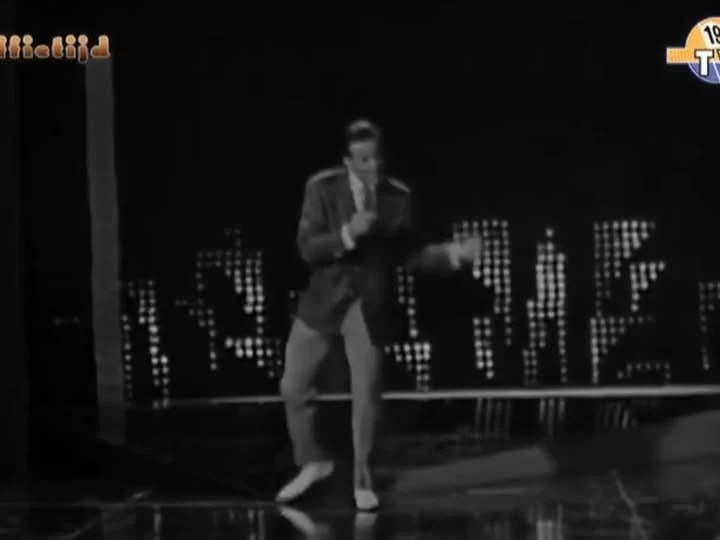
In the summer of 1962, before the British Invasion reshaped everything, a three-minute novelty record arrived like an unexpected party invitation. Pat Boone, already a household name with seven years of chart presence, released a single that somehow managed to be both silly and sophisticated. Speedy Gonzales did not whisper into the pop landscape. It burst through the door, grinning, with the unmistakable voice of Mel Blanc zipping through the speakers like a cartoon character who had escaped the screen and found a home on vinyl.
The track climbed into the United States Top 10 that year and performed even more strongly across several European markets. But its success was not merely commercial. The single represented a peculiar alchemy – a collision between Boone’s polished, gentlemanly croon and the manic, high-speed patter of one of animation’s most beloved characters. The result was a recording that felt less like a standard pop release and more like a miniature theatrical production, complete with characters, comic timing, and a tightly constructed musical frame.
The effect is light as confetti yet weirdly architectural, like a radio play hiding inside a two-and-a-half-minute jukebox spin.
The song’s origins trace back to 1961, when David Dante, who later became known as David Hess, recorded an earlier version. The writing credits belonged to Buddy Kaye, Ethel Lee, and Dante himself. But it was Boone’s interpretation that cemented the track in pop memory. His version tightened the dramatic structure and incorporated those instantly recognizable interjections from Blanc, who had been voicing the character for Warner Bros. since the 1950s. Those vocal cameos were not mere decoration. They functioned as structural hinges, breaking the song into comic vignettes and keeping the rhythm skipping forward with a playful urgency.
To understand the record’s longevity, one must examine the arrangement. Jimmie Haskell, the conductor and arranger, brought a brisk, sunlit clarity to the session. Bright brass figures punctuated lines like exclamation marks. The rhythm section walked with a dancer’s heel-toe confidence. A chorus glided in and out like party guests leaning over a banister to shout friendly advice. Modern stereo transfers reveal the meticulous engineering: voices stacked so their edges never blur, handclaps that feel immediate and close, percussion with a dry room character that keeps splash away from the vocal microphone. Boone sang with an earnest twinkle, largely straight-faced. Comedy lands best when the performer refuses to wink too hard.
The female backing vocals, those floating la-la-la lines, have often been credited to Robin Ward, a session singer active during that period. Combined with Blanc’s speedy interjections, these voices created counter-characters who nudged the narrative forward – one coaxing and melodic, one mischievous and manic. The most famous line readings snapped into place like jump cuts. The entire recording rode the tension between Boone’s croon and Blanc’s cartoon patter. That contrast, crooner poise versus animated chaos, became the single’s signature texture.
For listeners encountering the record now, perhaps through a curated playlist or a classic hits station, Speedy Gonzales sits at an interesting cultural angle. Its cartoon borrowing, its caricature vocabulary, and its postcard vision of a border town all reflect 1962’s mainstream lens. Approaching it today invites a double listen. One ear for the craft and effervescence. One ear aware of how representation has evolved. If you hold both frames simultaneously, the record offers more than nostalgia. You hear how a mainstream pop machine made room for comedy without sacrificing musical order.
The production credits matter for pop archaeology. Dot Records, with founder Randy Wood at the helm, specialized in clean, accessible sonics. Radio-first mixes where the lead vocal sat high and dry, never smothered by reverb. On Speedy Gonzales, that approach kept the narrative clear and the interjections intelligible. Haskell’s conducting kept the ensemble tidy, especially the brass, whose entrances were crisp without the blare that plagued some contemporary pressings. On vinyl, sibilants can skate, but this cut tends to hold them in lane. The decisions were commercial but craft-aware.
There is folklore attached to the recording beyond its musical elements. Contemporary sources note a brief legal kerfuffle with Warner Bros. over the use of Speedy’s voice, a suit that was later dropped. That dust-up, however brief, tells you how ubiquitous the record became. Big enough for a major studio to notice. Quick enough on the air to seem inevitable.
Melodically, the tune pivots on an easy rise and fall that lets Boone lean into rounded vowels and clipped consonants. He shapes phrases with a showman’s diction, cutting the ends just enough to leave room for Blanc’s drop-ins. The rhythmic ideas are simple and effective. Syncopated stabs that keep shoulders moving. Little gallops in the drum pattern that mimic the character’s dash. This piece of music is engineered for quick delight. A setup. A call. A comic interruption. A chorus that returns like a friendly echo. The dynamics are mostly medium-bright, but they breathe. When the chorus pulls back, you can hear the band reset, like sunlight passing through leaves.
Novelty records age best when they hide a little craftsmanship in the confetti. Speedy Gonzales hides more than a little.
The release history adds a final panel to the story. Issued as a single on Dot Records in May 1962, the track was compiled later that year on Pat Boone’s Golden Hits Featuring Speedy Gonzales, a package that functioned as a snapshot of Boone’s durable chart persona. Compilation placement like that usually signals two things. Immediate commercial impact. And a bet that the song would have catalog life. It did. Reissues and digital listings keep it in circulation. Radio programming for oldies weekends continues to treat it as a recognizable spark.
What keeps Speedy Gonzales interesting more than six decades later is how it manages the tropes of its time. This is a postcard of a south of the border fantasy, filtered through early sixties mainstream pop. The guitars and brass sketch stylized fiesta colors. The call and response makes it feel communal. The lyric, in Boone’s revision, frames the story as an overheard plea to tame a wayward romancer. A novelty, yes. But also a miniature about competing tempos. The party’s breathless sprint versus the lover’s steady insistence.
Imagine the arrangement stripped to its bones. A rhythm section walking in silhouette. A bright, slightly nasal brass choir leaning on upper harmonics for lift. A backing vocal line that behaves like set dressing, curtains fluttering, lights warming. Then layer in the comic voice overs, which function like stage whispers that the audience can hear but the protagonist cannot. The trick is staging. Boone keeps singing to the front rows while the jokes happen in the wings. When the chorus arrives, everyone faces the audience and the room widens again.
I keep returning to the image of a traveling fair. Bright colors. Zippers on the rides. Sticky soda caps underfoot. That is the energy Speedy Gonzales captures. And yet, within the carnival, Boone’s tone remains courtly, even gentle. His phrasing refuses to snarl. That restraint is the record’s ballast and the reason it has not curdled with time. Where some novelties rely on mockery, this one opts for cheerful bustle. A pageant where nobody gets hurt and every punchline wears confetti.
Two short vignettes come to mind. The first. Late-night radio in a kitchen lit by one stubborn bulb, summer heat pressing against the window. The song pops up, and your grandfather, who rarely hums, taps the table with a knuckle, then half-smiles when the cartoon voice rings out. He is not remembering 1962 exactly. He is remembering a mood. A world where a three-minute record could feel like a street party summoned from thin air. The second. A kid on a backseat road trip, fingers drumming on vinyl upholstery while the chorus trails across the windshield. For that kid, novelty is not a gimmick. It is sonic confetti keeping boredom at bay. The memory sticks.
Boone was not remaking youth culture with this track. He was updating his relevance amid a shifting pop landscape. By 1962, rock and roll had matured into multiple dialects. Girl groups with sophisticated arranging. Surf instrumentals. Soul records with church in the bones. Boone’s single fits into the novelty wing, but it borrows arrangement polish from pop proper. Tight horn voicings. Backing vocals that move like a string section would. Rhythm parts engineered to sit comfortably in jukebox cafes. It is halfway between a comic sketch and a well-appointed showroom number.
One reason the record endures is its efficient imagery. The lyric foregrounds familiar icons. Adobe walls. A cantina glow. The moon as stage light. Musically, the arrangement mirrors that iconography with percussive flourishes that flicker like lanterns. The balance between voice and band is particularly neat. When the cartoon crumb of dialogue appears, the band dips, then springs back. It is a lesson in arranging negative space. Do not just stack. Carve.
Listen to how the bass locks with the kick. How the tambourine is rationed, never a constant jingle, more like a prompt to lift the chorus. Note the bright, slightly percussive keyboard comping that behaves like a stand-in for a brittle upright. You can imagine a piano on the session shading the groove with clipped chords. Guitar fills are brief, decorative, ribbons tied to phrase endings. They retreat the moment the vocal needs air. The entire mix is a study in second-row upholstery. Everything supportive. Nothing lumpy.
Speedy Gonzales also embodies the friction between glamour and grit that defined much early sixties pop. Glamour. The sheen on Boone’s vocal. The immaculate balance that Dot’s producers favored. Grit. The lived-in texture of novelty itself. Jokes that wear out their soles on the dance floor. A joyous silliness that refuses to apologize. That friction makes the record feel tactile rather than slick.
Curators and collectors will care about credits, so they are worth restating with cautious clarity. The single traces to Dot Records with Randy Wood named as producer on contemporary digital credits and Jimmie Haskell noted as conductor of the session. Mel Blanc voices the titular interjections. That detail enters the song’s lore along with the brief legal kerfuffle that reportedly followed. Boone’s chart performance placed it among the top tier in the United States for the season and prominent in several European markets. Exact placements vary by source, but the consensus places it firmly among the year’s earworms.
What to do with the song now. Try it on a good pair of studio headphones once, and you will notice how carefully the comic inserts have been slotted into the stereo picture on remasters. Then play it in a room with friends. It performs better as a communal artifact than as a private grin. If you are a musician, glance at the available sheet music. You will see how the melody’s range and the rhythmic profile invite a light touch rather than vocal fireworks. Keep it bouncy. Keep it clean. The laughter will land.
As you revisit Boone’s catalogue around this period, Speedy Gonzales resembles a marker flag when the winds were changing. British beat would soon pour over the airwaves. Soul was gathering new voltage. Novelty as a chart mainstay would crest and then thin. Yet this single, buoyant as a paper lantern, reminds you that the early sixties pop factory could still turn out pieces that sparkled without strain. It is a comic mini-play with a tight orchestra pit. It still moves.
Final perspective. If this were just a gag, we would have forgotten it. But the rhythm still hops. The voices still tag-team the scene. The whole thing reaches the ear like a postcard from a livelier, tidier radio age. The next time it sneaks into your day, do not swat it away. Let it run its course. Grin at the cameo. Hear the care tucked inside the confetti. If you listen for the frame, the arranging hands, the label polish, the mix that bends around the jokes, you may find yourself queuing it up again. Not for the punchline. But for the craft that made it land.
Listening Recommendations
Ritchie Valens – La Bamba — Folk-rock rhythm and party-circle vocals delivering a timeless dance-floor lift.
The Coasters – Yakety Yak — Comedy woven into immaculate R&B arrangement with punchy horns and crisp call-and-response.
Paul Anka – Eso Beso (That Kiss) — Early sixties Latin-tinted pop with suave phrasing and a bright, ballroom glide.
Ray Stevens – Ahab the Arab — 1962 novelty with narrative voice-overs and a tightly marshaled band groove.
The Champs – Tequila — Instrumental exuberance and fiesta color from sax and rhythm section, perfect adjacent mood.