
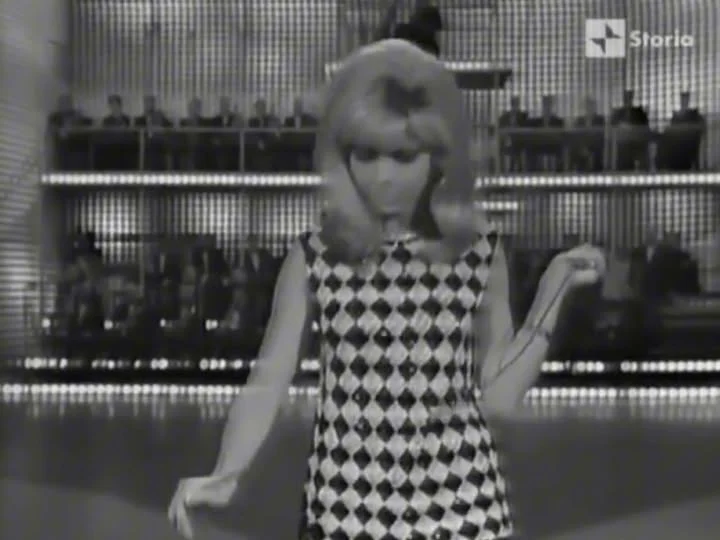
The bass note lands like a declaration of war. Low, resonant, deliberate. It is not the sound of someone asking permission. It is the sound of someone who has already made up her mind. Five decades later, that opening riff from Nancy Sinatra‘s “These Boots Are Made For Walkin'” still sends a shiver down the spine, a perfect distillation of feminine power wrapped in patent leather and attitude.
Late afternoon light spills across a room as the track spins through high‑quality speakers. The needle drops, and suddenly it is 1966 again. But this is no mere nostalgia trip. This is a masterclass in sonic architecture, a three‑minute drama where every note serves the story. The song was never just a pop hit. It was a cultural earthquake, and its tremors are still felt.
To understand the magic, you have to go back to the moment before Nancy Sinatra found her voice. By 1965, she was a singer without a signature. Despite the famous last name and a spot on her father Frank Sinatra‘s Reprise label, her singles had failed to break through. Critics dismissed her as too soft, too polite for the era of Dylan and the British Invasion. The label was ready to let her go. Then came Lee Hazlewood.
Hazlewood was a songwriter and producer with a gift for grit. He had worked with Duane Eddy, crafting twangy instrumentals that echoed across the desert. He looked at Nancy and saw not a starlet, but a rebel waiting to be unleashed. His advice was blunt. He told her to sing like a seventeen‑year‑old who dated truck drivers. The transformation began. Bleached hair. Heavy eyeliner. And the boots. Those iconic go‑go boots that became a symbol of the new woman she was about to become.
The bass note lands like a declaration of war. It is the sound of someone who has already made up her mind.
Released in December 1965, “These Boots Are Made For Walkin'” shot to number one on both sides of the Atlantic. The song’s power comes from its economy. Arranged by Billy Strange and played by the legendary Wrecking Crew, every instrument is a character in the drama. The double bass, played by Chuck Berghofer, walks a chromatic descent that mimics the tread of those boots. It is heavy, almost sinister. The drums, courtesy of Donald “Richie” Frost, lay down a slinky shuffle that invites listeners to dance while warning them not to get too close.
The electric guitar stabs are sparse but sharp. They cut through the mix like flashes of a blade. And the horns. They arrive not as sweet strings but as brassy, dissonant punctuation, underlining Nancy’s vocal blows with cinematic precision. The production is dry and close‑mic’d, giving her low contralto growl an intimacy that borders on the dangerous. When she speaks the line “Are you ready, boots?” it is with a chill so cool it burns.
What makes the song endure is the way it captures a specific kind of female agency. It is not a scream of rage but a quiet, confident warning. The narrator has given her lover four chances. The repetition of the phrase “these boots are made for walkin'” functions as a countdown. Each time the words come back, the listener knows the exit is nearer. By the final refrain, the walking is inevitable. This is not a woman asking for change. This is a woman delivering a final notice.
The piano, though subtle, provides the harmonic bedrock. It holds the rhythm section together while the guitar and brass play their dangerous game. Lee Hazlewood originally wrote the song for himself as a male narrator threatening a lover. Nancy insisted on flipping the perspective. That single decision transformed the track from a novelty into an anthem. It became the sound of a woman stepping into her own power and walking out the door.
For modern listeners, “Boots” offers a gateway into the craft of 1960s session work. Every element is deliberate. The descending bassline alone is a lesson in building a hook. Aspiring musicians, especially those taking private guitar or bass lessons, can study how a simple, repetitive figure can anchor an entire arrangement. The track is a blueprint for controlled tension and release.
The song’s cultural resonance has never faded. It has been licensed for films ranging from Full Metal Jacket to Austin Powers, each time bringing its sardonic cool to a new generation. It is rare for a novelty hit to also be a lasting artistic statement. But “Boots” manages both with effortless swagger. It is glamour with an undercurrent of danger. It is the sound of freedom, still ringing true more than fifty years later. Give it a proper listen. You will hear the defiance in every step.