
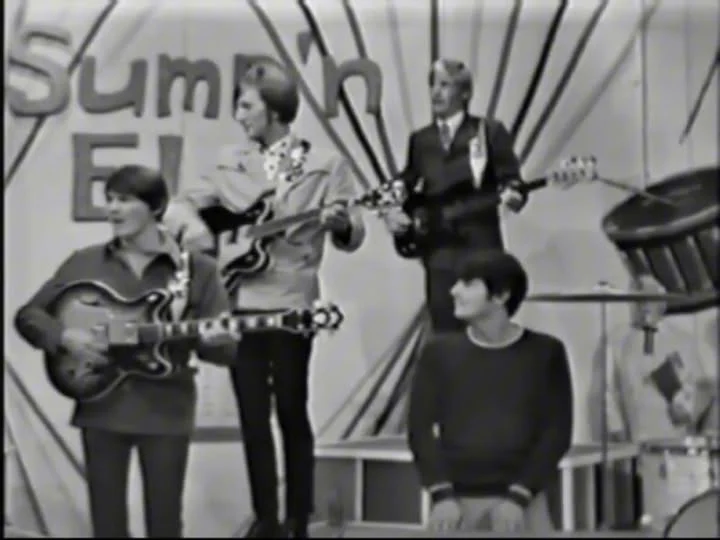
The moment the telegraph sound cuts through the radio static, you know you’re hearing something both of its time and strangely timeless. It is the sound of a band that accidentally invented a perfect hook.
The year is 1967. From the smoky chaos of a late-night drive, a frantic rhythm emerges. It sounds like a telegraph key hammering out a message dit da dit da dit. This is the genius of The Five Americans, a scrappy Oklahoma band that had been grinding through the Dallas club circuit. Their biggest moment arrived not through a major label push but as a raw, jittery burst of energy on the small Abnak imprint. The song is Western Union, and it remains a fleeting yet indelible snapshot of pop-rock alchemy.
Decades later, it’s easy to dismiss the band as a one hit wonder. But such a view misses the delicious contradiction at the heart of their story. Western Union is not a fluke. It is the perfect crystallization of everything The Five Americans had been working toward. The single soared into the Top 10 in the United States and Canada, becoming the centerpiece of their second album, oddly titled Western Union/Sound of Love. It remains their definitive statement, a two minute twenty second declaration of sonic urgency.
Before that record, the band had tasted modest success with I See the Light, a Top 40 entry. But they lacked a signature sound. The shift came when they teamed up with producer Dale Hawkins, the ex rockabilly star famous for Susie Q. Hawkins sharpened their garage rock instincts with a pop sheen that radio programmers could not resist. He helped focus their high octane energy into a tightly wound machine.
The true magic of Western Union lies in its hook. According to legend, lead guitarist Mike Rabon was simply messing around when he stumbled upon a percussive, staccato riff. The sound conjured the image of a telegraph key transmitting a message across the wires. It became the song’s signature, performed on electric guitar with a dry, punchy attack. There is almost no sustain, just a series of sharp, urgent strikes.
The arrangement is a masterclass in controlled chaos. A relentless rhythm section pushes the frantic energy without ever slipping into sloppy garage punk. But the true engine beyond Rabon’s riff is John Durrill on the Vox organ. His bubbling, frenetic counter melody washes across the soundstage, lending the track a mid 60s psychedelic edge while keeping it danceable. Lyrically, the song mirrors its sonic structure short, declarative bursts of frustration. The protagonist cannot reach his sweetheart, and the irony of using the sound of rapid communication for a song about failed communication is unintentional but potent.
The way Western Union weaponizes simplicity makes it a timeless snapshot of urgency and pop-rock fusion.
The production, supervised by Dale Hawkins, is clean but not sterile. It avoids the cavernous echo of surf rock and the muddy compression of garage records. Instead, it feels crisp and immediate. When listening through a good pair of studio headphones, the layered nature becomes clear a tight bassline anchors the rhythm, percussive piano chords add subtle harmonic complexity beneath the main riff, and the central guitar hook sits clearly distinct from the sustained organ wash. It is perfectly mixed for the limited frequency response of AM radio, designed to explode from a dashboard speaker.
The band’s story is a classic tale of a brilliant moment struggling against the fickle tides of the music business. Despite follow ups like Sound of Love and Zip Code, both released on the same album, The Five Americans could not replicate their top ten success. The Abnak label lacked the promotional muscle of major labels, and their subsequent excellent singles faded quickly. They were a band of writers and players whose moment of perfect pop clarity was both a blessing and a curse.
Yet that moment retains its power. It captures the transitional energy of 1967, bridging the raw power of Texas Oklahoma garage rock with the nascent polish of bubblegum pop. It speaks to the enduring magic of a perfect hook, born from a simple accident on a guitar. Every listener should revisit this track, turn it up, and let that signature dit da dit cut through the noise of the decades.
Listening Recommendations
- Time Won’t Let Me by The Outsiders (1966) shares the same breakneck tempo and urgent romanticism.
- Indian Lake by The Cowsills (1968) blends tight driving rhythm with buoyant harmonically rich pop rock.
- Just a Little by The Beau Brummels (1965) features similar structural economy and a distinctly American chiming guitar pop sound.
- A Piece of Paper by Gladstone (1972) features Mike Rabon and has a comparable clean pop sensibility.
- I Fought the Law by The Bobby Fuller Four (1966) possesses the same raw kinetic energy and driving drum performance.
- The Rains Came by The Sir Douglas Quintet (1966) blends regional R&B grit with high energy pop.