
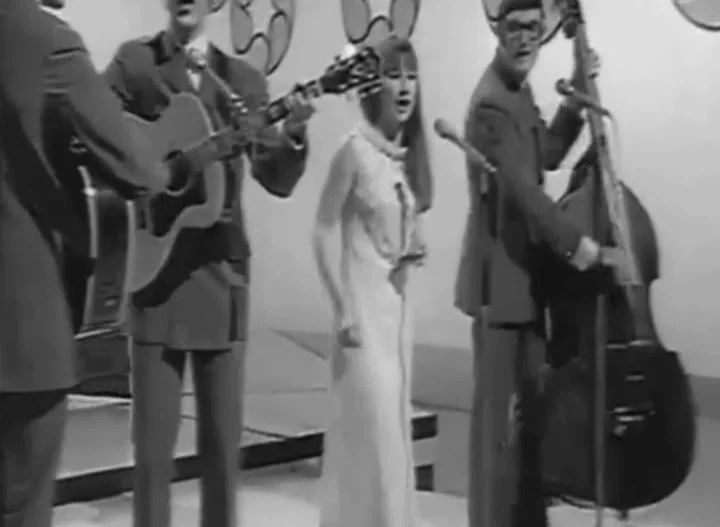
“Hey there, Georgy girl” — the opening line still stops you in your tracks, a voice that carries both a question and a gentle nudge. More than half a century after its release, The Seekers’ 1966 anthem “Georgy Girl” remains a warm, melodic embrace for anyone who has ever felt invisible. It is a song that swings with optimism while whispering truths about loneliness and self-doubt, a paradox that makes it timeless.
At first listen, the track bubbles with joy — acoustic guitar strums, a bouncing double bass, and a playful brass section that almost winks at you. But beneath that cheerful surface lies a deeper story. The lyrics, written for the British film of the same name, speak directly to a young woman who “never stops to buy” and hides her true self behind dowdy feathers. It is a call to action, a quiet rebellion against the fear of change.
“Bring out all the love you hide and, oh, what a change there’d be”
The world would see a new Georgy girl — a message that still feels urgent and liberating today.
Judith Durham’s voice is the heart of the song. Crystal clear yet full of warmth, she balances exuberance with tenderness, making every line feel like a personal pep talk. Backed by Athol Guy, Keith Potger, and Bruce Woodley, the harmonies are seamless, rising and falling like a gentle tide. The arrangement is deceptively simple: light percussion keeps the beat airy, while strings add a playful shimmer. The brass, which bursts in during the chorus, never overwhelms — it dances alongside Durham’s lead, reinforcing the whimsy of the lyrics. It is folk-pop at its most refined, a sound that stood apart in an era dominated by electric guitars and rebellious rock.
Originally featured on the album The Seekers Sing, “Georgy Girl” became the group’s most successful single in North America, peaking at number two on the Billboard Hot 100. The album itself is a showcase of the quartet’s distinctive blend of folk and pop, but this track remains its crowning jewel. It captures not just the spirit of the 1960s — a time when individuality was being celebrated and norms questioned — but also the enduring appeal of a band that offered something refreshingly earnest. While The Beatles and The Rolling Stones dominated the airwaves, The Seekers carved out a space for harmony-driven, introspective pop that felt like a kind hand on your shoulder.
The song’s legacy extends far beyond its chart performance. It has become a staple of oldies playlists, a sing-along favorite at gatherings, and a gentle reminder that self-acceptance is a journey. For listeners who love this track, a few other songs from the same era carry a similar spirit. “Downtown” by Petula Clark shares its upbeat tempo and encouraging message. “These Boots Are Made for Walkin’” by Nancy Sinatra offers a defiant twist on empowerment. “Both Sides Now” by Judy Collins provides a more introspective counterpart, while “To Sir With Love” by Lulu mirrors themes of growth and discovery. And “California Dreamin’” by The Mamas & The Papas taps into that same folk-pop harmony and nostalgia. Each of these songs, like “Georgy Girl,” invites you to pause, reflect, and maybe even dance a little.
More than a pop hit, “Georgy Girl” is a cultural touchstone — a four-minute pep talk wrapped in a melody that refuses to fade. Whether you first heard it on a scratchy record player or stumbled upon it in a streaming playlist, its message remains the same: it is time to jump down from the shelf, shed the dowdy feathers, and let the world see the person you’ve always been inside. Hey there, Georgy girl — the world is still listening.