
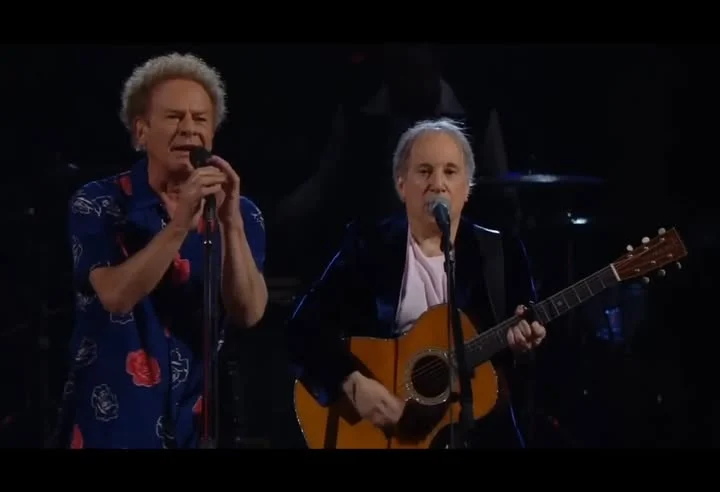
Hello darkness, my old friend. Those five words, sung with aching intimacy, have drifted through five decades of cultural change and still manage to raise the hairs on the back of your neck. They belong, of course, to Simon & Garfunkel’s “The Sound of Silence,” a song that began as a quiet flop and ended up a haunting anthem for every generation that has ever felt alone in a crowded room. From the folk clubs of 1964 to the booming orchestral covers of the modern era, this ballad refuses to fade, and the reasons why are as layered and complex as the lyrics themselves.
People talking without speaking, people hearing without listening.
It’s a line that cuts through today’s digital noise like a blade. We scroll, we like, we comment—yet so often, we never truly connect. But long before the internet rewired human interaction, Paul Simon was already probing this ache. He wrote the song alone in a dark bathroom, deliberately shutting out the world to better understand its hollow echoes. That search for clarity in isolation shaped every syllable of a composition that would define a partnership, a decade, and eventually, a genre.
Here’s the twist that could have changed music history entirely: the track’s original acoustic version landed with a thud. Released as part of the debut album Wednesday Morning, 3 A.M., the tune vanished into obscurity until producer Tom Wilson made a bold, unsanctioned decision. He lifted the raw vocal and guitar track, layered it with electric guitar, bass, and drums—without even telling the duo—and dropped it back into the world. The result was a number one hit in early 1966, a miraculous resurrection that launched Simon & Garfunkel into the stratosphere and turned a quiet folk meditation into a symbol of rock’s expanding palette.
What makes that transformation so striking is how perfectly it mirrored the era’s cultural collision. Folk purists were listening to protest songs and tradition; the youth were hungry for electric energy. “The Sound of Silence” stood at the crossroads, bridging acoustic intimacy and amplified urgency. It was, in every sense, a song that belonged to both worlds—and yet, even now, it belongs entirely to itself.
Dig deeper into the imagery and you’ll find silence isn’t just a lack of noise here. It’s a living presence, a vessel for emotional drought. Simon’s “darkness” isn’t an enemy; it’s an old companion, someone he knows well enough to greet by name. That paradox—finding comfort in solitude while aching for true belonging—is the song’s spiritual core. In a world where chatter is everywhere and meaning is scarce, that paradox hits harder than ever.
Perhaps the song’s most unsettling prophecy arrives near its end, when Simon observes that “the words of the prophets are written on the subway walls.” It’s a grim image—wisdom scrawled in forgotten corners, ignored by crowds, dismissed as graffiti. And yet, the warning persists. Every generation hears those lines differently, and every generation finds them painfully true. The messages we need most often sit right in front of us, hidden in plain sight, waiting for someone brave enough to look.
That universality is exactly why the song refuses to die. In the 1960s, it captured the disillusionment of a generation watching technology and urbanization rewrite the rules of belonging. Today, it speaks to a culture drowning in connectivity while starving for actual contact. The silence has only grown louder, and the song has only grown more relevant.
The words of the prophets are written on the subway walls and tenement halls.
And then there’s the cover that introduced the anthem to a brand-new audience. In 2015, heavy metal band Disturbed shattered expectations with a version that swaps raw electric grit for sweeping orchestral drama. David Draiman’s booming baritone turns the song into something almost operatic, and yet the emotional weight stays intact. That cover wasn’t just a tribute—it was proof that the song’s bones are strong enough to be redressed in any era’s clothing. The same isolation and yearning it captured in 1964 are still pulsing beneath the surface of every new arrangement.
Simon himself offered the clearest explanation decades ago when he described the song as being about “the inability of people to communicate with each other, not particularly internationally but especially emotionally.” Those words ring with the same clarity today as when he first spoke them. Emotional communication remains the hardest language we’ve never learned to speak fluently.
So why does the song still stop us cold when it comes through a speaker, a movie scene, or a live performance? Because it does what the greatest art always does—it holds up a mirror and refuses to flinch. It asks us to sit with the silence we usually run from and, in that stillness, find something real. It warns us that the prophets are still writing, and the subway walls are still waiting, and the connection we crave is still only a genuine conversation away.
“The Sound of Silence” has become more than a song. It’s a reminder that some truths don’t age, no matter how much the world changes around them. It’s a call to listen—truly listen—before the noise wins. And half a century after a boy in a dark bathroom scribbled lines about loneliness, the entire world is still leaning in to hear them.