
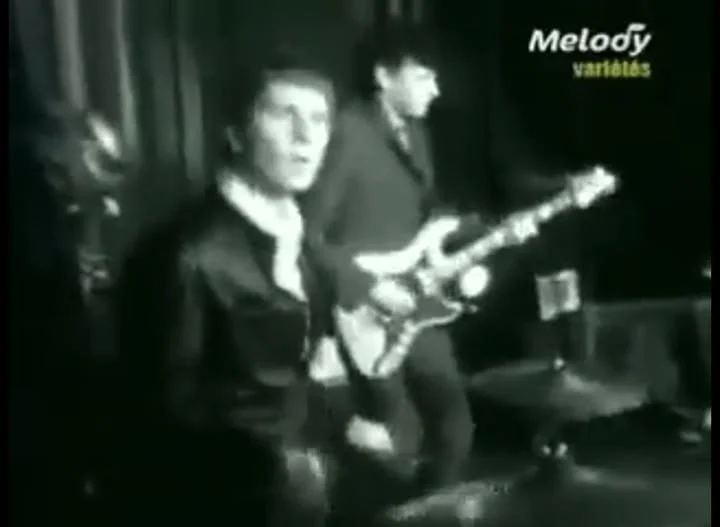
There is a reason why the opening notes of “Gloria” still sound like a threat whispered through gritted teeth. It is not a polite invitation. It is a demand. For generations of listeners who have never set foot in a smoky Belfast club, the song carries the weight of a late night rendezvous that feels both reckless and essential. More than sixty years after its birth, this two minute and thirty eight second blast of raw rock and roll remains a declaration of independence that refuses to age.
The legend begins in 1964 at the Maritime Hotel in Belfast. The air was thick with stale beer and the kind of desperation that only a live audience can generate. On a stage illuminated by a single bare bulb, a barely formed band called Them played with a ferocious intensity. Their frontman was a fierce almost sullen young man named Van Morrison. That dangerous energy recorded that night became the ghost trapped in the grooves of “Gloria”. It was music that sounded captured like a wild animal cornered in a studio.
The track originally sat on the B side of a cover of Big Joe Williams’ blues standard “Baby Please Don’t Go” released on Decca Records in November 1964. The A side was the safe nod to tradition. The B side was the Trojan horse. It was a blast of raw teenage desire disguised in a three chord riff. Producer Dick Rowe reportedly oversaw the session but the recording does not sound polished or meticulously arranged. It sounds like a garage band even if it was recorded in a proper studio. The track would later appear on Them‘s debut UK album The Angry Young Them in 1965 cementing its place in rock history.
The beauty of this piece of music lies in its almost aggressive simplicity. The rhythm section operates with a relentless driving pulse. The bass lays down a hypnotic repeating foundation. The guitar work is pure unvarnished rhythm a sharp overdriven strumming pattern that hammers the chords E D and A into the listener’s skull. There are no soaring leads or virtuoso breaks. Van Morrison does not so much sing the lyrics as declaim them a mix of R&B bark and spoken word menace. That famous slow drawling introduction “G L O R I A” builds a cult around a mundane name granting it mythic weight. The entire song builds dynamically toward a catharsis that is never fully reached.
The original 1964 recording of “Gloria” is not just a song. It is a declaration of independence signed with three chords and a snarl.
This stark architecture is exactly what made the track a syllabus for aspiring musicians around the world. Any kid with a cheap electric guitar and a slightly broken amplifier could master the chords. It was a rallying cry against the orchestral sweep of pop. You did not need a professional arranger or a piano. You only needed attitude. The song found great success in the Los Angeles area long before the rest of the United States embraced it. A cover by The Shadows of Knight in 1966 reached the Billboard Hot 100 bringing the raw power of the original to a wider audience.
That accessible volatility became a template. It forced other bands to reimagine the form years later. The Doors took the live version as a launching pad for a lengthy psychedelic jam. Patti Smith transformed it entirely in 1975 using the core riff as a vehicle for her iconic feminist punk poem “Jesus died for somebody’s sins but not mine”. Van Morrison gave them the framework of a legend and they built their own stories inside it.
The subsequent history of rock and roll is littered with echoes of this single track. From the minimal ferocity of The Velvet Underground to the punk ethos of The Ramones. “Gloria” remains vital not in spite of its simplicity but because of it. It speaks to the elemental desire for transgression. It carries the weight of a back room gig and the electrifying promise of a late night encounter. It is an artifact of the moment when rock learned to stop asking permission and start demanding attention.