
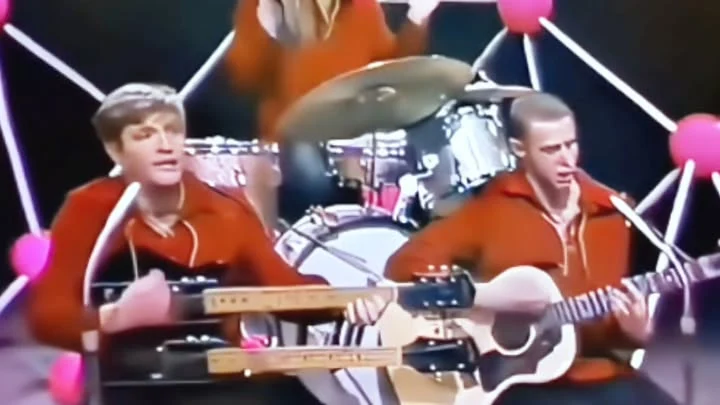
The final chorus of The Cyrkle’s Red Rubber Ball does not explode with triumph. It exhales, letting the melody drift into a patient silence that feels almost wise. That controlled release is the secret to the song’s long life. It turns a goodbye into something that sounds like a hello to a better morning.
Written by Paul Simon and Bruce Woodley, two craftsmen who understood clean hooks, the track found its voice in the hands of an American quartet from Ohio. The Cyrkle recorded a version that became the definitive one, sending the song up the charts in 1966 and into the memory of anyone who heard it. The band’s reading remains the standard because they let the tune breathe without overloading it.
The Cyrkle operated under the management of Brian Epstein, the same man who guided the Beatles. That connection earned them a slot as an opening act on the Beatles’ final North American tour in 1966. It is a remarkable bit of context that gives the single an extra glow. To have a sunshine pop smash while standing near the end of the biggest touring act in history adds a layer of sweet irony to the record.
The debut album, also called Red Rubber Ball, arrived on Columbia Records in June 1966. John Simon produced and arranged the sessions with a clear headed precision that became the album’s hallmark. The LP captures the same tidy harmonies and lean rhythm section that make the single so durable.
Listen closely to the arrangement and you hear restraint everywhere. The drums tick rather than thud. The bass walks a light path between chords. Tambourine shimmers in the background without rattling the picture. Vocal harmonies arrive in measured layers, never swamping the lead. The mix is friendly to modern gear because it never relies on clutter.
The lyrics deliver a farewell that refuses bitterness. Instead of dwelling on loss, the speaker turns toward what comes next. The buoyancy sounds earned, not naive. It is optimism as a deliberate choice, and that distinction keeps the song from aging into kitsch.
Commercially, Red Rubber Ball did everything a debut single dreams of doing. It climbed high on American charts, found a strong welcome in Canada, and gained traction in other countries. Reliable sources place it among the top pop singles of 1966, the kind of record radio keeps on hand when someone asks for something bright from that year.
The song works in small moments too. It can lift a rainy morning commute or give a teenager dealing with a first heartbreak a sense of perspective. A parent at the stove might find themselves moving to its gentle rhythm without planning to. That is the mark of a tune that understands daily life.
Listeners who enjoy this sound should also explore The Association’s Along Comes Mary, The Hollies Bus Stop, The Seekers A World of Our Own, Simon and Garfunkel I Am a Rock, and The Turtles Happy Together. Each shares the same combination of crisp production and openhearted melody.
For more on the band formation and the Epstein connection, the Cyrkle biography offers background on the early singles and management story. The Columbia Records discography entry confirms the release details, producer credit, and album context.
Pop at its best does not deny pain. It compresses it into something you can carry.
The song appears on the 1966 single and the debut LP. John Simon handled the production and arrangement. Chart performance placed it among the year’s top singles in North America. Those details ground the track in history, but the magic goes deeper. Red Rubber Ball remains fresh because it makes a choice. It picks composure over noise, grace over theatrics. That is the lasting magic of a record that still sounds like hope with its feet on the ground.