
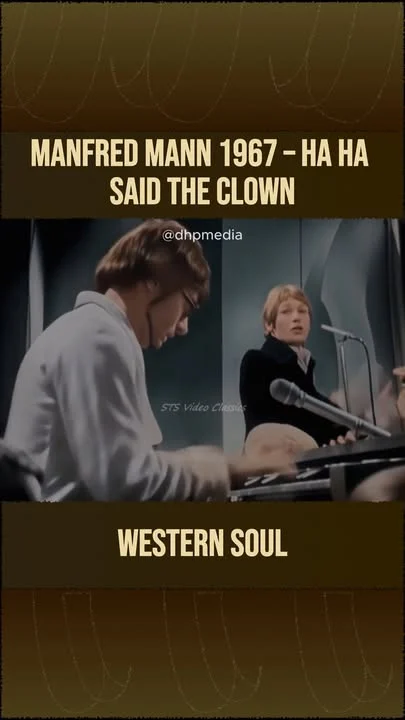
You hear it first on a sun-baked afternoon, crackling through a transistor radio like a voice from another world. That bright, forceful organ riff cuts through the static with unmistakable cheerfulness, a musical wink that promises fun and frivolity. But listen beyond the surface and the smile starts to waver. The year is 1967, a time when pop music was dissolving boundaries and reinventing itself with every new single. And this track, released in March under the name of Manfred Mann, had a darker secret hidden beneath its bounce. It invited you to dance while delivering a punch to the gut. The song in question is Ha! Ha! Said The Clown, and its deceptive joy remains one of the most cunning tricks in sixties pop.
I first encountered it decades later, a mid-afternoon oldie cutting through a modern playlist. That opening riff sounded like a curtain lifting on a vaudeville stage, all sparkling surface and big top energy. But as the lyrics unfolded, a cold chill crept in. This was no simple confection. It was a miniature tragedy disguised as a party anthem. The song tells the story of a man nursing a broken heart who heads to the circus for distraction only to discover that the very woman who broke his heart is now married to the clown performing before him. The punchline lands with devastating grace: there is no escape from grief. You can run to the brightest room but the darkness follows you in.
To understand how this single works its magic, we must step back and look at the band behind it. By 1967, Manfred Mann was a seasoned force in British pop, having transitioned from jazz and rhythm and blues to a potent pop rock sound. The departure of original singer Paul Jones in 1966 was a seismic shift, but incoming vocalist Mike D’Abo brought a softer, more wistful tone perfectly suited to the changing times. The band had moved to Fontana Records and needed a commercial hit to follow up their top five cover of Bob Dylan’s Just Like a Woman. Ha! Ha! Said The Clown was released as a standalone single in March 1967, a statement of intent that proved the new lineup could thrive. It soared into the UK top five and hit number one across much of Europe, confirming that the band could still charm audiences without their original frontman.
The song was penned by songwriter Tony Hazzard, but it was the production and arrangement that turned it into something unforgettable. The sonic palette is deceptively simple, dominated by the throbbing pulse of a Hammond organ played by the band’s namesake. That organ defines the rhythmic pocket, a percussive heartbeat that keeps the track moving forward with relentless efficiency. The rhythm section of Klaus Voormann on bass and Mike Hugg on drums is tight and dry, captured close to the microphone rather than in some cavernously psychedelic space. The electric guitar work appears sparingly, offering clean strums and perfectly placed fills that heighten the major key optimism while building a counterpoint to the increasingly desperate lyrics. A piano lurks deep in the mix, adding harmonic weight without ever demanding attention. The entire arrangement is a masterclass in economy, a pop fortress built around a hollow center.
The real star is Mike D’Abo’s vocal delivery. He sings the tale of a man seeking distraction from heartbreak with an almost aggressive cheerfulness. “Feeling low, gotta go see a show in town” he declares, his voice bright and confident. But there is a forced quality to it, the sound of someone trying too hard to convince themselves that everything will be fine. The song never lets the mask slip entirely, but the listener feels the weight behind the grin. This performance is the cornerstone of the track’s brilliance.
The song’s genius lies in its sonic refusal to surrender to its lyrical sadness.
I once watched a friend at a wedding request this song. They had spent the evening avoiding eye contact with an ex-partner who was having a far better time. As the jaunty organ hook kicked in, the absurdity of the moment became palpable. The major key and relentless beat seemed to mock the forced jollity of the event, that thin veneer of happiness required for public gatherings. In that moment the song became the soundtrack to a private humiliation, a perfect encapsulation of how grief can shadow us into the brightest rooms.
The narrative structure of Ha! Ha! Said The Clown is a perfect tragedy in miniature. The protagonist goes to the circus hoping to find relief, but the girl who broke his heart is now married to the very clown on stage. The joke, it turns out, is always on him. This universal experience of running headlong into the source of your pain when you only wanted an hour’s reprieve resonates across generations. It is why the song remains a sparkling yet slightly terrifying entry in the pantheon of sixties singles. It captures the moment escapism fails, when the mask of cheerfulness cracks and reveals the hollow space beneath.
For those seeking to explore similar sonic territories, consider these tracks from the same year. The Box Tops’ The Letter shares a punchy, tight arrangement and a soulful, cynical vocal delivery that fits a short perfect pop statement. The Lemon Pipers’ Green Tambourine uses bright textures and a major key feel to lighten a potentially heavier theme. The Small Faces’ Itchycoo Park blends British mod pop energy with psychedelic whimsy and studio experimentation. The Move’s Flowers in the Rain offers melodic hooks underpinned by a driving sophisticated rhythm section. And Traffic’s Hole in My Shoe shares the dramatic lyrical concept of simple distraction turning into a moment of surreal personal epiphany.
Manfred Mann took a Tony Hazzard composition and built a three minute high energy pop fortress around a hollow center. They gave us the sound of a tear perfectly disguised by a chuckle. Ha! Ha! Said The Clown remains a masterwork of deceptive pop, a song that invites you in with a wink and leaves you in a cold existential corner where the laughter echoes long after the music fades.