
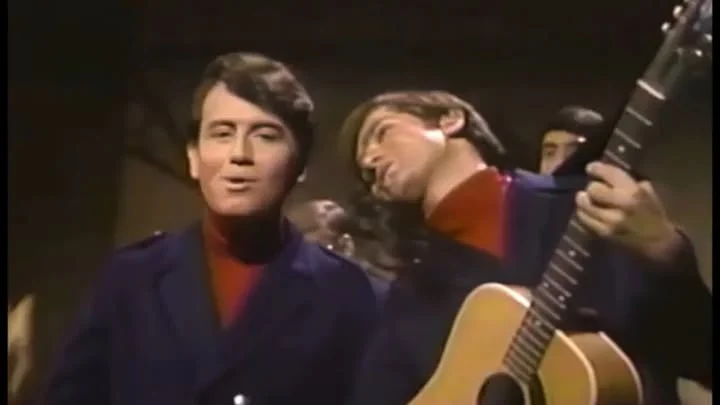
You hear it first as a whisper. A galloping heartbeat of piano and percussion, then a sudden stab of brass. Before a single word is sung, “Come A Little Bit Closer” has already pulled you into a dimly lit cantina at midnight. The year is 1964 and the British Invasion is shaking American radio to its core. Yet Jay & The Americans did not retreat into safer sounds. Instead they created a three minute melodrama that felt like a movie trapped inside a single
John Black lead vocalist of the group delivers the story with a mixture of swagger and fear. His voice is bright and close to the microphone as if he is whispering the tale directly into your ear. The backing vocals enter like a chorus of witnesses and the arrangement swells beneath them. Strings mimic the rush of adrenaline. Horns signal danger. The entire production is a masterclass in tension and release
The vocal performance taut and sweat soaked beneath a canvas of orchestral ambition transforms a simple romantic thriller into a grand three minute escape
The song was a critical turning point for the group. They had tasted success with the ballad “She Cried” two years earlier but had not consistently cracked the top of the charts. This single released on the United Artists label and produced by Artie Ripp with arrangements by Garry Sherman pushed them into the top five. It fused the polished vocal group tradition of Doo Wop with an urgent theatrical rock framework. American pop music proved it could still be ambitious and narrative driven even as the sounds of Liverpool dominated the airwaves
The story at the heart of the track is pure B movie gold. A man sees a beautiful woman in a bar. Her jealous companion is armed. Ignoring the warning signs he steps closer. It is a high stakes romance that could end in a kiss or a punch. The mix places the vocal bright and forward and the reverberation is rich but controlled. Every breath and every pause adds to the suspense
Beyond the narrative the arrangement is the true star. The rhythm guitar provides a bright chopping anti jangle while the piano anchors the lower register with nervous staccato. The brass section trombones and trumpets blare short tight stabs that signal intrigue. During the chorus the strings swell beneath like a rush of adrenaline. The mid song break features a punchy horn solo that acts as a narrative pause the moment the narrator makes his fateful step
This entire album context anchored by the 1964 LP also titled Come a Little Bit Closer demonstrates the flexibility of pop music in that era. Producers wove together the sophisticated textures of the pop orchestra with the raw storytelling energy of rock and roll. The sound is simultaneously lush and lean avoiding saccharine excess while refusing the deliberate rawness of garage rock
The enduring appeal of the song lies in its ability to transport the listener instantly. It is the perfect road trip track when the sun has set and the windows are down. Every late night encounter in a crowded foreign bar holds the potential for magic or disaster. I recently watched a young musician trying to decipher the complex chord changes using online sheet music captivated by the way the melody navigates dramatic shifts in harmony. The song continues to be discovered by new generations precisely because of its structural integrity and undeniable storytelling hook
It is an invitation to drama that is difficult to refuse. The final fade out offers no clean resolution leaving the listener suspended in the narrative climax a breathless escape into the night. Give it a fresh focused listen and you will find yourself transported not just to 1964 but to the dusty dangerous border town where this unforgettable story took place