
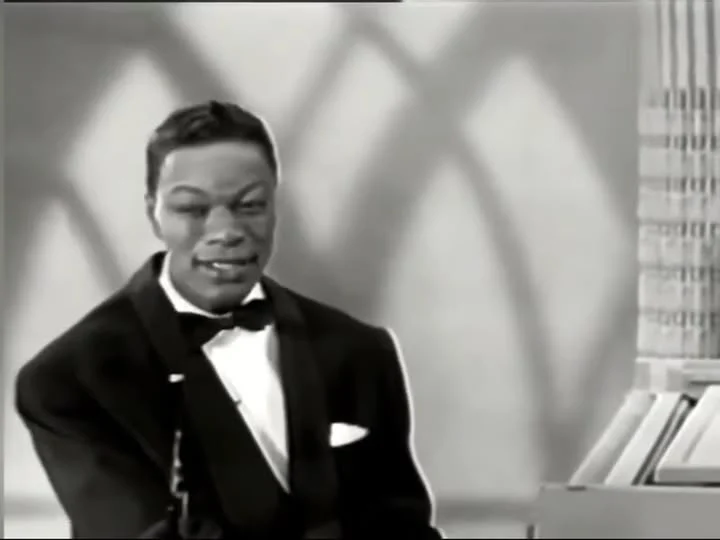
Nat King Cole stepped up to the microphone in 1950, his voice a liquid velvet that would forever change the course of a song. In a single, effortless take, he captured a haunting melody and a painterly lyric, transforming a humble film theme into a global anthem of romantic yearning. That moment, captured in a Los Angeles studio, gave the world “Mona Lisa,” a song whose enigmatic smile would outshine the painting that inspired it.
The story of “Mona Lisa” begins not in an art gallery, but in Hollywood. In 1949, songwriting duo Ray Evans and Jay Livingston were commissioned to write a love theme for the Paramount Pictures film Captain Carey, U.S.A., a romantic drama set in post-Civil War America. The song was originally performed on screen by actress and singer Ann Blyth, but it was destined for a far greater stage. When Nat King Cole lent his voice to the recording, the song’s fate was sealed. His rendition soared to the top of the charts in both the United States and the United Kingdom, eventually winning the Academy Award for Best Original Song in 1950.
The song’s enduring power lies in its perfect alchemy of simplicity and depth. The lyrics, with their gentle questions and evocative imagery, speak to a universal experience of love, longing, and the mystery of a beloved’s inner world. As Cole crooned, “Are you warm, are you real, Mona Lisa? Or just a cold and lonely, lovely work of art?” he tapped into a feeling that resonates across generations, from teenagers to grandparents, from the 1950s to today.
“The lyrics are simple yet evocative, and the melody is both beautiful and haunting. It is a perfect expression of love, longing, and loss. It is a song that can be enjoyed by people of all ages and from all walks of life.”
Over the decades, the song has been embraced by an astonishing array of artists, including Elvis Presley, Frank Sinatra, and Willie Nelson. Yet, it is Cole’s version that remains the definitive, the gold standard. His rich, velvety voice and masterful phrasing gave the song a timeless quality that no other interpretation has matched. It is a recording that feels both intimately personal and universally grand, a rare feat in popular music.
Some lesser-known details add to the song’s mystique. The lyrics, initially penned for a different, rejected project, found their perfect home in “Mona Lisa.” The title was directly inspired by Leonardo da Vinci’s famous painting, lending the song an artistic weight that matched its musical elegance. And as a testament to its cultural footprint, “Mona Lisa” has appeared in classic films and television shows, including The Godfather and The Sopranos, further cementing its place in the American songbook.
Decades after its release, “Mona Lisa” remains a true classic, a song that will continue to be cherished by new generations. It stands as a testament to the power of a perfect melody, a heartfelt lyric, and the singular voice of Nat King Cole. In a world of fleeting hits, its smile endures, forever warm, forever real.