
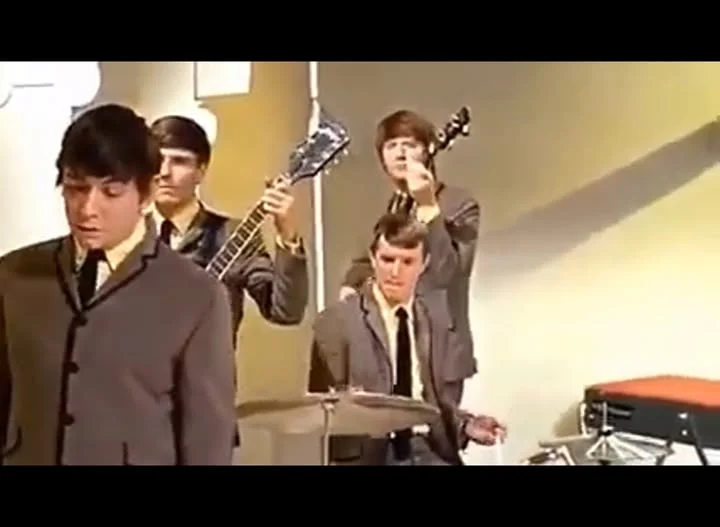
It begins with a single, hypnotic guitar riff a slow arpeggio that seems to climb out of a dark memory. Hilton Valentine’s fingers on the strings of his electric guitar, picking out a minor key pattern that feels both ancient and urgent. Then the Vox Continental organ swells like a fog rolling in, and Eric Burdon’s voice arrives deep, ragged, carrying the weight of a life gone wrong. This is House of the Rising Sun by The Animals, and in 1964 it did something no one expected it turned a centuries old folk ballad into a rock and roll monument.
That moment was captured on the band’s debut album, simply called The Animals. Released in the United Kingdom at the height of the British Invasion, the record announced a new hybrid of blues grit and rock energy. While the title track became a generational anthem, the album also featured gems like Boom Boom and I’m Crying, each one proving that The Animals could take the raw emotion of traditional blues and wire it straight into a modern sound. It was a collection that made listeners feel the pain and the pulse of every note.
“That song was a turning point for us,” Eric Burdon once reflected. “We knew we had something special the moment we recorded it in one take.”
The instruments themselves tell a story of deliberate craft. Alan Price’s organ lines don’t just accompany they haunt. They wrap around the melody like smoke, thickening the atmosphere. Chas Chandler’s bass walks a steady, mournful line while John Steel’s drumming holds a pace that feels almost like a funeral march. Together, they create a space where Burdon’s vocal can rise and fall with devastating effect. Every element is essential. Every sound carries the weight of someone who has lost everything.
The song’s roots stretch deep into American folk tradition. Versions by Lead Belly, Joan Baez, and Bob Dylan had existed long before The Animals stepped into the studio. But the band’s electrified arrangement gave the cautionary tale of gambling and ruin a new kind of urgency. The lyrics about a house in New Orleans where a life can be undone left room for each listener to fill in the details. That ambiguity is part of why the song has never aged.
The legacy of House of the Rising Sun extends far beyond its chart success. It showed that folk storytelling could live inside a rock song without losing its power. Artists from The Doors to Led Zeppelin to modern folk rock bands have cited it as a blueprint. And the cover versions keep coming each one a tribute to the song’s ability to sound both timeless and fresh.
If you feel the pull of that haunting atmosphere, you might also lose yourself in The End by The Doors, where darkness and poetry collide. Or in Gallows Pole by Led Zeppelin, another folk tale given a rock overhaul. The Animals themselves offered more with Don’t Let Me Be Misunderstood, while the Eagles painted their own tragic picture in Hotel California. And for that same organ driven melancholy, A Whiter Shade of Pale by Procol Harum sits perfectly in the same emotional space.
More than sixty years later, House of the Rising Sun still stops people in their tracks. Its opening notes are instantly recognizable a signal that something profound is about to happen. The song endures because it was made with conviction. Every chord, every breath, every pause was chosen to serve the story. That is what turns a piece of music into a landmark. And that is why The Animals’ version remains the definitive telling of a tale as old as the blues itself.