
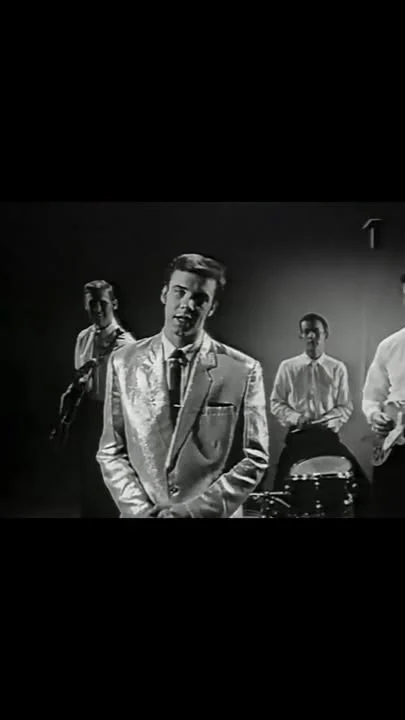
There is a moment in Marty Wilde’s 1959 recording of “A Teenager in Love” where the bass line drops and the vocal soars, capturing the precise ache of adolescent heartbreak. That feeling, both universal and deeply personal, resonates across decades. In Britain that year, this song was not just a hit but a cultural milestone, a polished sound that defined a generation seeking its own voice in rock and roll.
The year 1959 saw the first wave of American rock and roll begin to fade, its pioneers sidelined by military service, scandal, and tragedy. Across the Atlantic in the ballrooms and on the airwaves of Britain, a new revolution found its local heroes. Among them stood Marty Wilde, a figure of tailored elegance and undeniable vocal charisma, the ideal bridge between American grit and British polish. His version of “A Teenager in Love,” released on the Philips label in May 1959, soared to Number 2 on the UK singles chart, easily surpassing the original by Dion and the Belmonts. The track was a standalone single, later included on his debut album Wilde About Marty.
Wilde was part of a triumvirate of homegrown heartthrobs alongside Cliff Richard and Tommy Steele who shaped British rock. His earlier successes included covers of Ritchie Valens’s “Donna” and his breakthrough “Endless Sleep.” The Doc Pomus and Mort Shuman composition “A Teenager in Love” had already been a Top 5 hit in the United States, but Wilde’s interpretation quickly eclipsed the original in Britain, cementing his status as a major player. The song’s lyrics detail the simple terror of a first argument, the fear of parting, a theme that resonated with anyone who remembered that feeling of teenage finality.
Listening to Wilde’s take through premium audio speakers transports you directly onto the studio floor of late 1950s London. The arrangement is lush yet restrained, with a warmth in the room reverb surrounding the rhythm section. The track opens not with the signature doo-wop vocal riff of the American original but with a direct understated thrum from the bass and a gentle pulsing drum beat. The core rhythm is a slow to mid tempo shuffle, perfectly calibrated for the slow dance in a crowded hall. A subtle bright guitar line provides counterpoint, clean and finger picked, weaving in and out of the vocal phrasing with a delicate almost melancholic filigree.
The most powerful songs about youth do not speak of rebellion but of the overwhelming pain of emotions too large for words
Wilde’s vocal performance is the anchor. Unlike Dion’s more stylized yearning New York delivery, Wilde offers a smoother more earnest tone, embodying the boy next door idol persona. He delivers the famous lines like “Each time we have a quarrel it almost breaks my heart” with a vulnerability that feels sincere rather than dramatic. The backing vocals arrive in the chorus with a smooth harmonic cluster, echoing American doo-wop but with a tailored studio sheen. They lift the melody to a dramatic peak without competing with the lead. The piano is used sparingly but effectively, providing rich chords that underpin key changes, especially in the instrumental break. The overall dynamic range is compressed typical of a 1959 single cut for maximum impact on seven inch vinyl. This controlled energy is key the heartbreak is felt but contained within the social etiquette of the era.
What this version captures perfectly is the transition of adolescent angst from a niche subject into a universal pop commodity. Wilde’s success was built on his ability to take a strong American blueprint and refine it for a different audience. It is the difference between the sheer unpredictable excitement of Stateside originals and the polished professionalism that was the hallmark of the nascent British pop industry. This refinement made the track accessible a soundtrack for a new generation who might have been intimidated by the rough edges of pure rockabilly. Wilde did not write “A Teenager in Love” but for a time in Britain he owned the feeling.
Today when young musicians attempt to capture early rock they should study the control and deliberate pacing of this track. It is an object lesson in restraint showing that holding back the full force of the band and letting the simple power of melody and lyric carry the weight can be more effective than catharsis. The sonic decisions made here the clear mic work on Wilde’s voice the distinct separation of instruments the tasteful reverb make one appreciate the quality of analog recording. It is the kind of subtle detail that inspires people to invest in better home audio equipment just to hear the way the drum brush hits the snare. This recording stands as a testament to the power of a great song matched with the perfect voice for a particular cultural moment.
For those seeking adjacent moods and eras from that same period here are six tracks that share the gentle sophisticated spirit of Wilde’s hit
“Travelin’ Light” by Cliff Richard from 1959 offers a similar smooth mid tempo British rock and roll sophistication from Wilde’s direct chart rival
“Dream Lover” by Bobby Darin blends pop structure with light orchestral elements and a theme of romantic yearning
“Only Sixteen” by Sam Cooke captures the gentle nostalgic and vulnerable core of late 1950s adolescence with an immaculate vocal
“Poetry in Motion” by Johnny Tillotson exemplifies the transition from pure rock and roll energy to softer ballad focused pop sensibility
“Venus” by Frankie Avalon employed lush strings and a controlled heartfelt vocal for a major chart smash
“When” by the Kalin Twins is a less dramatic doo-wop pop tune with layered vocals and a simple infectious rhythm that shares the era’s light hearted sentiment