
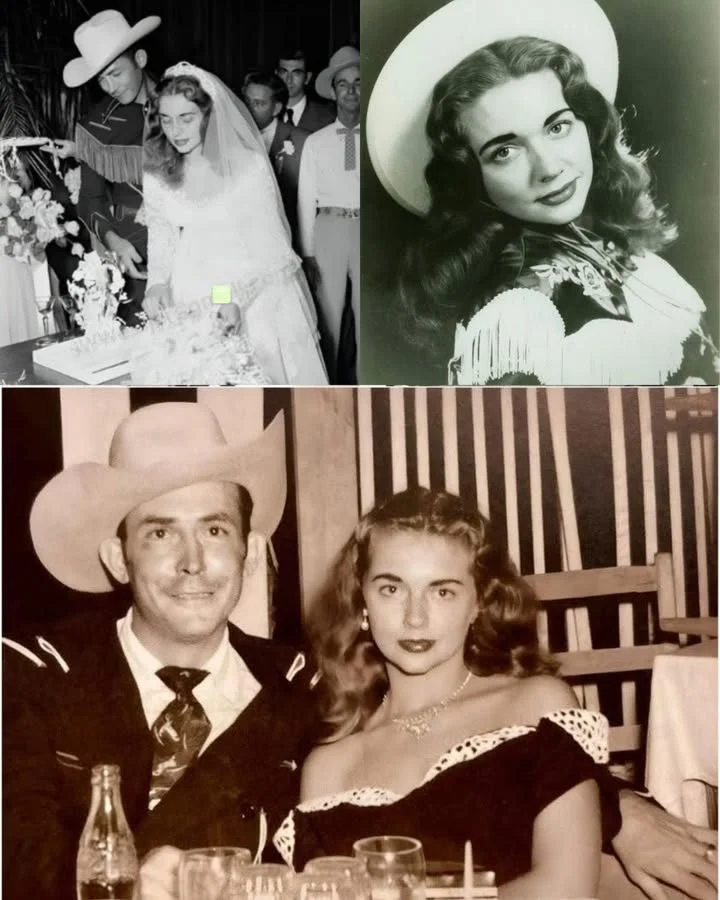
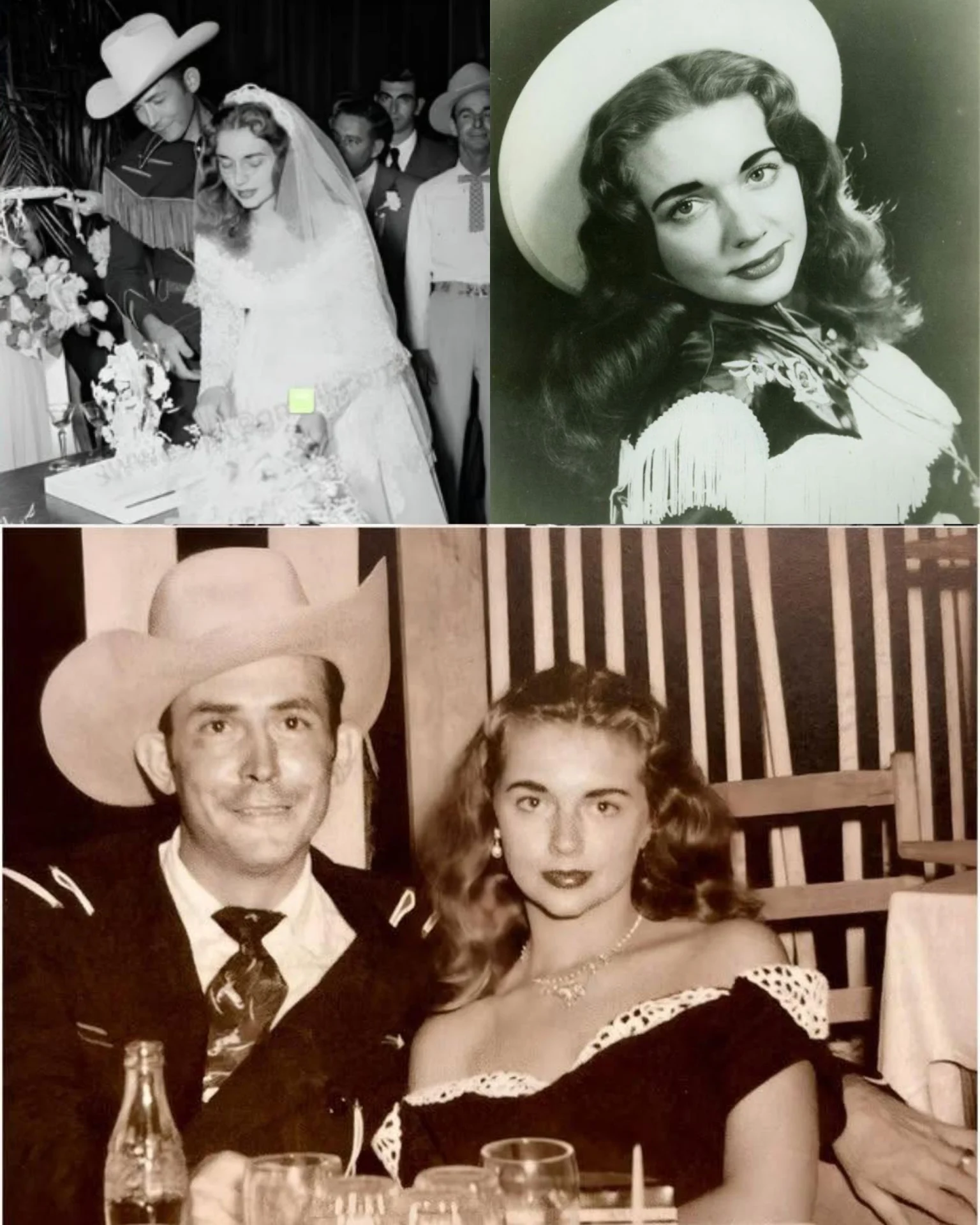
She was twenty years old when she became a widow for the first time. Before thirty, she would be one again. Billie Jean Jones lived a country song that no one would dare write because it would feel too cruel and too true.
Her story began in 1951 when she visited Nashville with Faron Young. She was nineteen and not looking for history. Then she met Hank Williams and the attraction moved quickly. By October 1952, Hank’s marriage to Audrey had ended. Billie Jean married him first in private and then in public New Orleans ceremonies where thousands paid to watch the country star take his bride. The marriage lasted barely two months. At the end of December 1952, Hank left for New Year’s bookings and died in the back seat of a Cadillac before reaching Ohio.
At twenty, Billie Jean had become Hank Williams’s widow. The man she married was already on his way to becoming a legend. Legends turn private grief into public property. But her life kept moving and country music kept pulling her closer.
Hank once looked at another singer and saw a future that neither man would live long enough to enjoy.
That singer was Johnny Horton. Hank knew Horton as a young Louisiana Hayride performer and genuinely admired his records. According to Billie Jean, Hank told her that Horton would become one of the biggest names in the business. After Hank’s death, she and Horton grew close and married in September 1953.
With Horton, Billie Jean stepped away from performing. She wanted a quieter life than the spectacle around Hank. They hunted and fished together and raised two daughters, Melody and Yanina. Horton also helped raise Jeri Lynn, Billie Jean’s daughter from an earlier marriage.
Horton’s career rose exactly the way Hank predicted. He moved from Honky Tonk Man to the enormous success of The Battle of New Orleans and North to Alaska. He became one of the rare country singers whose songs crossed beyond the usual boundaries and reached a wide national audience.
For Billie Jean, that success carried both pride and worry. She had already seen what fame did to one husband. But at home there was family, outdoor life, and a steadiness that felt far from Hank’s final chaos. She began to believe she could keep this life.
The second call came on November 5, 1960. Johnny Horton had been killed in a highway collision in Texas while returning from a performance.
Billie Jean was not yet thirty. Twice in less than eight years, country music had made her a widow. First Hank Williams in the back seat of a Cadillac. Then Johnny Horton on a Texas highway. The pattern felt impossible and cruel.
The life she had built with Horton ended with a sudden telephone call. The stage did not matter now. The house did not matter either. What mattered was raising her daughters and holding together the pieces of a broken history.
Billie Jean returned to performing for a time. She raised her daughters and managed portions of Horton’s catalogue and royalties. Then she spent decades in court protecting the legal interests attached to Hank Williams’s estate. By the 1980s, her office was described as crowded with boxes of old records, agreements and court papers gathered through years of litigation.
Those boxes became another kind of family archive. They held the business left behind by two famous men, but they also held the complicated futures of children, estates and songs whose value kept growing long after the people who made them were gone.
Songs can sound simple on the radio. Behind each one may sit contracts, disputes, heirs and memories no court can fully translate.
Billie Jean entered country music history as a young bride. She remained there as a widow, a mother, a fighter and a keeper of papers. The music took two husbands from her. She still stayed close enough to protect what was left. That endurance became her own legacy.