
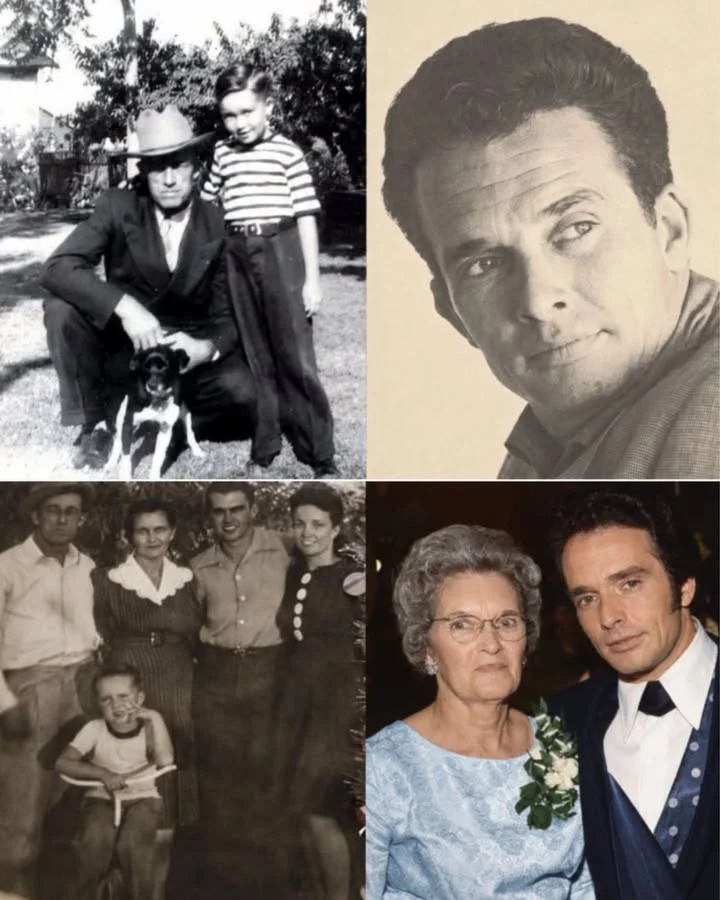
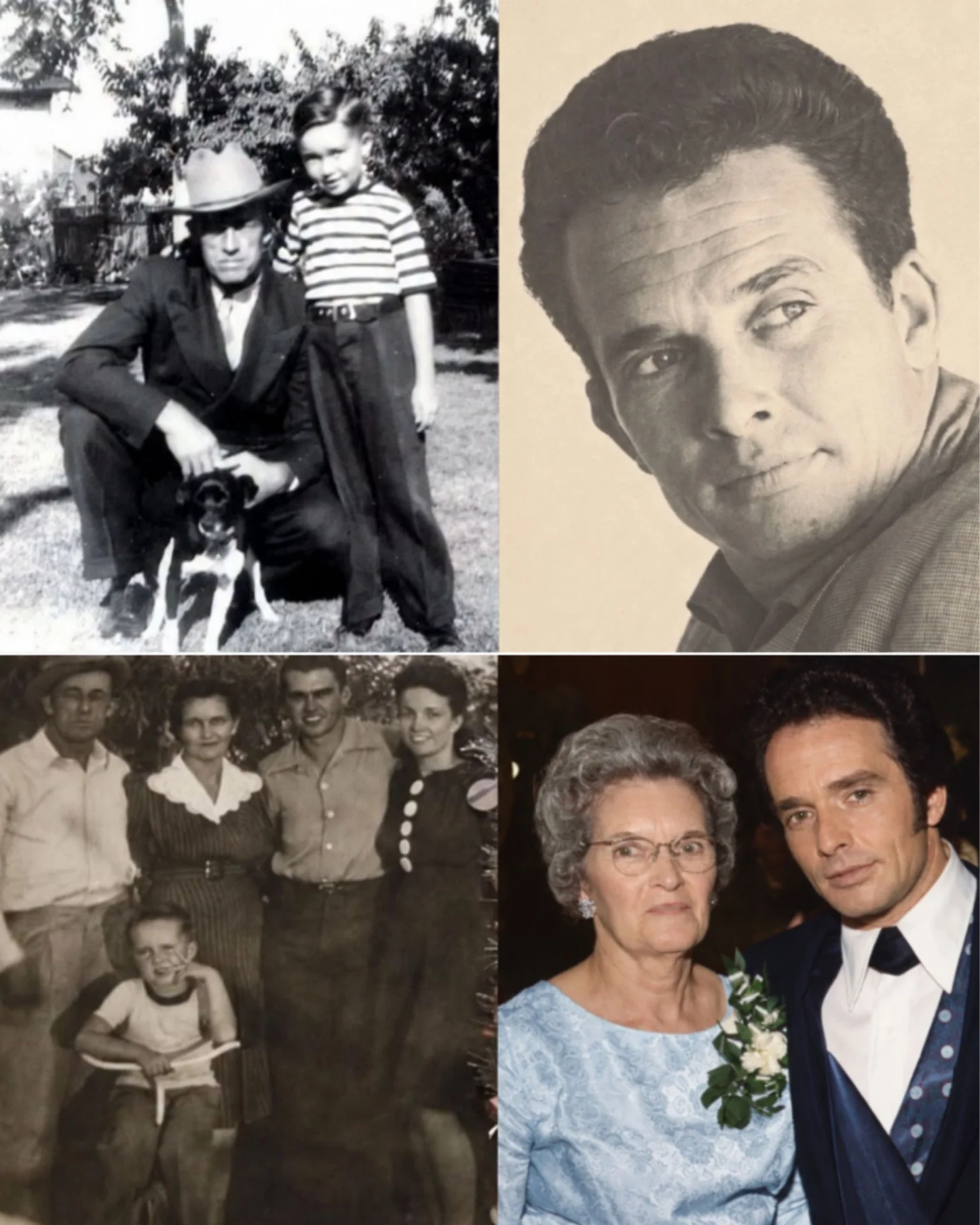
Every time Merle Haggard sang about turning twenty-one in prison, something else traveled with the melody. A Greyhound bus. A mother in the seat. Flossie Haggard had made that ride to San Quentin when her son was locked inside, and those visits never left him. They became the hidden engine of his 1968 hit ‘Mama Tried,’ a song that did not save his mother’s memory because it never needed saving. It honored what had been true all along.
Merle Haggard was nine years old when his father died. James Haggard had moved the family from Oklahoma to California during the Depression, working as a railroad carpenter near Bakersfield. He built a life from hardship. Then in 1946, a stroke took him. Merle would later say something permanent had drained from his world.
Something went out of my world that I was never able to replace.
That loss bisected his childhood, leaving a before and an after that nothing could suture.
His mother Flossie became the family’s anchor. She took a job as a bookkeeper and tried to hold the household steady. She also noticed her youngest son’s fascination with music. She encouraged it, buying a guitar, letting the sounds of Lefty Frizzell and Bob Wills fill their home. But music did not steady him the way she hoped.
Merle began to drift. He ran away from home. He hopped freight trains. He stopped going to school. He landed in juvenile detention again and again. The trouble was not an isolated fall but a long descent. By the time he reached his early twenties, he had racked up arrests, escaped reform schools, and earned a felony conviction for burglary. That conviction sent him to San Quentin.
While he was inside, most people who had known him gave up hope. Relatives grew tired of defending him. Friends faded. But not Flossie. Haggard later remembered that his mother rode Greyhound buses to the prison whenever she could scrape together the fare. The trip was long, the facility forbidding, the outcome uncertain. Still she came.
She kept showing up, Haggard recalled, when there was no reason to believe I would ever change.
That persistence became the emotional core of the song he would write years later.
After his release, Haggard started building a music career in Bakersfield. He played in bars, wrote songs, and slowly made his way onto records and radio. The memories of prison and his mother’s bus rides stayed with him, simmering. When he sat down to write a song about a son who had gone wrong, he did not invent a story. He pulled from the truth he knew.
‘Mama Tried’ was not a literal biography. Haggard’s real life was messier than the lyric. The song compresses and mythologizes, but its emotional truth is exact. The narrator turns twenty-one in prison and refuses to blame the mother who tried to raise him right. That refusal is the whole point. Haggard gave the shame to the son and the dignity to the mother. He made responsibility articulate without self-pity.
The record reached No. 1 in 1968. It became one of Haggard’s signature songs because it refused to romanticize the damage he had caused. It did not turn his past into an outlaw costume. It stood as a confession and a tribute. Listeners heard regret and also love.
Flossie Haggard lived long enough to witness the transformation. The boy her relatives once whispered about became one of the biggest stars in country music. He stood on stages and sang publicly about the woman who had never stopped coming, even when the world had given up on him. Imagine what that must have felt like. Not because a No. 1 record could erase the years of worry, but because it rewritten the final chapter of the story. The son she visited in prison became a man who told thousands that his failure had never been hers.
That is the lasting legacy of ‘Mama Tried.’ Not just a hit song, but an acknowledgment. A son who could not repay his mother’s devotion could at least tell the truth about it. He could say, publicly and forever, that mama tried. And in saying that, he honored the woman who kept boarding buses for a boy who had given her very little reason to believe.