
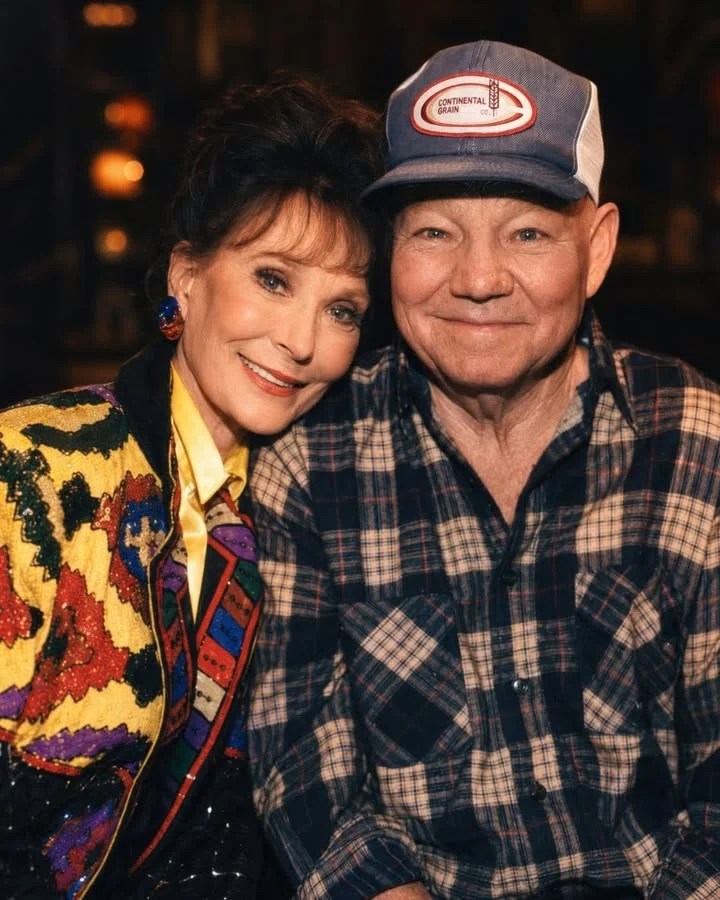
As Loretta Lynn sang “Wouldn’t It Be Great” to her dying husband, Oliver “Doolittle” Lynn lay in a hospital bed, hearing the very song she had written for him. The man who once bought her a $17 Sears guitar when they had almost nothing left this world to the sound of a melody born from their shared pain and forgiveness. That moment captured the raw honesty of a marriage that country music would never dare to romanticize.
Loretta Lynn built her legacy not by hiding the cracks but by singing straight through them. She married Doolittle when she was still a teenager, and together they raised six children while navigating a life that was often far from easy. He pushed her toward music, and that cheap guitar became a turning point. She taught herself to play, began writing songs, and slowly turned private experience into public art. But their marriage was never a country love song.
Doolittle drank. He cheated. Their fights could become violent. Loretta never hid any of it. As her records climbed the charts and awards filled the shelves, the hardest parts of their marriage found their way into her music. She wrote about the real man she knew, not a romantic fantasy. That choice gave her songs their force and made her story feel human.
The love was real. So were the betrayal, anger, forgiveness, and pain.
Doolittle died in 1996 after 48 years of marriage. Loretta never claimed those years were easy. What made her story remarkable was that she refused to rewrite them after fame arrived. In later years, her song “Wouldn’t It Be Great” became one of the clearest expressions of that complicated love. The song reflects a wish for peace, sobriety, and the version of love that might have existed if pain had not gotten in the way. Loretta later revealed she sang it to Doolittle while he was dying. By then, the arc of their life had already been written in full: beginning with a guitar, surviving years of struggle, and ending with a song. She gave country music more than a fairy tale. She gave it a marriage with all its bruises and tenderness intact, and she turned that marriage into art that still feels alive today.