
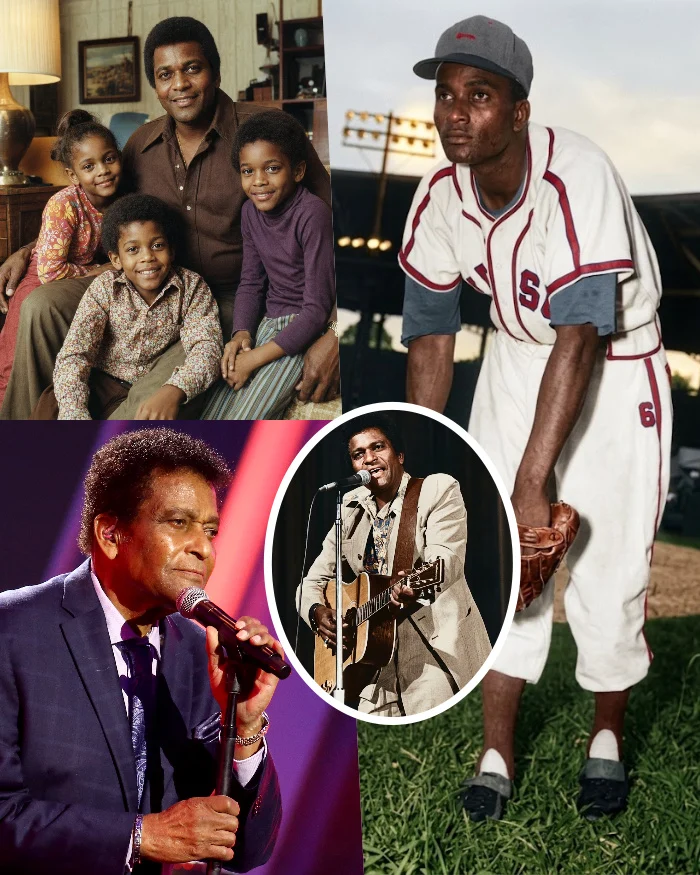
The silence in Detroit’s arena in 1966 was deafening. As Charley Pride walked onto the stage, the applause for the opening act died abruptly. The audience realized the man singing their beloved country songs was Black. But Pride didn’t flinch. He cracked a quick joke, launched into his set, and by the end of the first verse, the room erupted into cheers. That night, he shattered a racial barrier that had stood for decades in country music.
That moment was built on a foundation laid years earlier, with a mail-order guitar from Sears Roebuck. In 1948, at 14, Charley Pride saved his cotton-picking wages to buy a Silvertone acoustic guitar. Growing up in a sharecropping family of thirteen in Sledge, Mississippi, every cent was for survival. Yet he bypassed necessities and ordered the cheap instrument.
He had no formal teacher. His only instructor was the family’s wooden Philco radio. Every Saturday night, he sat close to the speaker, catching the 50,000-watt clear-channel broadcast of the Grand Ole Opry from WSM in Nashville. He taught himself to play by ear, matching the chords and phrasing of Roy Acuff and Hank Williams through the static. The same fingers calloused by cotton bolls blistered against stiff steel strings at night. He practiced while walking the rural dirt roads, ignoring the confused looks from his neighbors.
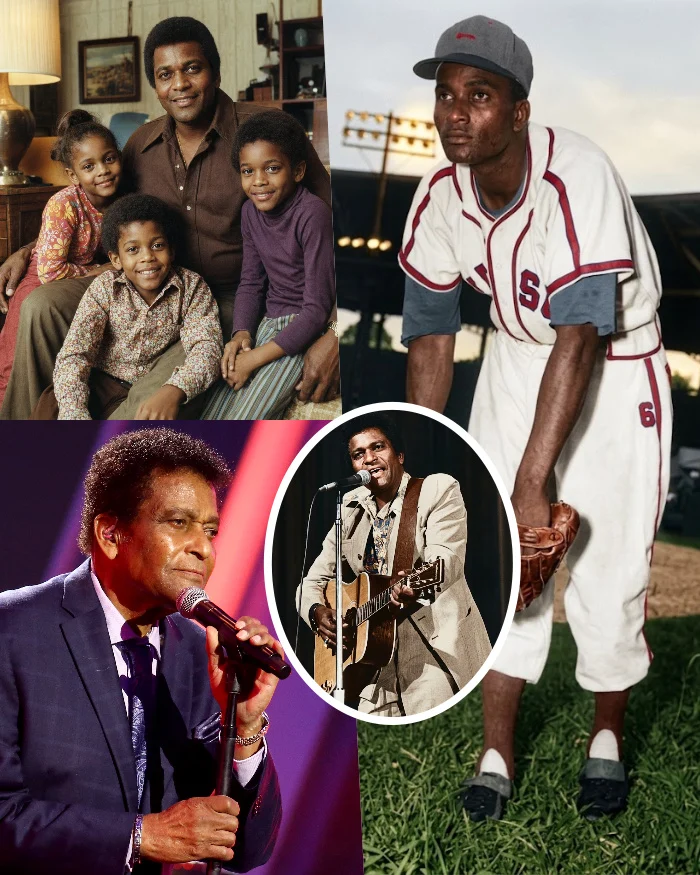
Pride initially pursued a different path. He pitched in the Negro Leagues for the Memphis Red Sox before moving to Helena, Montana, to work in a lead smelting plant. To supplement his income, he began singing traditional country standards at local honky-tonks, where his resonant baritone caught the attention of visiting country stars Red Sovine and Red Foley. They firmly told him he belonged in Music City. He followed their advice to Nashville, where producer Jack Clement captured a demo that reached RCA Records executive Chet Atkins.
Recognizing a generational talent, Atkins signed him in 1965. Knowing the severe racial prejudices of country radio disc jockeys, the label shipped his debut single, ‘The Snakes Crawl at Night,’ without any promotional photographs. The industry had to judge him solely on the weight of his voice.
He gave a massive, mainstream platform to the exact music he had studied as a boy, proving that the traditions of country music belonged to anyone who respected its roots.
Once the barrier was shattered, Pride never looked back. He went on to dominate the genre with twenty-nine number-one hits, three Grammy Awards, and the Country Music Association’s Entertainer of the Year trophy in 1971. He navigated a notoriously rigid industry with quiet, unshakeable dignity. The millions of records sold and his induction into the Country Music Hall of Fame cemented his legacy. But the foundation of his entire empire was built on a simple Sears Roebuck catalog order—a fourteen-year-old boy’s blistered fingers that eventually rewrote the history of an American institution.