
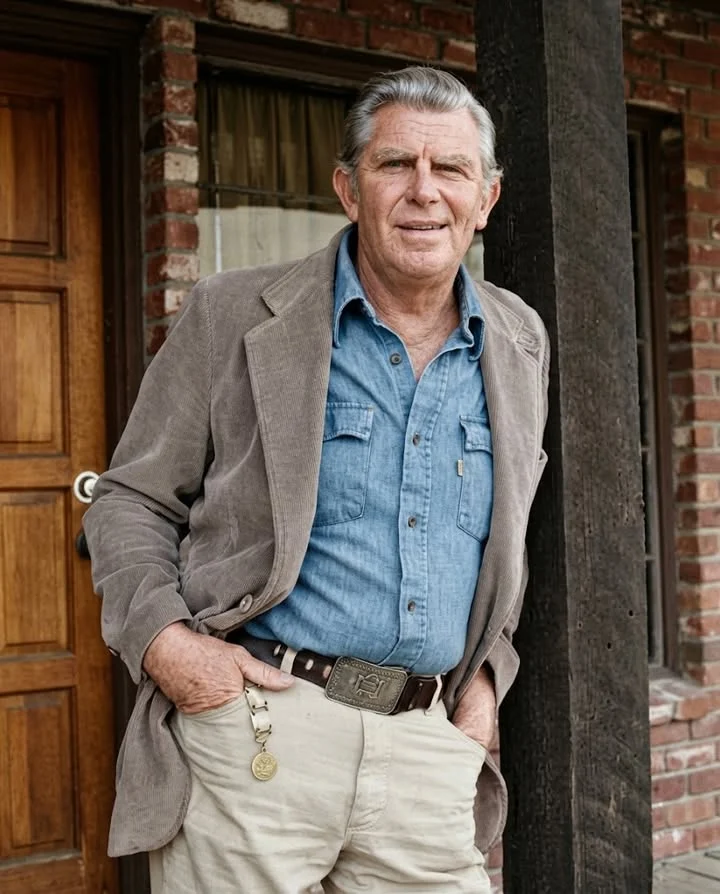
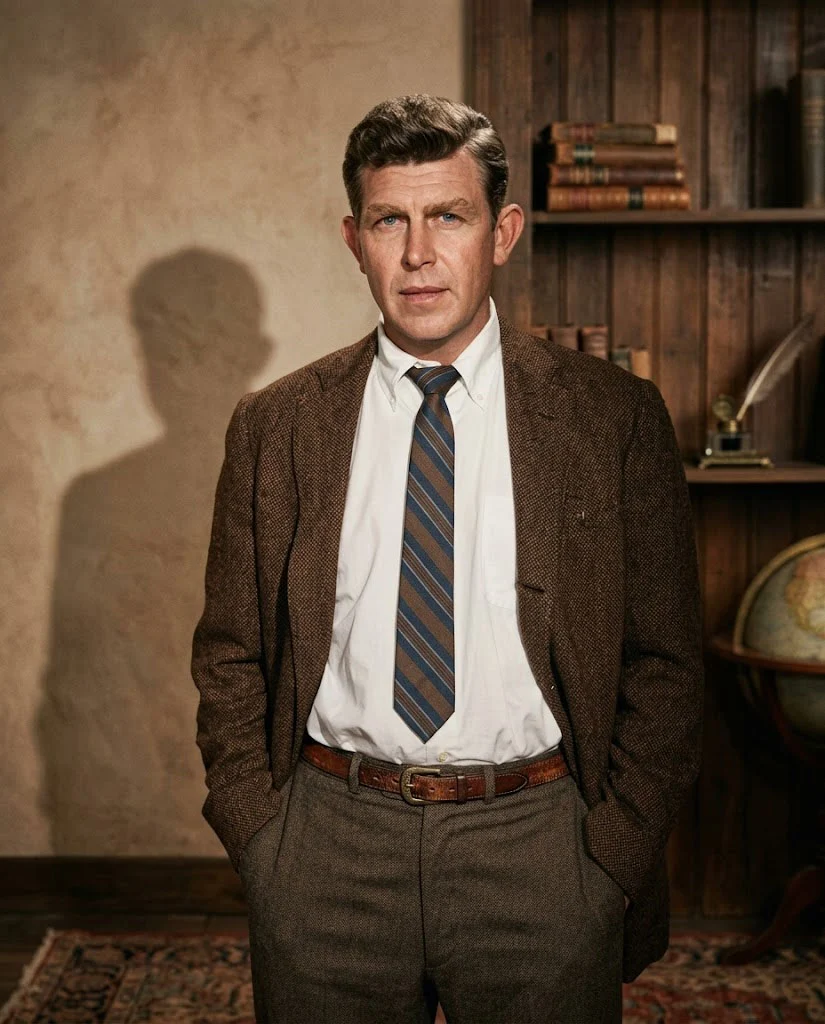
When Andy Griffith passed away in the summer of 2012, the nation grieved not just a television star but a member of their own family. The man who brought Sheriff Andy Taylor to life had quietly left behind a gift that would reveal his deepest truth.
But the real story of Andy Griffith wasn’t written in Hollywood scripts. It was sung.
Born a hundred years ago in Mount Airy, North Carolina, Griffith started his journey not on a soundstage but in a classroom, teaching music and singing in small church choirs. He carried that piece of North Carolina in his chest throughout his entire career.
His truest voice was never the one spoken through a television script. His truest voice was the one he sang.
In 1996, decades after reaching the peak of television fame, Griffith walked into a recording studio at seventy years old. He released a quiet collection of thirty-three timeless hymns titled I Love to Tell the Story. The album wasn’t a flashy comeback or a tell-all memoir. It was simply a man sitting on his front porch on a Sunday morning, singing out into a sunlit yard.
You hear a man who had seen the absolute heights of the world and decided that the simple quiet things were the only things worth keeping.
That record surprised the music industry by winning a Grammy Award. It didn’t win because of vocal gymnastics or massive marketing. It won because it didn’t feel like a performance at all. It felt like sitting next to your own grandfather, reminding you that everything was going to be alright.
Andy Griffith’s legacy endures. In an age of high-definition screens and constant noise, people still seek his quiet presence. They pull up old episodes or drop a needle on that gospel record.
Some voices never really pack up and leave. Mayberry never closed its doors. Because as long as people still crave a little peace in a loud world, we will always know exactly where to find him.