
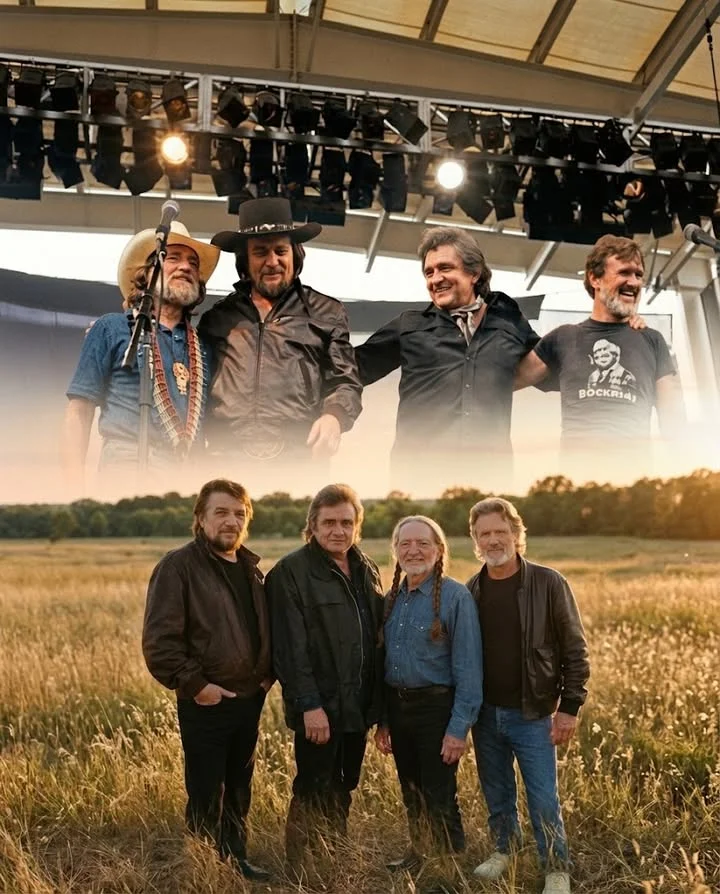
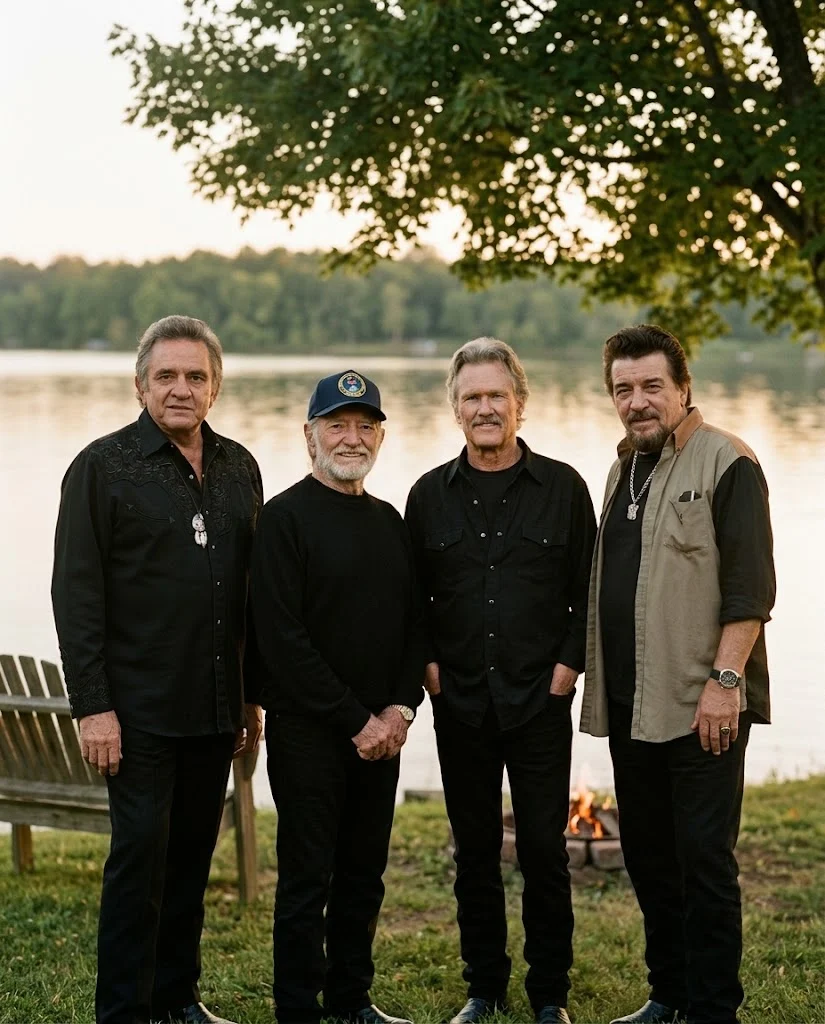
Four legendary outlaw singers stood shoulder to shoulder in the fading light of a career that had once seemed immortal, and when they sang about an aging oilfield hero, they were really staring into their own weary faces. Johnny Cash, Waylon Jennings, Willie Nelson, and Kris Kristofferson carried that moment into a song that turned tribute into confession.
In 1985, the four men released Desperados Waiting for a Train as the second single from their landmark album Highwayman. The record climbed to number 15 on the Billboard Hot Country Singles chart, following the huge impact of their debut hit.
Their first song had spoken about spirits and myth, but this one walked straight into the hard truth of time. It told the story of a young boy who worshipped an older Texas worker, a man built for labor and pride, who could not escape the slow loss of strength.
At that time, the four singers were no longer young, with Cash and Nelson in their fifties and Jennings and Kristofferson in their late forties. The cracked and tired sound in their voices was not a studio illusion. It came from hard living, illness, and countless nights spent on the road.
To feel the full weight of the recording, it helps to return to Guy Clark. He wrote the song in 1975 from memories of his childhood in Monahans, Texas. The aging hero was based on a real man named Jack Prigg, a one-eyed retired oil well driller who lived in a hotel run by Clark’s grandmother.
Prigg became a father figure to the young Clark. They shared beer and simple games such as Moon and Forty-two. Clark preserved the dignity of that roughneck spirit while showing how a proud man can remain trapped inside a weakening body.
A decade later, the Highwaymen made the song their own. They took turns with the verses, and the performance became a mirror. The outlaw voices of the seventies were now older men, acknowledging that they had become the elders they once defied.
Throughout the 1990s, they often closed their global tours with this track. They stood together at the edge of the stage, trading lines like old soldiers accepting the coming dark. Their brotherhood made the sadness feel noble rather than bitter.
To me he’s one of the heroes of this country So why’s he all dressed up like them old men Drinkin’ beer and playin’ Moon and Forty-two Just like a desperado waitin’ for a train
The song endures because it honors aging without pretending that age is gentle. It also celebrates the bond between lone wolves who could stand side by side and admit that time had changed them.