
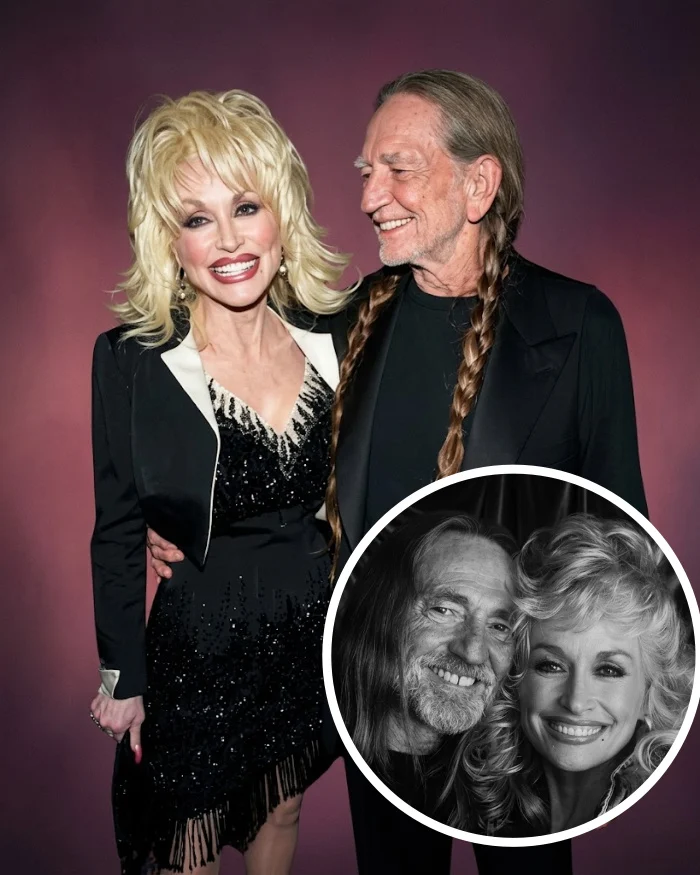
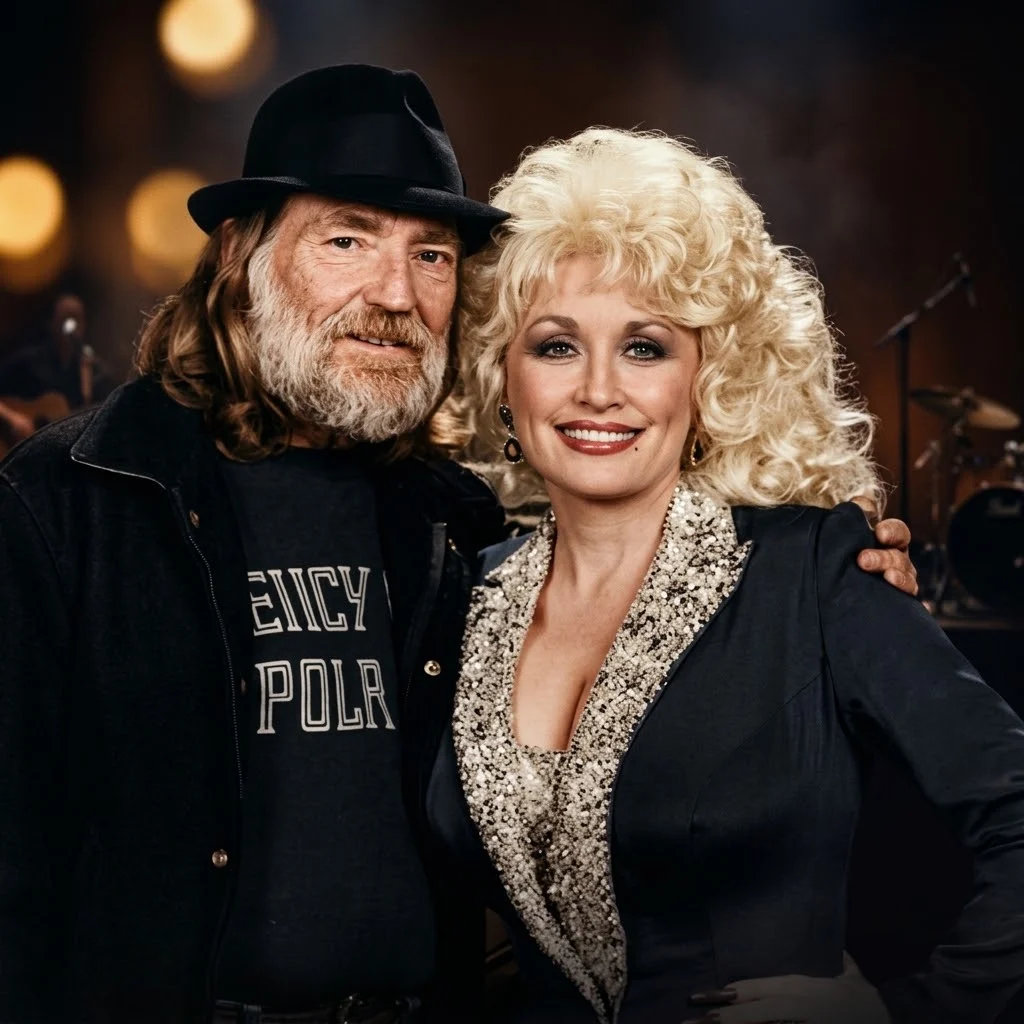
The studio fell still when Willie Nelson sang his lines beside Dolly Parton. Her eyes filled. A simple love song became a raw mirror of two Nashville survivors who had waited decades to be heard on their own terms.
On stage they seemed to belong to different worlds. Willie carried the battered acoustic guitar named Trigger and wore the dust of outlaw country. Dolly built a shimmering kingdom of rhinestones and flawless glamour. Beneath that contrast ran a quieter story. Their friendship grew in the lonely writing rooms of the 1960s, long before fame crowned them both.
They arrived in Tennessee as young songwriters trying to pay rent by turning heartbreak into lyrics for other voices. Music Row saw them first as inventory. Producers welcomed Willie’s songs, including Crazy and Hello Walls, yet dismissed his own behind the beat voice as too strange for country radio.
Dolly faced a similar squeeze. Industry men tried to soften her East Tennessee vibrato and suggested her safer role was writing hits for established stars rather than claiming the center stage herself.
That shared rejection forged a bond. They knew what it meant to help build Nashville while being told their own voices did not fit their own words. Their respect needed no spectacle. It lived in patience, humility, and the memory of closed doors.
He gave her song a gravity she could not force alone.
Years later that bond surfaced on Willie’s 2013 duets album To All the Girls… Dolly had written From Here to the Moon and Back for the film Joyful Noise, but she wanted Willie on the track. She trusted his weathered phrasing to deepen the melody.
Willie recorded with instinct, often in a single take, while Dolly pursued precision. In that session she met him where he stood, and the result felt bigger than a duet. It sounded like two people who had survived the golden era of country music together.
Their friendship across six decades remains a quiet lesson in resilience. The outlaw and the queen looked opposite, yet their shared struggle made one of country music’s most tender collaborations possible.