
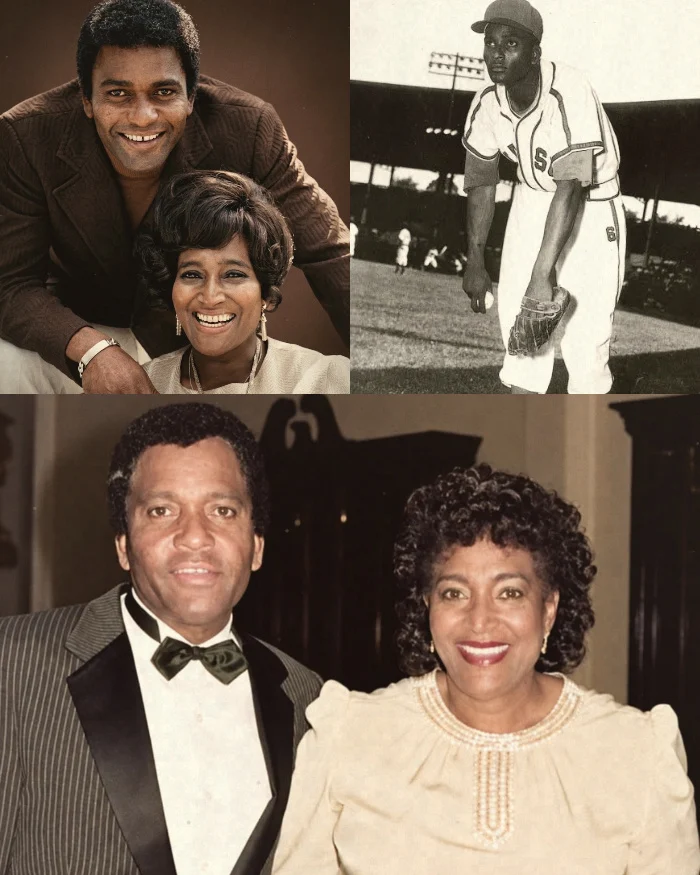
Long before the applause, the Country Music Hall of Fame, and sixty-four years of marriage, the future of Charley Pride rested on a kitchen table in Helena, Montana.
A young pitcher had lost his fastball. His wife, a cosmetologist from Mississippi, held the family together with careful hands and stubborn faith.
She believed in him before anyone ever heard him sing.
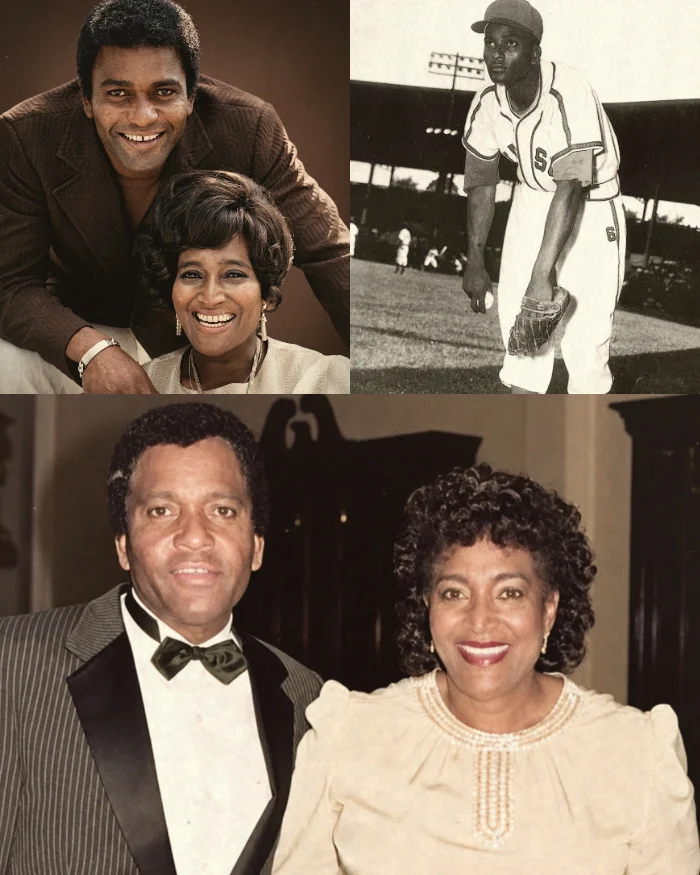
Charley Pride stood on the mound for the Memphis Red Sox in the summer of 1956, chasing a dream born in Mississippi cotton fields. Martin Stadium along Crump Boulevard drew working families, jazz fans, and neighborhood regulars to Negro American League baseball.
Rozene Cohran, an Oxford, Mississippi native working as a licensed cosmetologist, came often from the stands. A quiet conversation near the dugout rail grew into Sunday outings after doubleheaders.
By then, the U.S. Army had drafted Charley. He reported to Fort Chaffee, Arkansas, for basic training. Granted Christmas leave, he came straight back to Memphis. The couple married on December 28, 1956.
Baseball promised security, but it did not keep it. Charley served his military commitment at Fort Carson, Colorado, pitching for the post team and playing alongside future major leaguers. He returned to Memphis in 1958. Soon after, an arm injury permanently reduced his throwing velocity. Tryouts with the New York Mets and California Angels ended without a contract.
The couple moved into a harder chapter. In 1960, Charley traveled north to Helena, Montana, to work as a laborer at an Asarco lead-smelting plant while pitching for the local semi-pro East Helena Smelterites. Rozene stayed in Memphis with their young son, Kraig, until he secured steady shifts and living quarters.
When she joined him in the northern Rockies, the family settled into a modest routine far from the Deep South. They eventually welcomed two more children, Dion and Angela.
While Charley worked the furnace floor by day, he began singing fifteen-minute sets at local Helena taverns and honky-tonks. The tips were small, but Rozene kept strict order over their household budget. Every dollar from plant shifts and local gigs went toward groceries, coal, and the mortgage on their first home.
Country stars passing through the region, including Red Sovine and Red Foley, heard Charley perform and urged him to audition in Nashville. Traveling south for recording sessions meant days away from the plant, unpaid leave, and money the family could scarcely spare. Rozene managed their accounts so he could afford bus tickets and demo tapes. She remained at home with the children while he knocked on doors on Music Row.
When Chet Atkins signed Charley to RCA Victor in 1965, the label initially distributed his earliest records to radio stations without promotional photographs. Promoters and radio programmers hesitated. Segregated touring circuits across the South created logistical obstacles that other country artists never faced.
Through that friction, Rozene became manager and bookkeeper behind the scenes. She helped vet contracts and monitor performance dates. As Charley moved from outsider to one of RCA’s top-selling artists, her informal work grew into Chardon, a business enterprise that handled touring, publishing, and outside investments.
Charley was inducted into the Country Music Hall of Fame in 2000, standing as the genre’s first Black superstar. By the time of his passing in late 2020, their marriage had spanned sixty-four years.
Decades after thirty-six number-one hits and worldwide arena tours, the bedrock of that life remained what it was in 1956. A cosmetologist and an injured pitcher sat at a kitchen table, figuring out the household ledger one week at a time.