
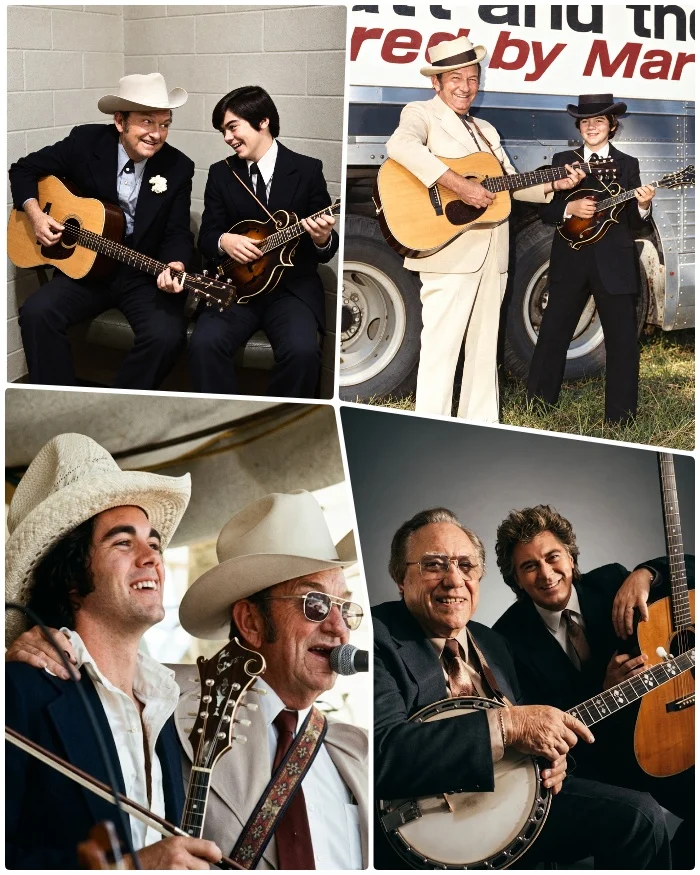
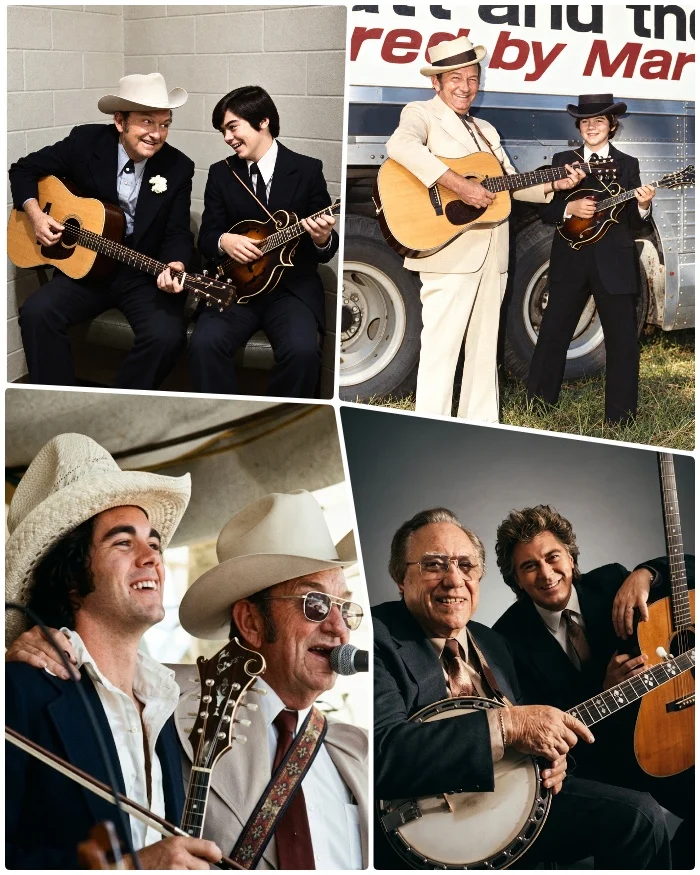
Decades after he first climbed aboard that silver tour bus, Marty Stuart still introduced himself with the title that meant more to him than fame or chart success.
Lester Flatt’s boy
That lasting bond began in September 1972 when the thirteen year old stepped straight from the pine flatwoods of Philadelphia, Mississippi, onto Lester Flatt tour bus and into the demanding rhythm of professional bluegrass touring.
Flatt had recently parted ways with longtime partner Earl Scruggs to lead The Nashville Grass and his decision to hire an eighth grader with an electric stage presence drew real skepticism from veteran pickers on Music Row.
Before Marty was allowed to pack a suitcase, his parents John and Hilda Stuart insisted on a personal meeting in Nashville. Hilda set absolute terms and made Lester personally responsible for the boy completing his correspondence coursework, eating proper meals and staying clear of alcohol and the late night vices common on festival circuits. Flatt gave his word and treated that promise as a binding family oath rather than a casual formality.
The road tested that promise with a schedule that often covered thousands of miles each week through county fairs, college campuses and southern high school auditoriums. Aboard the silver bus, life in The Nashville Grass ran on strict discipline with clean dress codes, punctual soundchecks and professional etiquette on and off the bandstand.
When long highway runs ended, Marty did not head for cheap Nashville boarding houses. Lester and his wife Gladys took him to their own home in Hendersonville, Tennessee, where Gladys cooked family dinners, washed his laundry and checked his school assignments alongside his daily instrument practice and gave the far from home teenager a grounded domestic center.
Flatt also took charge of his financial education and withheld a sizable portion of his weekly wage from weekend shows instead of handing over full cash envelopes. He placed the money in a dedicated savings account and when Marty turned sixteen he walked him to a local dealership where the teenager paid full cash for a 1970 Pontiac Catalina without borrowing a single dollar.
On stage, Flatt taught him that virtuosity meant little without presentation and restraint. He showed him how to stand straight at the microphone, how to support a vocalist without overplaying and how to hold an audience with his eye and a polished stage suit. Under that steady guidance, Marty grew into a multi-instrumentalist whose lightning fast mandolin and guitar breaks complemented the patriarch steady rhythm playing.
Stuart stayed a central part of The Nashville Grass for more than six years and shared stages with Bill Monroe, Mac Wiseman and other core pioneers of the genre. As the decade closed, chronic heart problems and failing health slowed Flatt and the band. Stuart turned down outside offers and stayed until Flatt final performances in 1979 shortly before the bluegrass titan died at age sixty-four.
Those years under Flatt roof permanently changed the course of Stuart life. He later joined the backing group of Johnny Cash and then built a chart topping solo career with The Fabulous Superlatives and earned a reputation for dazzling stage suits, pristine musicianship and deep reverence for the pioneers who built the genre.
Decades later, surrounded by his historic collection of country music artifacts and performing on the Grand Ole Opry stage, Stuart kept the polished manners, the sharp tailoring and the lessons from Hendersonville close. The home Lester and Gladys gave him became the foundation for everything that followed.