
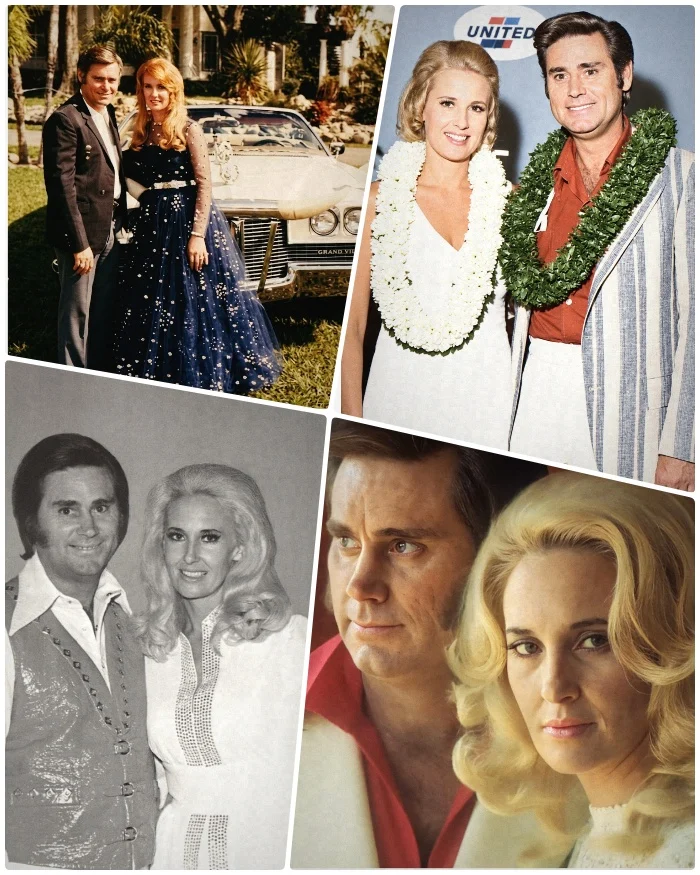

They did not need to act. Standing across from each other at the microphones only months after their divorce became final, George Jones and Tammy Wynette carried the raw wreckage of their own marriage straight into the vocal booth, and producer Billy Sherrill made certain every ounce of that unspoken grief went into the record instead of erupting between them.
By the end of 1975, the Nashville establishment had accepted that the reign of country music’s ultimate golden couple was permanently over. The intense pressure of fame, colliding with Jones’s severe battles with alcoholism and erratic paranoia, had completely fractured their household. After years of terrifying nights, including a breaking point when Wynette had to carry her infant daughter into the dark to escape his unpredictability, she made the agonizing decision to file for divorce.
The legal separation dissolved a marriage that had produced some of the greatest duets in American music history. The paperwork officially ended their home life, yet their contractual obligations to Epic Records remained entirely intact.
Just months after the ink dried on the divorce decree, the legally separated couple found themselves walking right back into a Nashville vocal booth. They were presented with Golden Ring, a narrative track penned by songwriters Bobby Braddock and Rafe Van Hoy that mirrored the exact and painful trajectory of their own lives. The song traced the cyclical journey of a cheap piece of jewelry purchased from a pawn shop display case for a hopeful wedding, worn through a deteriorating romance, and eventually abandoned on a dresser to end up right back in the same cold storefront window.
Navigating that volatile environment required masterful control, and Sherrill provided it by establishing a strictly disciplined and unsentimental psychological atmosphere inside the 1976 session. The legendary producer flatly refused to allow the studio to become a venue for personal arguments or lingering resentments. He maintained a highly structured and businesslike perimeter, treating Jones and Wynette not as a broken husband and wife but strictly as elite vocalists with a job to finish, anchoring the room by focusing their attention entirely on the technical delivery.
Because of that tight professional boundary, Jones and Wynette did not need to manufacture chemistry or perform the heartbreak. When they delivered the verses, the subtle cracks in Jones’s traditional baritone and the familiar tear in Wynette’s signature delivery were devastatingly authentic, fueled by the fresh and undeniable reality of the family they had just dismantled. They were not simply recording a standard country heartbreak song. They were using the studio equipment to process the absolute end of their own relationship.
The resulting record resonated massively with audiences, climbing all the way to the number one spot on the Billboard Hot Country Singles chart in August 1976. The subsequent album became a landmark release, proving their commercial drawing power was entirely independent of their marital status. Fans were captivated by the unshielded friction they heard on the vinyl, recognizing an emotional weight that clever songwriting alone could never fake.
That massive commercial triumph, however, carried a heavy and exhausting personal cost. Because the track became one of their most defining and requested duets, the legally separated couple was forced to stand on concert stages together night after night. For years they had to look at each other under the arena lights and perform the exact details of their real life failure for cheering crowds, maintaining fierce professionalism while unable to fully escape the history they had just walked away from.
The divorce decree formally separated their lives and allowed a mother to finally protect her children from a chaotic environment. Yet the pristine vocal tracks they cut while their wounds were still open proved far stronger than any legal document.
George Jones and Tammy Wynette lost the ability to live under the same roof, but the sheer honesty of that 1976 session ensured their voices would remain permanently bound together.