
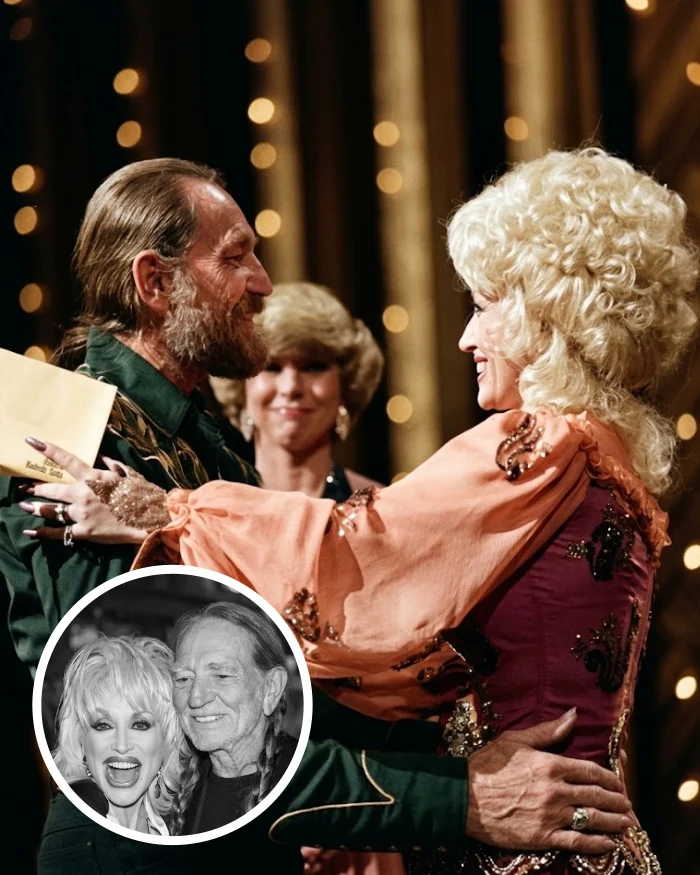
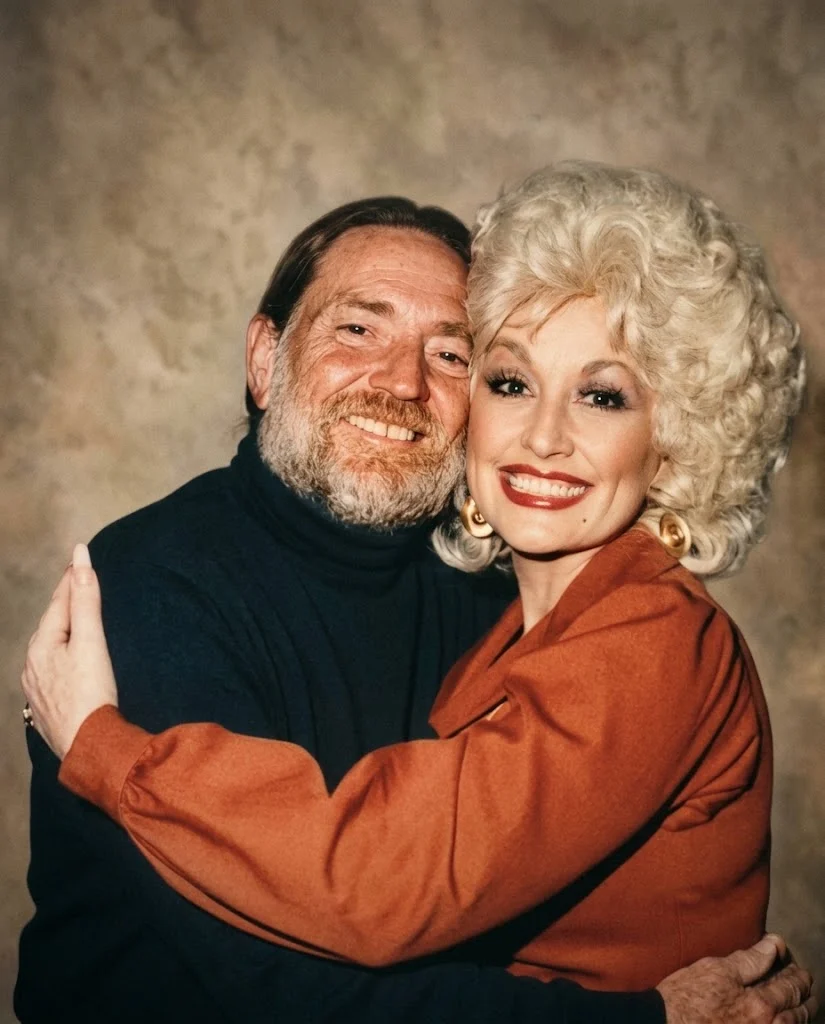
Long before stadiums echoed their names, Dolly Parton and Willie Nelson were two broke songwriters splitting cheap diner booths on Music Row. They met in the 1960s as staff writers for Fred Foster’s Combine Music, surviving on modest weekly draw checks while conservative label executives turned away song after song.
Their friendship was not built on gold records or applause. It grew in low-rent writing rooms, late nights, and the quiet understanding that rejection could be survived when someone else believed in the next verse.
Willie later carried that stubborn independence to Texas and helped reshape outlaw country around his battered 1969 Martin N-20 guitar, Trigger. Dolly stayed the course in Nashville and built a crossover empire across country charts, pop radio, television specials, and films.
Yet fame never bent the bond they formed along 16th Avenue South. In 1982 they recorded the duet Everything’s Beautiful In Its Own Way, and the song reached the Top 10 on the Billboard country charts. Willie’s jazz-inflected phrasing and Dolly’s bright mountain voice fit together without force.
They sang as friends first and stars second.
Decades later that same ease appeared inside a parked tour bus. Sitting side by side on a worn couch, Willie strummed Trigger while Dolly harmonized without headphones, sheet music, or studio polish. Between verses they traded old road stories and wry jokes, as if they were still picking on a porch sixty years earlier.
They also shared the same instinct to give back to the soil that raised them. Willie helped found Farm Aid in 1985 and raised tens of millions of dollars for independent family farmers. Dolly poured millions into childhood literacy through the Imagination Library and supported mountain healthcare in Sevier County.
Through shifting industry trends, health scares, grueling tours, and the loss of nearly every peer from their formative era, their late-night phone calls kept the same down-home humor alive. They offered advice about songwriting copyrights, checked in during hard seasons, and protected a loyalty that never changed keys.
Their friendship remains a rich record of Nashville’s golden era, preserved in early sessions, unpolished outtakes, and six decades of road stories.