
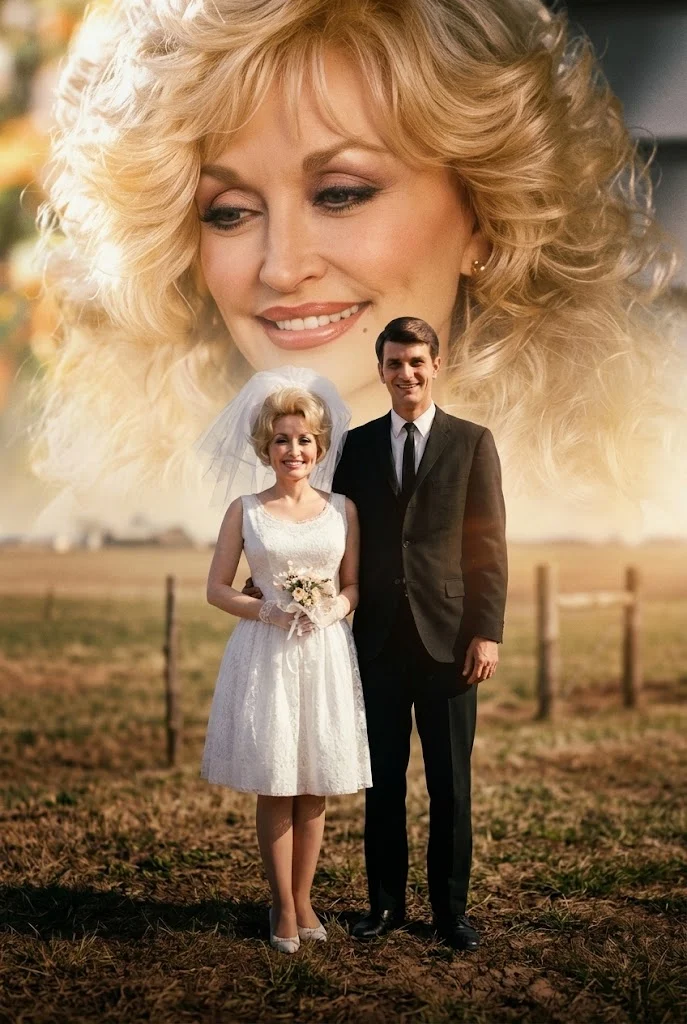
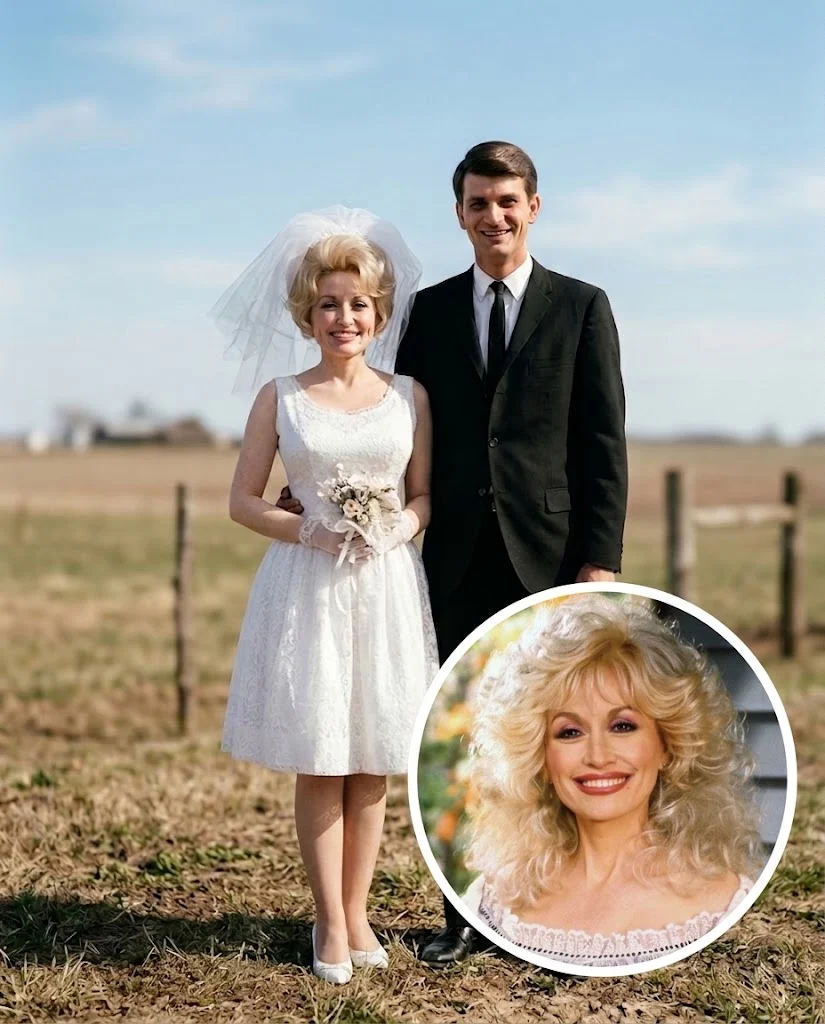
A handmade white lace dress, a tiny bouquet, and a quiet church in Ringgold, Georgia became the unlikely launchpad for one of country music’s most enduring partnerships.
When Nashville told Dolly Parton that love would break her career, she did not fight the executives with headlines. She answered with a secret wedding and a husband who chose to stand outside the spotlight.
In 1966, Monument Records executive Fred Foster warned the young singer that country music audiences wanted their female stars to appear single and available. A husband, he said, could alienate fans, complicate touring, and stall a career that was only beginning to rise.
Parton was twenty years old. Carl Thomas Dean was twenty-three. They had already built a bond away from the polished machinery of Music Row, and they were not willing to let a record label set the date for their marriage.
That bond began in 1964, on Parton’s first day in Nashville. Fresh out of high school in the Great Smoky Mountains, she was doing laundry at the Wishy Washy Laundromat when Dean drove by in a white Chevy pickup. He called out to warn her about the sun in her outfit, then walked over and simply wanted to know her.
He had no connection to the music business, and he did not care about her industry dreams. He saw a young woman he wanted to meet.
By spring 1966, Parton still needed to protect a fragile public image. To keep the wedding away from the Nashville press and label executives, the couple drove across the state line to Ringgold, Georgia, a small mountain town known for issuing same-day marriage licenses without a waiting period.
On Memorial Day, May 30, they stood inside the First Baptist Church. There was no red carpet, no press, and no sprawling guest list. The witnesses were only the pastor, his wife, and Parton’s mother, Avie Lee.
Avie Lee had made the simple white lace dress for her daughter. She also found a small bouquet just before the vows. Carl accepted the quiet ceremony so his new wife could guard her career while they claimed their private life.
After that hidden afternoon, the two walked very different roads. Parton rose into blinding global fame, commanding arenas, starring in films, and building a legendary entertainment empire.
Dean took the opposite path. He avoided award shows, stayed away from cameras, and continued his paving business in Nashville. He gave Parton a grounded refuge after months on tour buses and bright lights.
He never wanted the spotlight, but he never asked her to leave it either.
The marriage that Nashville feared would destroy her career instead outlasted nearly every record deal in the town. Their foundation was not built on spectacle. It was built on a laundromat meeting, a handmade dress, and a quiet choice to love first.