
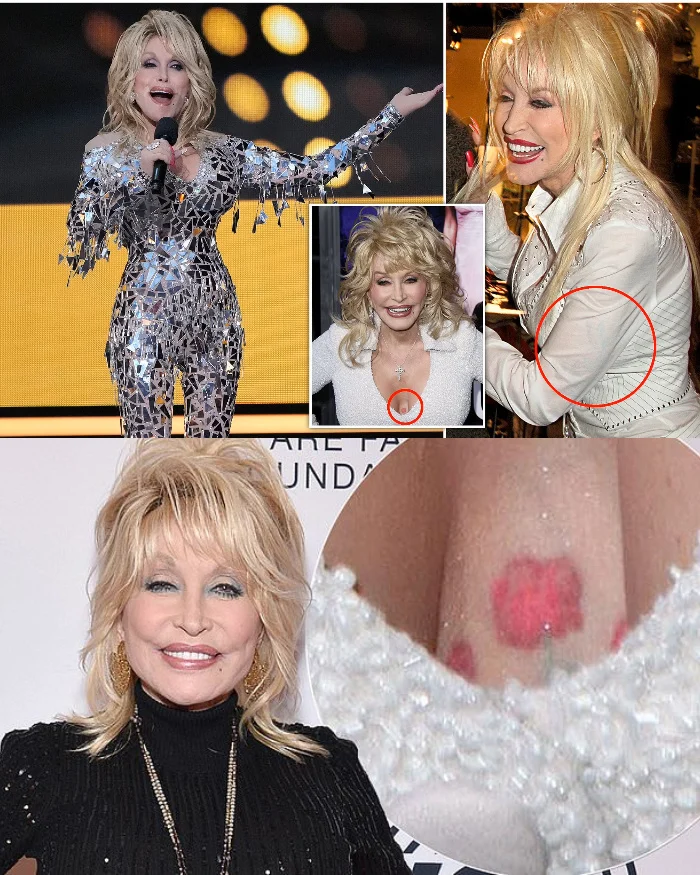
For decades the world watched Dolly Parton shine under rhinestones, yet one of her most recognizable choices hid a private truth. She wore long sleeves not to tease fans, but to protect the marks left by survival. Behind the glamour sat a woman who had faced painful medical battles and chose to reclaim her body on her own terms.
At the height of her fame in the early 1980s, the country music icon faced a catastrophic health crisis. Severe internal bleeding and debilitating endometriosis forced her to undergo a partial hysterectomy in 1984. The surgery saved her life, but it also ended her ability to have children. That loss plunged the normally bright singer into a deep and agonizing depression.
She returned to the stage and the screen, but her body carried lasting reminders. Because her fair skin is prone to keloid scarring, surgical marks did not fade softly. They turned deep purple and stayed visible, becoming harsh physical records of her hardest days.
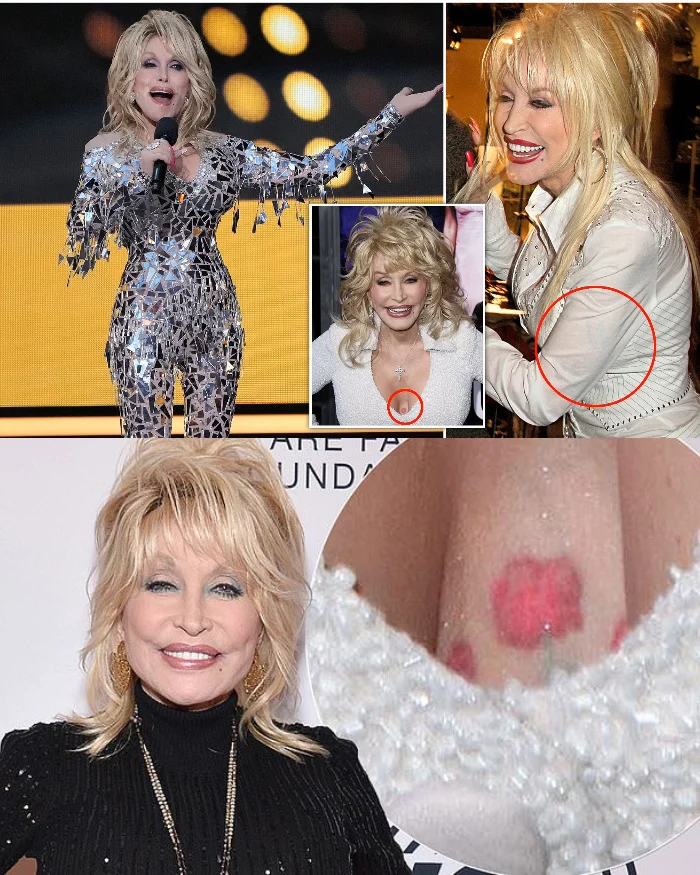
Rather than live with those clinical reminders, Dolly made a quiet decision. She covered the scars with pastel tattoos. She did not seek a rebellious fashion statement, and she has often said she never wanted tattoos for their own sake. The ink was functional and emotional, a way to take back control.
She disliked heavy black outlines, so she asked artists for soft translucent pastel colors that would blend with her fair complexion. A permanent indentation left by a feeding tube was covered with a honeycomb and a small yellow bee. Other scars disappeared beneath ribbons, guardian angels, and butterflies.
She turned the physical evidence of her pain into a private canvas of resilience.
Despite her enormous global fame, she has guarded this artwork fiercely. Comedians such as Roseanne Barr have mentioned seeing her inked arms backstage, and fans caught a brief glimpse of a butterfly during a 1996 appearance on The Tonight Show with Jay Leno. A rare partially exposed sleeve on a 2011 red carpet also revealed a small piece of the hidden story.
For more than a quarter of a century, Dolly has mostly worn long-sleeved gowns, tailored jackets, and sheer illusion gloves. The public speculated for decades, inventing rumors about addiction, sleeve tattoos, or needle marks. The truth was far more personal. It was rooted in medical trauma and the way her body heals.
Throughout her fifty-year career, Dolly has given audiences a great deal. She built a theme park in her native Smoky Mountains, shared the intimate details of her impoverished childhood, and poured heartbreak into songwriting. She let the world consume her image, but she drew a firm boundary around her physical trauma.
The pastel ink transformed the harsh reality of hospital rooms into something she alone could control. The sequins, the legendary songs, and the towering glamour belong to the public. The butterflies underneath belong only to her.