
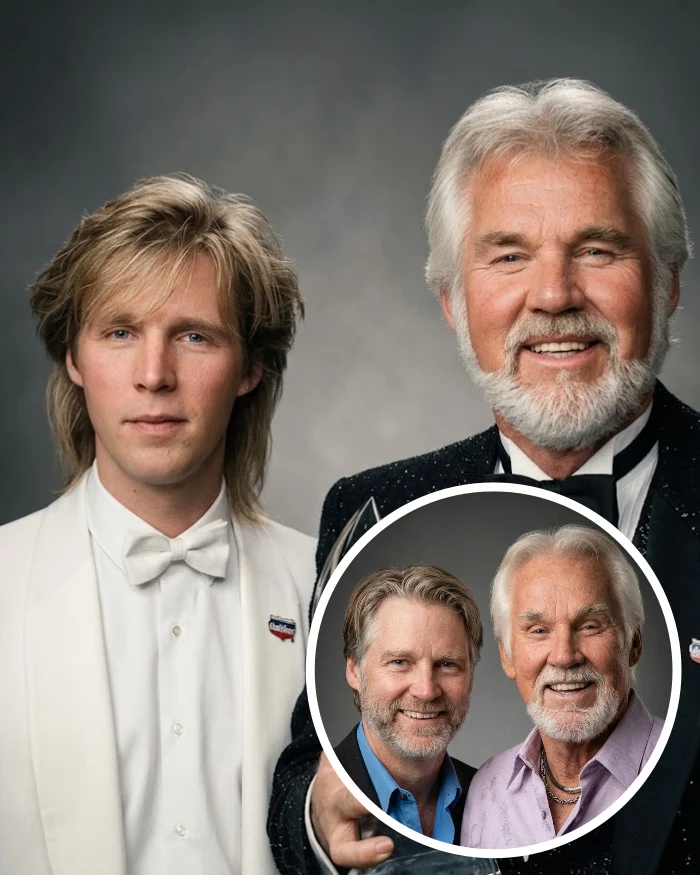
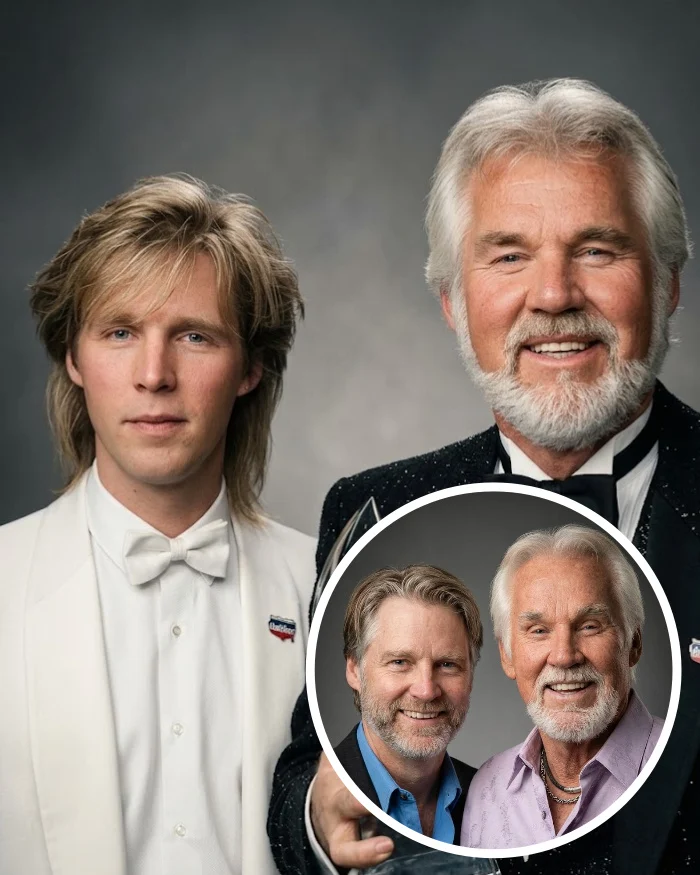
While Kenny Rogers stood under bright arena lights in 1980 and confessed a private failure to the world, the most powerful country voice of his era sounded less like a superstar and more like a frightened father.
Between 1975 and 1980, Kenny Rogers built one of the most successful careers in country music history. His records topped the charts, his television specials reached millions, and his relentless touring filled arenas across the country. Yet the same fame that made him a household name kept him away from Kenny Jr. for five years. The boy grew up without the daily presence of a father who had become a stranger.
By the late 1970s, Rogers had moved from working musician to pop-culture phenomenon. The machinery of his career demanded constant travel, constant performance, and constant public control. Behind the silver-haired storyteller the audience trusted, a quiet fracture widened inside his family. The intense demands of superstar status created a wall between father and son, and Rogers spent the most important years of his son’s life on the road.
In 1980, instead of protecting a flawless public image, Rogers used a high-profile media interview to admit his failure. He did not blame the music industry. He did not hide behind his management team. He took full responsibility for the five-year absence and said he desperately wanted to repair a relationship on the verge of breaking completely.
No amount of wealth or applause could buy back the days he had already traded away
Standing before roaring crowds forced him to confront a painful truth. The applause could not replace the ordinary moments he missed. The awards could not restore the years he had traded away.
The public confession became a breaking point. Rogers reevaluated his priorities and began the slow work of rebuilding trust. The repair did not happen in one grand gesture. It happened in awkward conversations, careful listening, and ordinary presence after the cameras disappeared. He had to remove the superstar persona and become a father again, one consistent day at a time.
To protect his family from the road, Rogers set strict boundaries. He stopped staying away for months. He used private aviation as a practical tool so he could fly home immediately after concerts. He blocked protected time on his calendar for family and refused to fill those days with studio sessions, media appearances, or live shows.
He also brought Kenny Jr. into his world. The son gained roles on tour and behind the scenes, not as a publicity move but as a way to share the life his father had once missed. Rogers wanted to bring them closer instead of letting his career keep them apart.
That lesson followed him into later family life. When he welcomed Christopher and the twins Justin and Jordan, Rogers guarded his time at home with even greater care. The guilt of those missing years between 1975 and 1980 became a permanent reminder of what ambition can cost. He eventually retired from touring entirely in 2017 so he could be a full-time father.
Kenny Rogers leaves behind a towering musical legacy that will keep playing for generations. Yet his deepest victory was quieter. He admitted where he had failed, changed the shape of his life, and chose presence over applause. A fractured family can heal when a father decides to stay.