
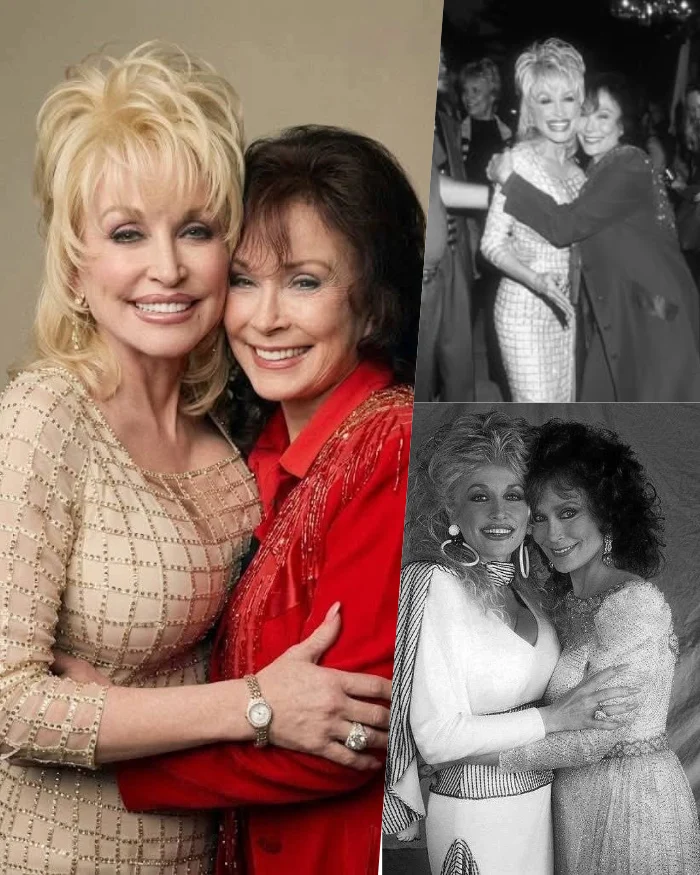
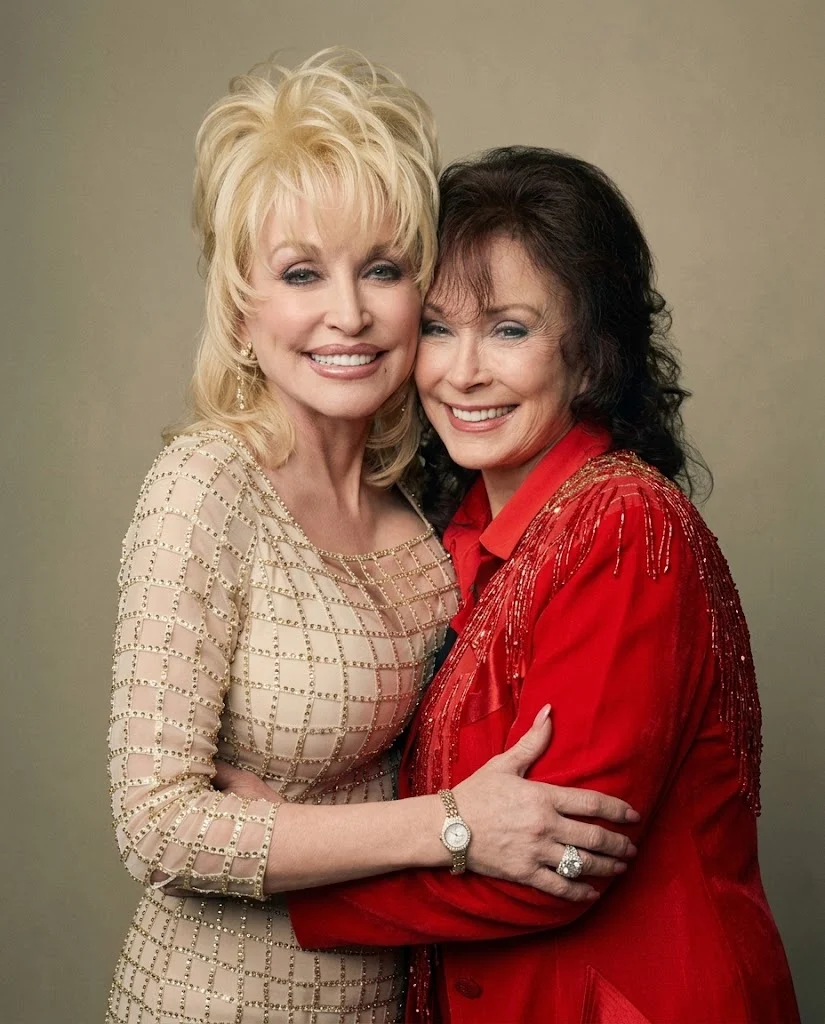
When Loretta Lynn died at ninety on October 4, 2022, at her home in Hurricane Mills, Tennessee, Dolly Parton did not simply lose a famous colleague. She lost the last living witness to the hard years when two young Appalachian women fought to survive in Nashville.
Parton’s public statement honored a friendship that lasted more than half a century. The industry mourned a pioneer, but Parton said goodbye to someone she considered a sister. For six decades, they had watched each other climb from unknown singers seeking radio play to matriarchs of country music.
Their bond grew from the same soil of rural hardship. Lynn came from the coal mining hollows of Butcher Hollow, Kentucky, and Parton grew up in a one-room cabin in the foothills of the Great Smoky Mountains. Both arrived in Nashville in the 1960s carrying raw pain and a fierce need to be heard.
Music Row rarely valued independent female songwriters. Women were often pushed into secondary roles as television girl singers, with Lynn alongside the Wilburn Brothers and Parton under the towering shadow of Porter Wagoner. Female artists were expected to smile, sing harmony, and compete for the few radio slots given to women.
Parton and Lynn refused that lonely script. They built a private sanctuary away from cameras, chart pressure, and executives who wanted to control their careers.
Behind closed dressing room doors and over late-night telephone calls, they could take off the wigs, the heavy makeup, and the armor of fame.
They spoke about exhaustion from endless road tours, frustration over publishing rights, and the mental toll of carrying massive public images. In those quiet moments, they were not legends. They were two mountain women leaning on each other for strength.
That backstage alliance helped them claim creative autonomy. Lynn wrote candidly about working-class women and the double standards they faced. Parton took ownership of her vast publishing catalog and expanded her reach far beyond country music.
Even in their seventies and eighties, both women continued releasing records and proving their staying power. Nashville kept searching for younger faces, but the sisterhood between Parton and Lynn outlasted the trends.
Lynn’s death left Parton in a unique isolation. The executives, the male mentors, and the early battles were long gone. Lynn remained one of the last mirrors to Parton’s youth and the silent struggles they fought backstage.
The private conversations they shared away from the cameras carry the real weight of their legendary careers. That chapter of country music history will belong fully to only the two of them.