
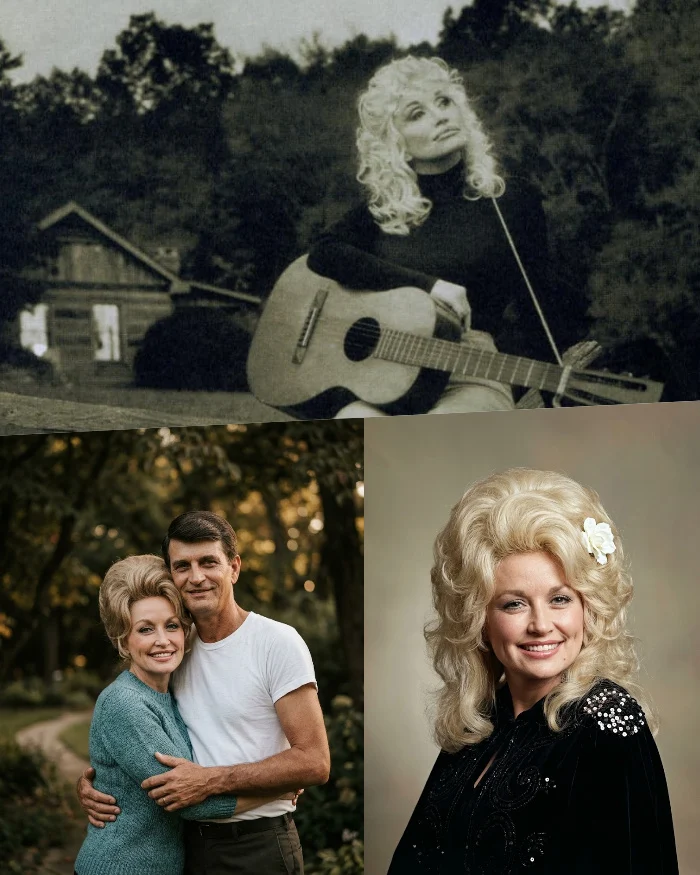
The most covered song in Dolly Parton’s catalog began with a quiet fear that a red-headed bank teller might take her husband. That private dread in 1973 became “Jolene,” a masterpiece forged while Parton was already navigating one of the most chaotic chapters of her life.
By then Parton was preparing to end her legendary professional partnership with Porter Wagoner and step into a heavily anticipated solo career. The industry watched every move. Yet inside her Nashville home, a far more human crisis was unfolding.
Her husband of seven years, Carl Thomas Dean, ran a local asphalt paving business and kept his distance from her spotlight. He had begun making unusually frequent trips to a local bank branch. The attraction was not financial. A striking red-headed teller was openly flirting with the quiet contractor from behind the counter.
For a woman whose towering wigs and global fame made her seem untouchable, the situation stirred a crushing wave of insecurity. Parton did not create a public scene. She confronted Dean directly and honestly, halting the visits before they could fracture the vows they had taken in a Ringgold, Georgia, courthouse in 1966. Dean assured her there was nothing to worry about and never returned to that teller’s window.
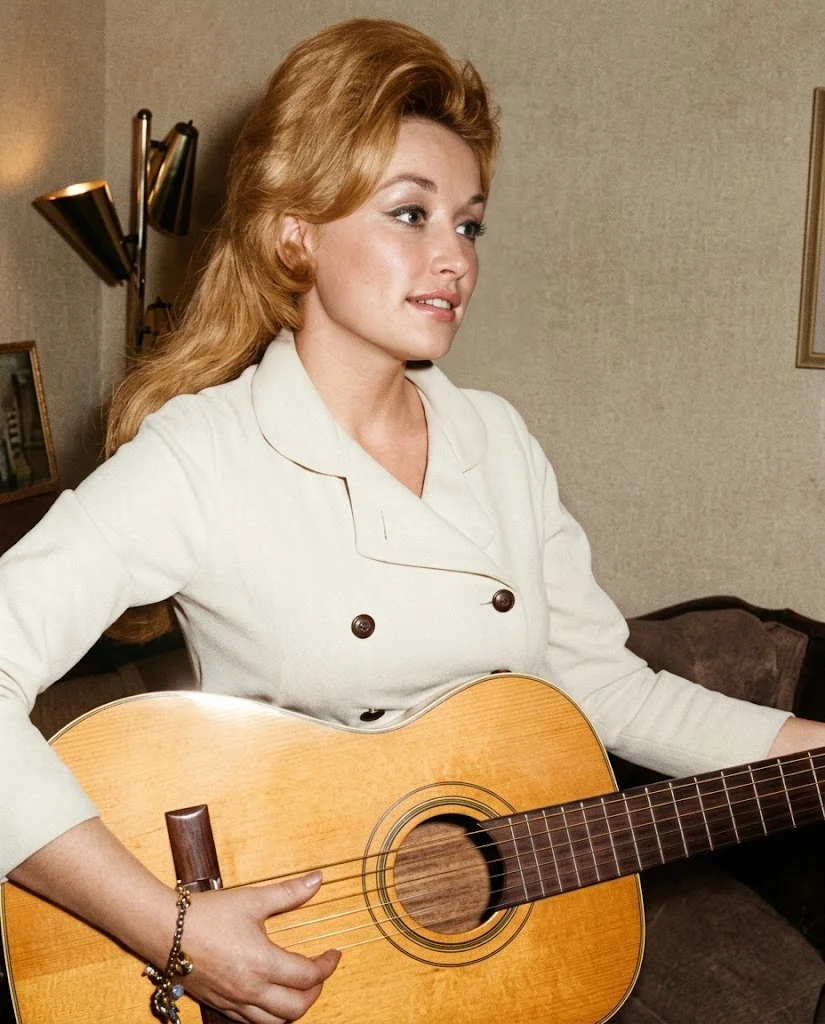
The emotional residue still lingered. Instead of burying the fear or lashing out, Parton sat on the floor with her acoustic guitar and poured her vulnerability into a new melody. She wrote about a woman with ivory skin, emerald eyes, and auburn hair, a natural beauty she felt she could not compete with.
Please don’t take him just because you can
That line was no sign of weakness. It was a fiercely honest plea from a wife fighting to protect the peace she had left.
When Parton carried the raw acoustic confession into Nashville’s legendary RCA Studio B in May 1973, she made a crucial artistic choice. She did not shape the track as a slow weeping country ballad. Working with producer Bob Ferguson and Nashville’s elite session musicians, she built the arrangement around a relentless descending acoustic guitar lick that she finger-picked herself. A fast-paced bassline and brushed snare drum gave the studio track an urgent galloping rhythm.
It sounded exactly like a racing anxious heartbeat
The pulse matched the breathless panic of a woman rushing to save her marriage before it slipped away.
Released in late 1973, “Jolene” reached the top of the country charts by early 1974 and soon crossed into the mainstream pop world. It became the most covered track in Parton’s massive catalog. Incredibly, she wrote it on the same day she wrote “I Will Always Love You,” making 1973 the year she mastered the art of turning impending loss into musical history.
Decades later, Parton and Dean remained devoted to each other. They weathered the pressures of fame and stayed married for nearly six decades until Dean’s passing in 2025. The bank teller faded into a Nashville footnote, but the name she inspired became immortal.
Parton took the bitter reality of a near-betrayal and disarmed it completely. The woman behind the counter believed she was simply flirting with a local paving contractor. She never realized she was handing his wife the exact tools to build a masterpiece.