
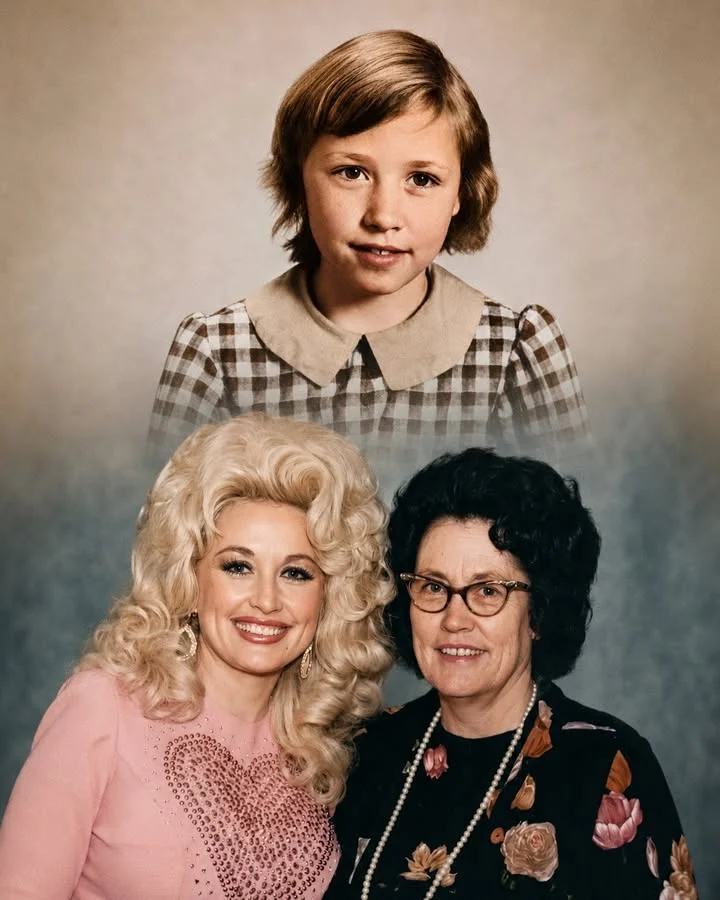
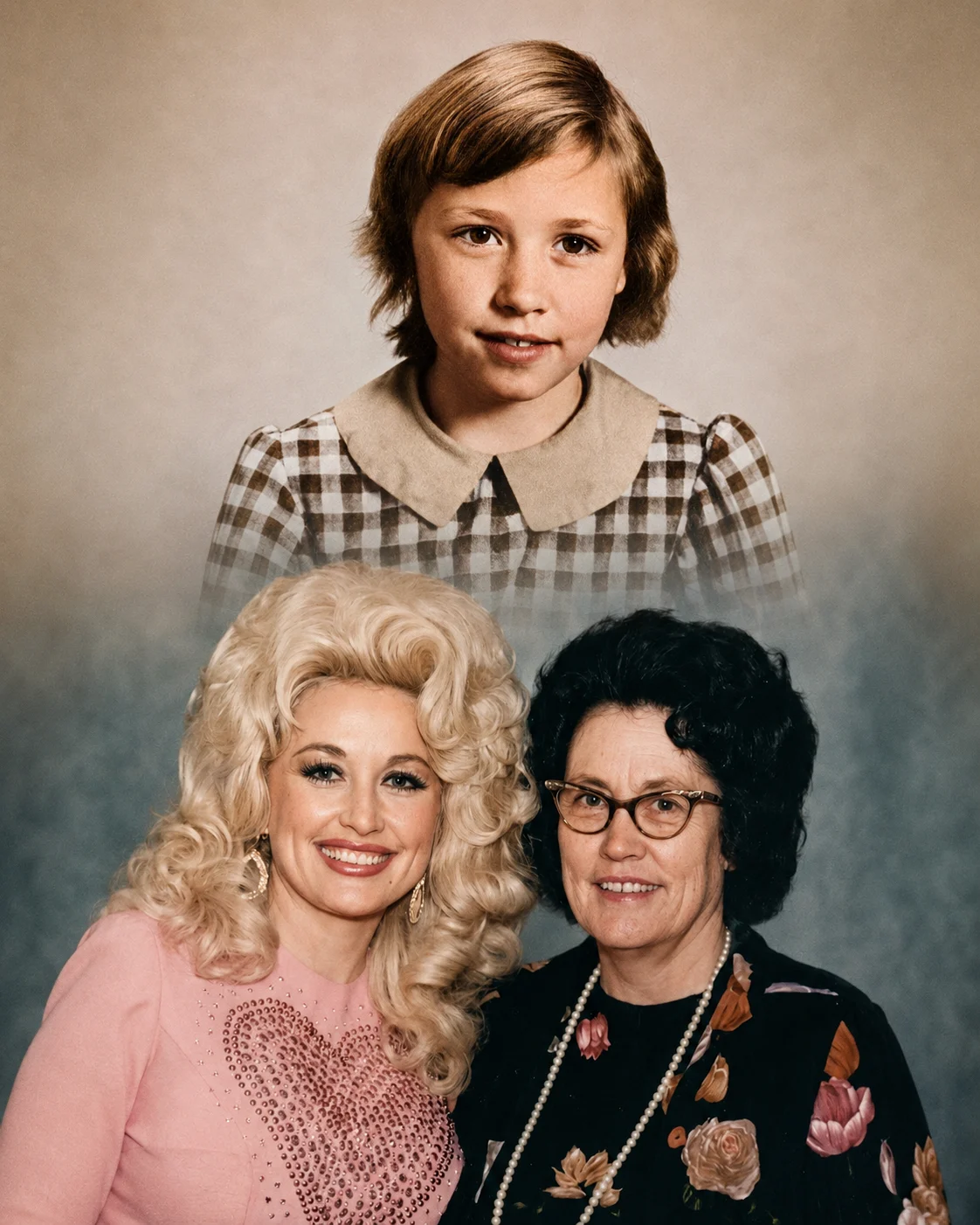
The needle came first, and the rhinestones came much later.
Before Dolly Parton became a global country icon, her mother closed a deep wound in her foot with an ordinary clothing needle and thread.
At six years old, Parton was running through the dirt yard of the family cabin in Locust Ridge, Tennessee, when she stepped on a broken mason jar.
The cut was serious, and the nearest doctor was too far away for a poor farming family in the isolated Appalachian mountains during the early 1950s.
Her father, Robert Lee Parton, held her down on the rough wooden floor while her mother, Avie Lee Parton, worked like a makeshift surgeon.
They cleaned the torn skin with kerosene and packed the bleeding wound with cornmeal.
Avie Lee then pulled household thread through her daughter’s flesh and closed the gash without anesthesia.
The stitches held, and the child who might have lost her ability to walk instead grew into a woman who carried her mountain roots onto every stage.
Parton never turned that memory into resentment. She saw her parents’ courage as proof of what a family could endure to protect its children.
She carried that lesson when she left for Nashville in 1964, and she later used her success to change medical care in her hometown.
She donated millions of dollars to Sevier County to help build the modern Covenant Health LeConte Medical Center.
Her giving was not a distant check. She directed resources through the Dr. Robert F. Thomas Foundation, named for the physician who delivered her, and she used benefit concerts at Dollywood to create steady support for the region’s healthcare system.
That strategy helped build a facility with a modern emergency department and the Dolly Parton Center for Women and Infants.
For the valley where kerosene and cornmeal once stood between a child and permanent harm, the hospital became a lasting answer.
Every confident step Parton takes now traces back to the thread her mother pulled that afternoon.